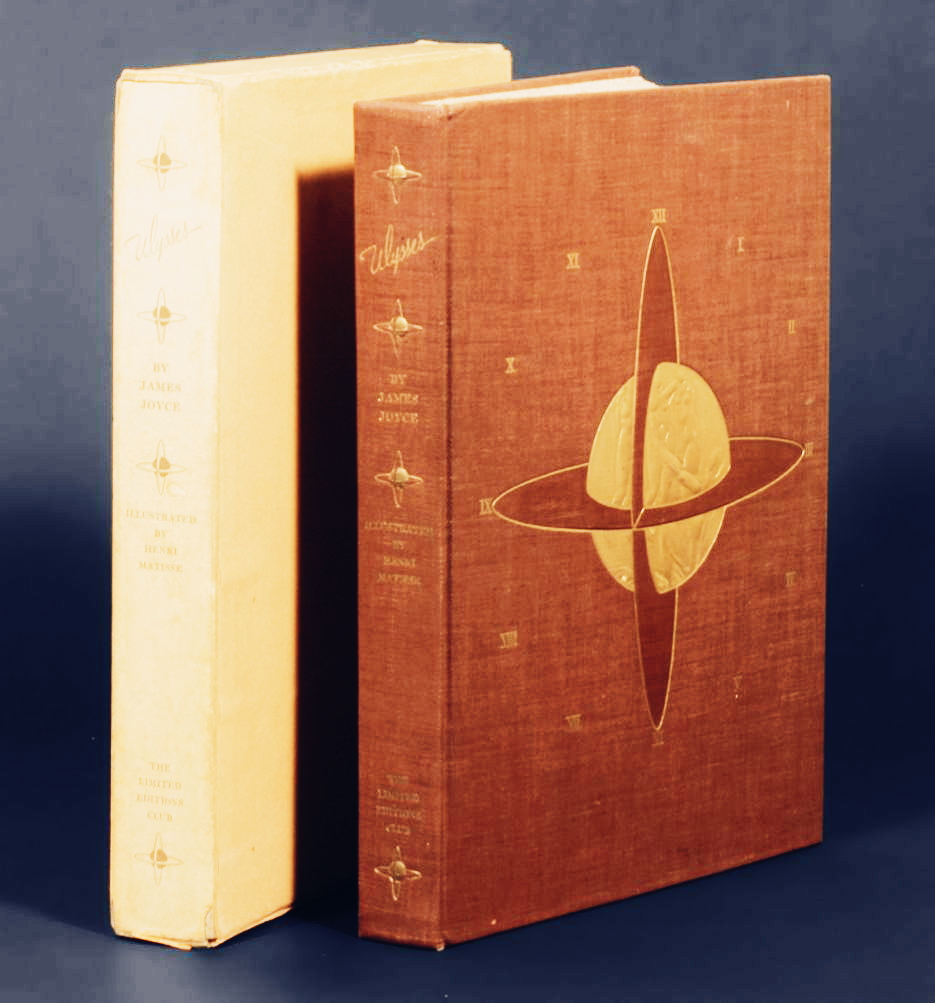
The book that's a work of art, made by Matisse, Joyce and Homer.
“Bloomsday is the only holiday in the world exclusively dedicated to a literary character and of course a book worth this feat has amazing editions.”
Leopold Bloom is the main character of the polemic book Ulysses, written by James Joyce and published in 1922. Every 16 of June brings the Bloomsday, official holiday in Ireland and reason to comemorate for readers all around the world. The holiday is a homage to Bloom, the book and to James Joyce itself. The book can reach more than 1000 pages and tell the story of one day in the average life of the even more average Leopold Bloom. In the this day is 16 of June in 1904 which also the date when Joyce went out with Nora Barnacle, the woman who later became his wife.
Choosing the hero
The Ulysses was written using the structure of the Odyssey, the epic whose hero is Ulisses. Odisseus is the greek name, Ulisses is the latin version. To develop the main character of his book, James Joyce searched in other heros the characteristics he wanted to see in Leopold Bloom, but they had to be pacific, with no sexual constraints and, maybe paradoxically, they should be free of the desire to become heroes and being imortalised through violence.
As Deklan Kieberd says in his introduction to the Ulysses, the self imposed celibacy and lack of informations about his family put Faustus out of the dispute. Hamlet was another option since Shakespeare was Joyce's favorite writer, but to him Hamlet was not a complete man, because Hamlet was basically a son and that was not enough. Jesus was considered, but Joyce discarded him due to the sexual constraint he wasn't willing to impose upon his character, as he told Frank Budgen:
“Jesus was a bachelor and never lived with a woman. Surely living with a woman is one of the most difficult things a man has to do, and he never did it.”
Ulysses was the only greek hero who had no interest in going to war because he didn't believed the reasons subjacent to the Trojan war were good enough to leave his family behind. But the politics obliged him to go since he was the ruler of Ithaca and owed loyalty to the other leaders. Still, we see along the Odyssey that he won his battles using inteligence, traps and other less violent methods. He was a cautious and patient man. Besides that he was father of Telemachus, husband of Penelope, son of Laertes, companion of great war heroes like Achilles and a great adventurer, therefore, the most well developed heroe considered by Joyce. These were some of the reason that made Joyce use the Odyssey and it's hero to build work.
Matisse and the Odyssey
Bloomsday is the only holiday in the world exclusively dedicated to a literary character and of course a book worth this feat has amazing editions. Around 1930the american editor George Macey offered five thousand dollars to the painter Henri Matisse in order to get anything he could create for this money.
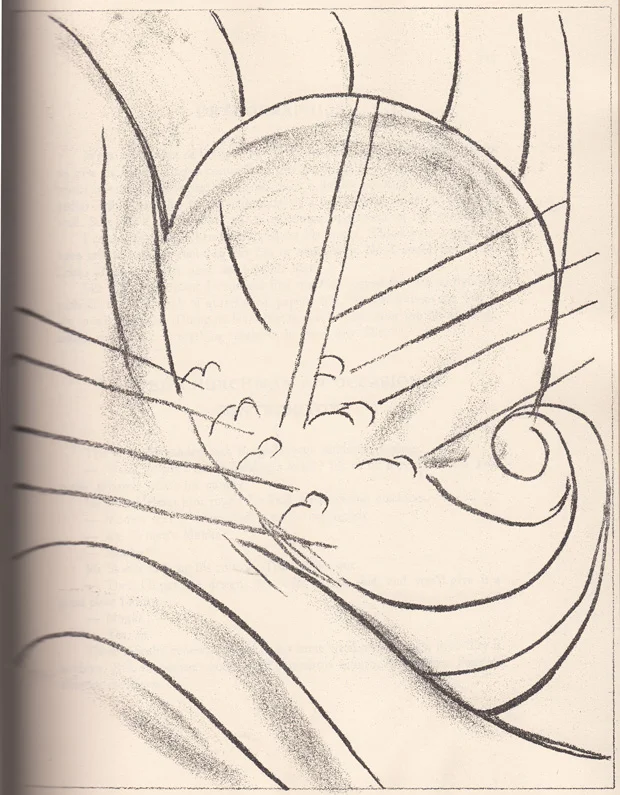
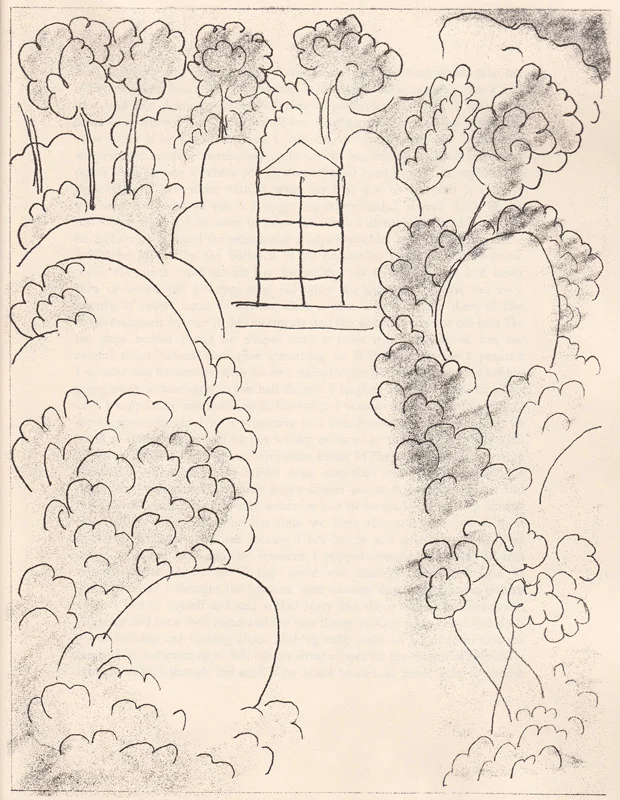
Apparently Matisse never read the Ulysse, at least not before creating the illustrations. His friend Eugene Jolas only summarized the book to him during. Despite that he created 26 illustrations based on themes of the Odyssey. The edition that united both the artistic sensibility of Matisse and Joyce's literary prowess was published in 1935. Matisse signed all the 1500 copies, and Joyce signed 250 of them.
In his illustrations Matisse chose the simplification, with his characteristic quasi childish lines made famous by some of his most popular paintings. Maybe there's a lack of colour to those who are familiarized with Matisse's works, however it was a contingency not only of time and money, but also of the medium, after all they were made exclusively to be used on books. The simple lines and the thems of the Odyssey match the technical complexity of the book and bring attention to the detailes of the homeric skeleton underlying the Ulysses without adding a unnecessary need of interpretative effort upon the reader. In the gallery below you can see 9 of the 26 illustrations of this edition:
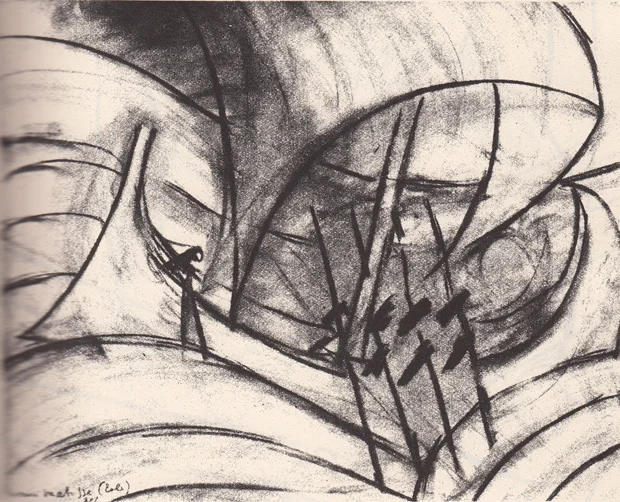
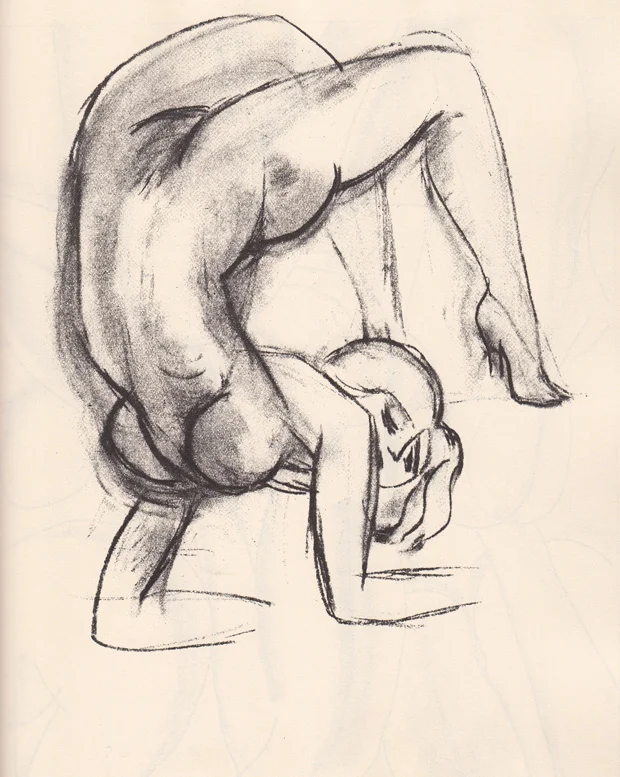
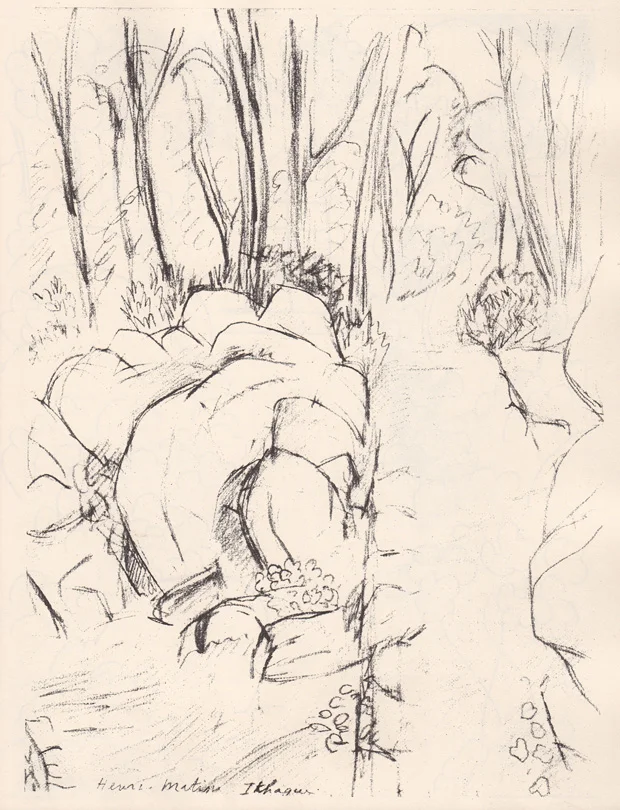
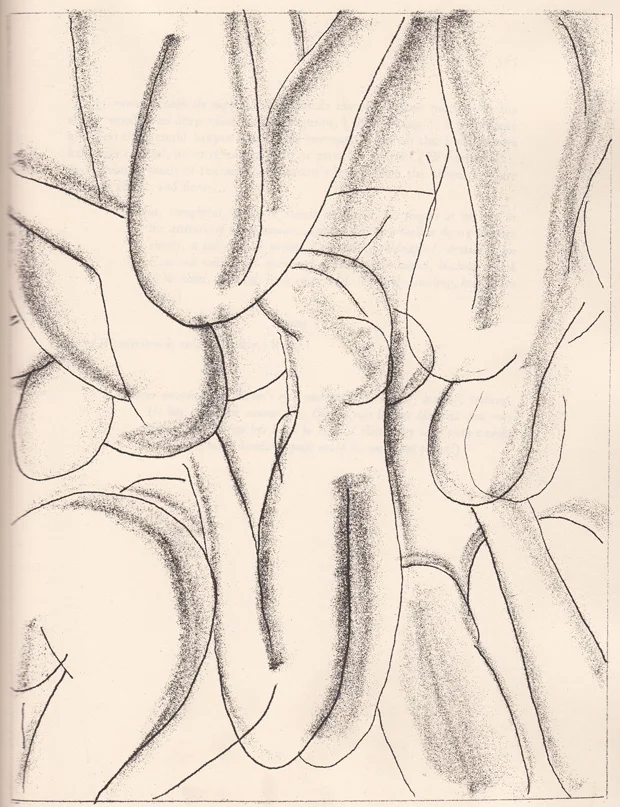
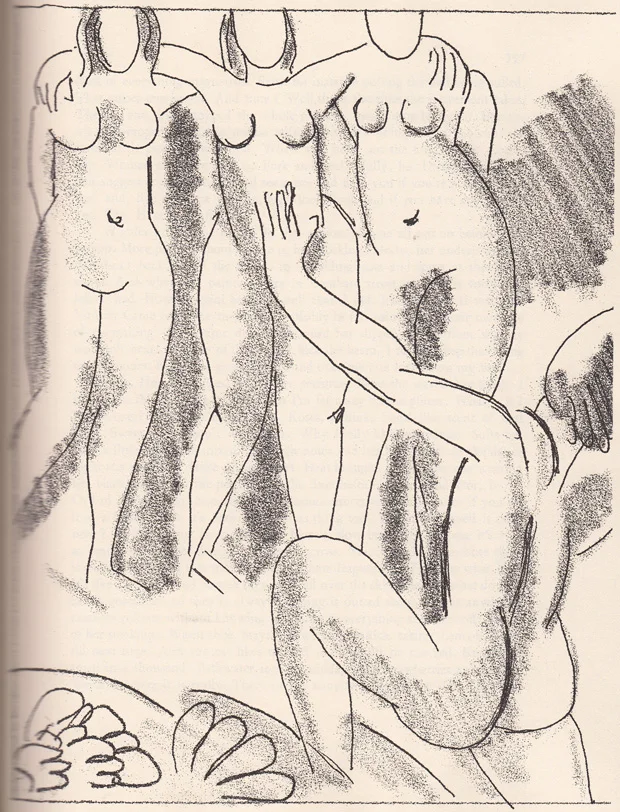
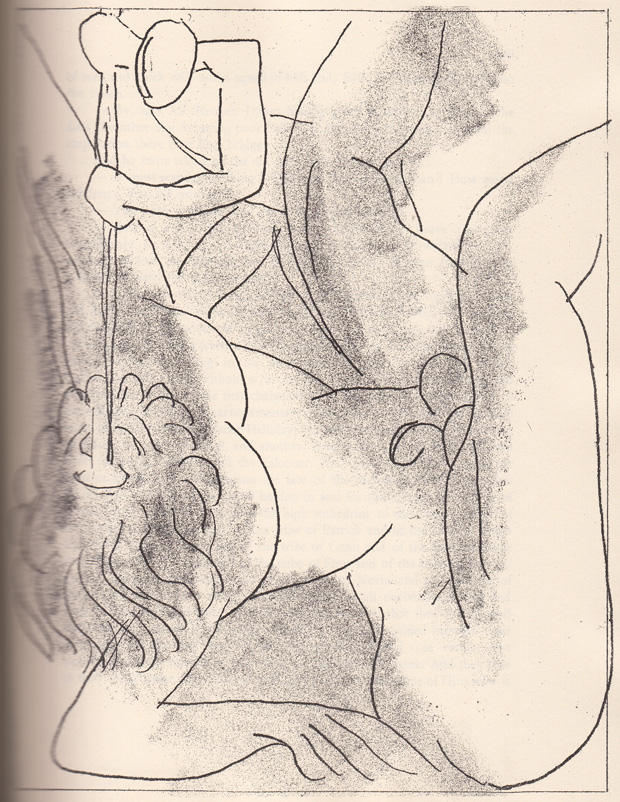
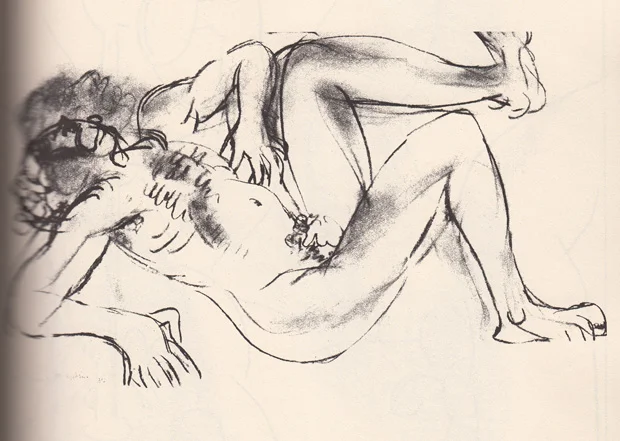
It's still possible to buy a edition with the signatures of both of them, that is, if you have 30 thousand dollars to spend on a book. On Ebay it's also possible to find more affordable replicas, even though still above the usual prices of the average books. The good thing about books it that to know the book you don't need any fancy edition, any copy work just fine, be it digital or pocket.
Would it have been better it Matisse actually read the book? The illustrations lose their value because of this? To literature Roland Barthes claims that the book should be dissociated from the author and Anne-Marie Willis also defend some similar ideas while thinking Design. Two must-read articles that can be used as a first step to answer these questions.
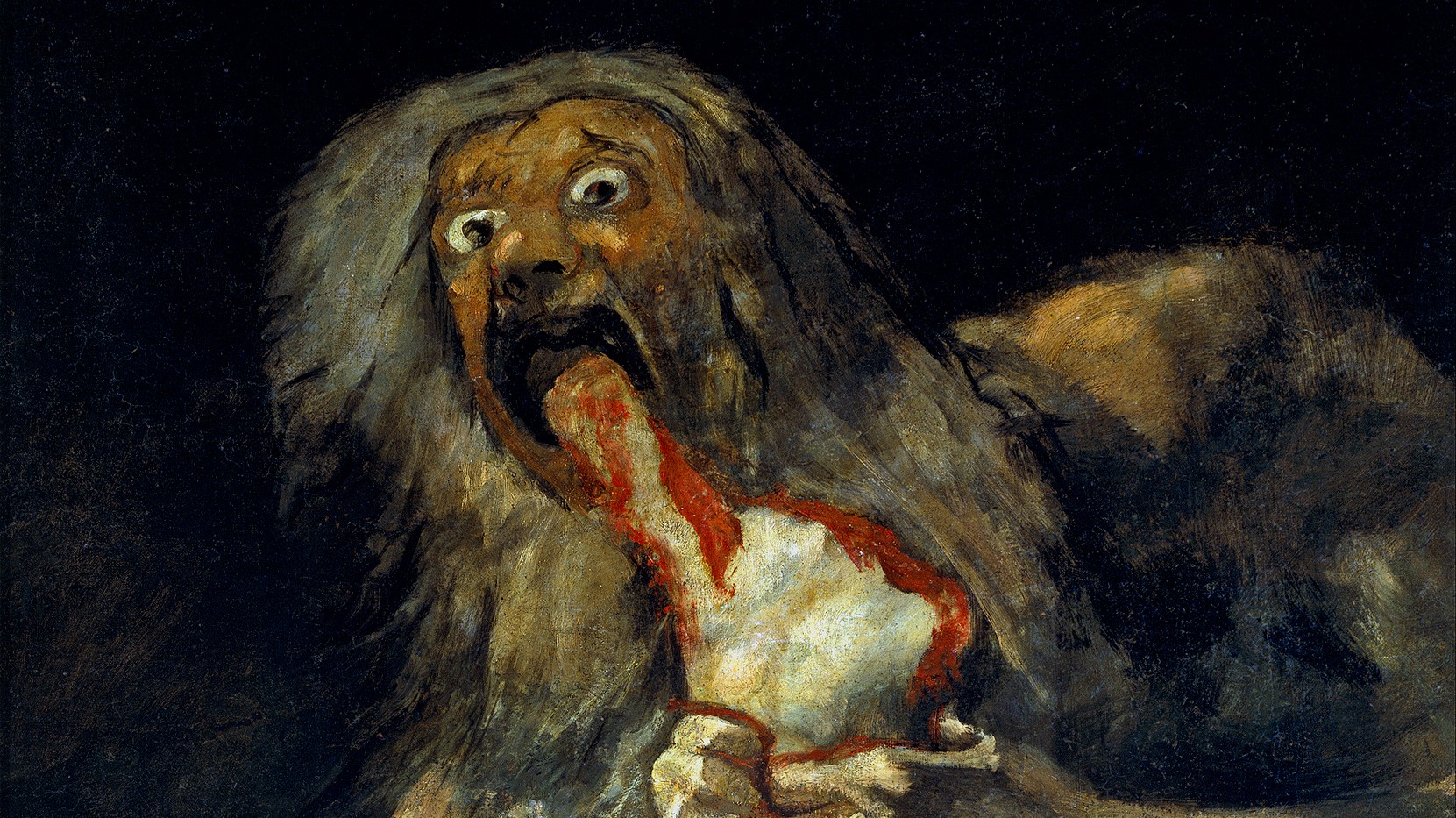
Titan and monster, Lord and cannibal. The myth of Cronus as seen by Goya.
“The sleep of reason produces monsters” - Francisco de Goya
When James Joyce discusses the effects of the Renaissance over the modern man, we can see that to him art has deep roots in it's own time, but still more important is the relation of the artist with the society he lives in. The painter Francisco de Goya suffered an intense proccess on both fronts, because as we will see, he witnessed important social changes and choking historical events while he had to deal with physical and psichological alterations which resulted in a work in constant metamorphosis but also of great sensibility to expose the world as he saw in each stage of his life.
The painting above is known as “Saturn devouring his child”, made by Goya between 1819 and 1823 as part of the group of 14 paintings that covered the wall of his house and today are called “Black paintings”. Even though there are inumerous interpretations it's safe to point some of the recurring themes of these paintings: mythology, mortality, suffering and finitude.
The original myth
Saturn is the latin denomination of the titan known by the greeks as Cronus. His father was Uranus, personification and lord of the skies and his mother was Gaia, the personification of the Earth. The animosity between Gaia and Uranus began after he imprisioned two of their in the Tartarus. In revenge, Gaia created a stone sickle and congregated her sons to castrate Uranus.
Cronus who envied the powers of his father was the only one who accepted the task and castrated his father on a trap created by Gaia. Then he claimed his father throne, imprisoned his brothers again and took his sister Rhea as queen. Gaia and Uranus warned him about a prophecy predicting him being overthroned by one of his sons just like he did to his father. That's the reason why he began to eat his childs as soon as they were born.
Rhea then went to Gaia asking for help to save her childs from her cannibal husband. Their combined efforts managed to delude Cronus by giving a stone wrapped in the baby towels which he ate without noticing the change, allowing Zeus to survive and grow in secret. As an adult Zeus reappers to take revenge on his father Cronus and gives a potion which makes him vomit his eaten brothers and sisters. Zeus also releases form the Tartarus the brothers of his father. Then war ensues, it's called the Titanomachia and had Zeus his brothers and uncles fighting against Cronus and the ohter Titans. As the prophecy foresaw, Cronus and the Titans are defeated.
Goya's vision
According to the greek myth Saturn swallow his children without much violence since Rhea was able to give him a rock wrapped in sheets instead of Zeus and Saturn didn't noticed the difference. It also makes less inconceivable the fact that his children was still alive inside him before Zeus saved them. But Goya approaches the cannibalism from a diferent angle, giving great psychological deepness to the muth not only by the way he depicts the Titan but also through the act itself.
On this painting the lightning comes from the top left of the canvas creating a chiaroscuro responsible only for part of the sense of nightmare. Beyond the lightning we see the desfigured and tortured Titan, irradiating suffering and the grotesque. His legs are thin and look dieseased due to uncommon format that ends up in the darkness which swallows his feet. His shadowed body contrasts with the pale corpse in his hands.
The severed body in the center bring attention to a singular characteristic of this painting: despite the myth tlaking about Cronus eating his child as soon as they were born and in a single swallow, here it's the body of a adult. The body is not of a child and Cronus isn't so giant, he doesn't even look like the lord of the skies. In the myth Cronus eats both male and female children, but here it isn't possible to distinguish the sex of the devoured body.
The body also adds an almost unsuspected dose of anguish because it makes us think about not only of the parts already eaten, but also about the chewing and dismembering to come, anguish reinforced by the hands of the Titan. Their tight and strong squeeze around the body allows us to see some blood between the fingers, as if it were a spasm of despair.
Seeing this painting for the first time it's usual to pay attention at the monstruous figure of Cronus and to identify ourselves more with him than with the body being eaten. In this work the lord of the skies isn't a cold and powerful Titan, he's an old creature desperate for power and very aware of his weakness and of how grotesque is the method he uses to maintain his power. His disgruntled hair supports the dramatic effect of his eery eyes and dilated pupils adorned by the eyebrows responsible for the face of fear and terror.
The painter and the work
Deaf due to a earlier disease that brought great suffering to him, Goya witnessed the unveil and the effects of the Napoleonic Wars in his country. It redirected his works to social and political themes concerned with the folly of war and the lack of meaning of the human suffering. These numerous works are know as “The disasters of war” and pregifured the anguish present on the Saturn painting.
Years later he bought the house where he would paint his Black Paintings. After surviving two serious deseases and witnessed Spain's toils under the absolutism of Fernando VII, he painted over existing works with the ones that are know today as the Black Paintings. This pessimism and the presence of suffering in his works came through his personal life and the politic scenario of his time. The contrast between the works of the beginning of his carrer and the later ones is huge, the porosity of his paintings absorved much of his time and of his mind changes. These changes can be easily seen, for example, comparing the painting “La era” (1786-87) and a Black Painting, “The Great he-goat” (1819-23).
Goya never aimed to publicly expose the Black Paintings, the depiction of Saturn belonged to his dining room. None of them were named by him, their denonimations are posterior. Despite the influences of Goya being important to understand his motivation with this late works on his home it shouldn't exclude their autonomy. As Barthes defends when thinking literature, when it comes to art the value isn't so much on the artists intent but on the interpretatitva possibilities carried by the artistic objects. To look after a absolute meaning based only on the manifest of veiled intents of the artist is to block the possibility of appropriation of the art as social and intelectual instrument.

Renaissance and the birth of the modern man, according to James Joyce
“Indeed, one might say of modern man that he has an epidermis rather than a soul.” - James Joyce
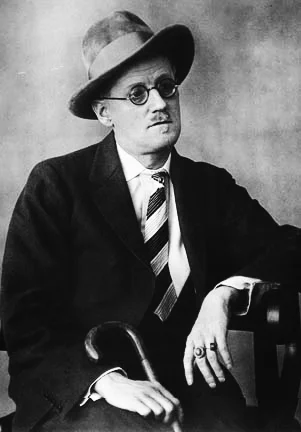
James Joyce is known and imortalized due to his works of fiction, specially for Ulysses, a book so debated it's said that people talk about it more than they read it. Beyond fiction Joyce was an critic and essayist. In his wanderings over the world he wrote in many languages.
On april of 1912, two years before officially publishing his first title, Dubliners, Joyce wrote “The universal literary influence of the Renaissance”. This essay, originally written in italian, show his sharp and somewhat conservative view on what was the Renaissance and how it's influence extends to the modern man.
Joyce begins by questioning the idea that humanity only achieved maturiy after the Renaissance:
“I agree that this social system can boast of great mechanical conquests, of great and beneficial discoveries ... But in the midst of this complex and many-sized civilization the human mind, almost terrorized by material greatness, becomes lost, denies itself and grows weaker.”
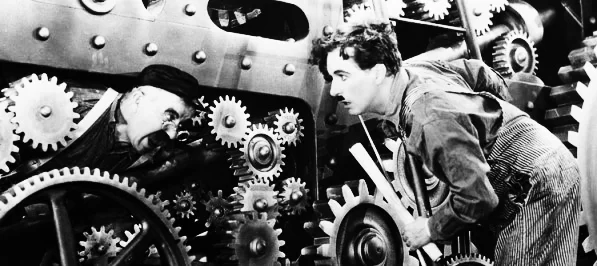
Movie "Modern Times", 1936.
This change, according to a almost nostalgic Joyce, happened as a rebellion against the scholastic absolutism and against the aristotelic philosophical system which had the christian religion as it's peak. In this rebellion:
“[The human spirit] abandoned it's peace, it's true abode because it had tired of it, just as God, tired (if you will permit a rather irreverent term) of his perfections, called forth the creation out of nothing, just as woman, tired of the peace and quiet that were wasting away her heart, turned her gaze towards the life of temptation.”
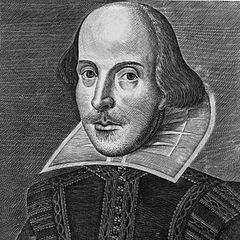
Shakespeare. A Joyce's favorite.
However, Joyce never cease to aknowledge the value of the literary production of that time:
“It would be easy to fill these pages with the names of the great writers who the wave of the Renaissance lifted to the clouds (or thereabouts), easy to praise the greatness of their works which, in any case, no one is calling into doubt, and to end with a ritual prayer: and it might be an act of cowardice since reciting a litany is not philosophical inquiry. The crux of the question lies elsewhere.”
Dismissing the easy way out he develops the core of his arguments. The crucial changing of the period was a changing of the mind that “placed the journalist in the monk's chair”:
“[the renaissance] has deposed a sharp, limited and formal mind in order to hand the sceptre over to a mentality that is facile and wide-ranging... a mentality that is restless and somewhat amorphous.”
The same power and impetus that left behind the formalism also had important effects over the modern mentality and the extrems it would reach:
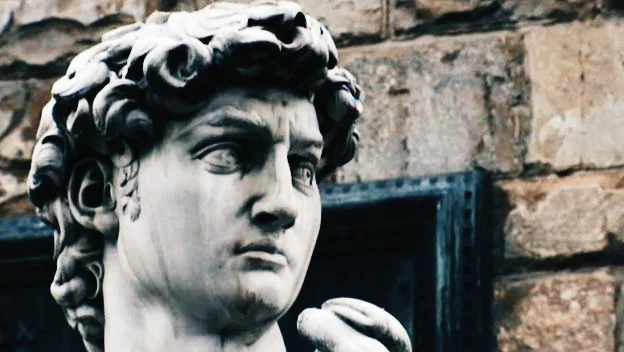
Michelangelo's David.
“Untiring creative power, heated, strong passion, the intense desire to feel, unfettered and prolix curiosity have, after three centuries, degenerated into frenetic sensationalism. Indeed, one might say of modern man that he has an epidermis rather than a soul.”
With a mixture of pessimism and comprehension Joyce moves foward evaluating the origin of the Renaissance and the final results of it's existence:
“Renaissance came about when art was dying of formal perfection, and thought was losing itself in vain subtleties.
[...]
The Renaissance arrived like a hurricane in the midst of all this stagnation, and throughout Europe a tumult of voices arose, and, although the singer no longer exist, their works may be heard just as the shells of the sea in which, if we put them up to our ear, we can hear the voice of sea reverberating.
Listening to it, it sounds like a lament: or at least, so our spirit interprets it. Strange indeed! All modern conquest, of the air, the land, the sea, disease, ignorance, melts, so to speak, in the crucible of the mind and is transformed into a little drop of water, into a tear. If the Renaissance did nothing else, it did much in creating whithin ourselves and our art a sense of pity for every being that lives and hopes and dies and deludes itself. In this at least we excel the ancients: in this the popular journalist is greater than the theologian.
James Joyce”
It's impossible to ignore the body of work that James Joyce left to us assuming his role, being a modern man, as a descendant of the phenomenon he diagnosticated. “The universal literary influence of the Renaissance” is an intelligent essay that has both feet on the ground all the time. It's a must read for any fan or academic interested on his works because it also reflects the mind of the writer.

I was face to face with the Abaporu and I barely looked at it
“And what can I do with it if in the room there’s a line to take selfies with the painting, if there’s a bulletproof glass between me and the painting and the lights of the gallery prevents me from seeing the canvas?”
Since a small child I learned in school to recognize and value Tarsila do Amaral’s paintings, but they never put me closer to it, I never got closer to it’s huge idealistic pedestal, I wasn’t even told that I could do it. I speak like that because I know that my formative experience is common to most student who some (if any) contact with arts classes in their earlier years
And at August 2nd I got myself face to face with two of her most iconic paintings, Anthropophaghy and Abaporu. It would be dishonest on my behalf if I acted like my academic formation and my artistic interests kept me in the same childish level of innocence/ignorance after all these years. When I got the exposition “The color of Brazil” at the Arte museum of Rio (MAR), it’s wasn’t as a layman, much less as a someone who causally deals with art. I went there very interested in studying the involvement of the visitor and the experience museums proportionate to the public.
With Rio de Janeiro about to host the Olympic Games and the city full of tourists, there in the museum I found the same crowd filled with energy, joy and curiosity. Still, few of them were there due to the exposition opening that day with great brazilian artists displayed, many people walked around these works like they were the same as the others, which do not desserve less attention, but this absence of mind or indifference were na extension of environment. Located in the Mauá Square, now part of the Olympic Boulevard, the public divided itself between the MAR and Museum of Tomorrow in huge lines, maybe without knowing exactly what to expect from these institutions beyond the photos they were about to make with the artworks and the exotic architecture of both the museums.
What’s a museum?
Considering only what’s too obvious makes it easy to blame the public for not paying attention, for being too casual and superficial, however, it’s important to investigate how the museum gets involved in this experience.

Rio Art Museum (MAR).
An interesting starting point is to observe the image and the expected funtion assumed by museums nowadays. The secularization of the western society seems to be connected with the ascension of the museums as they come to have reverenced and meaningful objects and the religions face a symbolic emptying, therefore part of the value atributed to museums comes from a transference of this deep human need, be it psychological or spiritual, which we want solved by a secular art.
The consequence of this art valorization is the elevated status assigned to museums today as holders of a invaluable cultural patrimony and the obscene pricing of these originals hanged in museums and houses and galleries of certain millionaires. Something so important creates a complicated situation for the visitors who want to get closer and actually understand the importance of art to our lives. Complicated because we revere the museum and the things in it, we treasure all those works and we learn that only a few illuminated people can create those incredible objects, but how can we understand Tarsila if we consider her to be so different and superior? How can we dive in Di Cavalcanti’s paintings if we considers ourselves unable to do it because the essential can only be seen by specialists? In the museums the only help comes from these almost catalographic texts explaining the collection the small plates telling us about dates, artist and material.
At the museum, facing the vibrant colors of the huge cannibal I couldn’t care less about year, ink and owner. I see a huge and absurd creature in a simple, almost schematic, environment, with colors I know familiar to my daily life, but also familiar to everything official and canon about Brazil. And what can I do with it if in the room there’s a line to take selfies with the painting, if there’s a bulletproof glass between me and the painting and the lights of the gallery prevents me from seeing the canvas? I wait until they stop taking selfies and leave, but there’s no seat or something like that also, because apparently they didn’t think any viewer may need more time and confort to do a deeper evaluation of the painting.
MAR isn’t a problem, it isn’t about crucifying an individual museum when in reality it’s a pattern. The exhibitions are risking being only this, art showcases, where the most intelligent visitor is the one photographing the small plates, so later he can research about it and find a digital version to analyse, interpet and really bring it to his life and mind routines.
To talk about art
Before going ahead I have to make it clear that I recognize many functions exercised by museums beyond this one I’m discussing. I understand that the museum is also an institution responsible by reasearch, restoration and many other essential cultural and academic activities which by themselves justify the existence of dedicated entities. But if I’m dealing only with the contact of the visitor with the collection it isn’t due to unawareness or to attack a weak spot, it’s because I want to discuss the layman experience and not the museum as a whole. I understand It’s impossible to think the museum without these other aspects, but I’m leaving them to another opportunity.
This “experience” I’m talking about isn’t necessarily attached to any academic limitation. I consider it openly knowing there’s a multiplicity of manners through which we can relate to art, therefore I’m thinking about how to make it possible, independent of the form. I believe this contact happens when art becomes revelant in someone’s life.
An example of this situation is when we feel sad and listen to depressing music which in principle would only deepen the problem, but in reality it help us, through a momento of introspection, to elaborate that feeling because they guide us and work as a meditative framework for the mind. We understand music because in shows we’re allowed to dance, sing, drink and use drugs, there’s no pomposity or reverence before music, we listen it a tour homes and in the bus. It’s true that it may prevent us from completely enjoying it at all times, but we must admit it’s constant presence and familiarity is better than an overly serious approach.
Complexities, obstacles and a light at the end?
The museum, like a cathedral,should prioritize the personal experience and the relationship with the artworks before attempting to become a touristic icon. An example of how to do this is the Rothko Chapel, located in Houston, built with the painter to be a contemplative space now displaying 14 of his black paintings. In the chapel Rothko’s paintings work as tools to create a space able to guide reflection and the visitor’s introspection. The investment to create something more elaborate isn’t necessarily a problem, or shouldn’t be, if we consider that only the Abaporu’s insurance costed almost 300 thousands dollars, according to Jones Bergamin, presidente-director of the Rio Art Stock Exchange.
We still have to discover if museums really are capable of making this change since everything is result of a complex conjuncture raging from economic, cultural and political questions. With na international art market breaking records at auctions, a government using art as a spectacle and the lack of mass art education, it’s no surprise that museums struggle being in the middle of the crossed fire, in one side our huge expectations and in ther other the limitating environment they’re submerged.
While these questions remains open, we must occupy the spaces offering some valuable experiences despite the obstacles. To see art not as something to consume but as something alive we need to get hold of so it don’t become only a museum piece, disponible for selfies. In all it’s weirdness the Abaporu still have a tremendous intensity, of roots, of a growing towards the earth and a serenity profound even for such a powerful figure. If there’s something Tarsila do Amaral taught us is how we are able alone and there’s greatnesse even in the smaller things. It doesn’t matter what’s expected from us, we can always create if we’re brave enough to try,