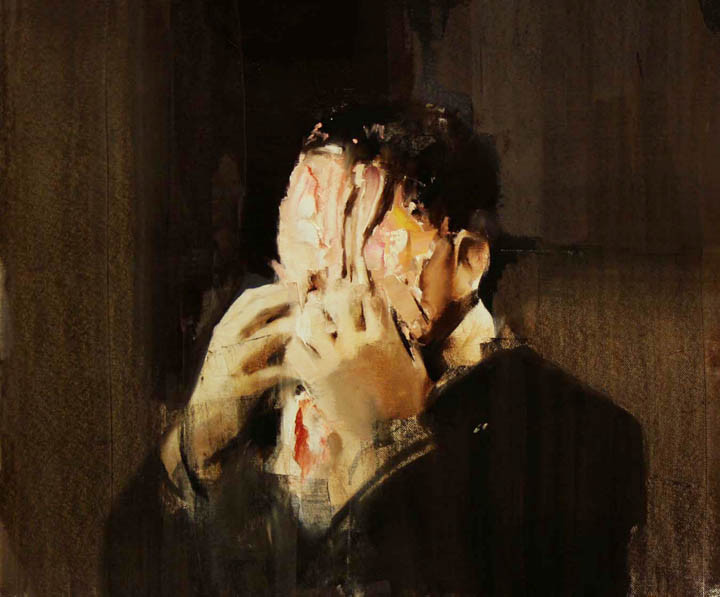
Modern literature and the death of the Author in Roland Barthes
“...literature is that neuter, that composite, that oblique into which every subject escapes, the trap where all identity is lost...” - Roland Barthes
It's common to see fans seeking explanations about movies and books on the authors, considering them the only reliable source of interpretation, but Anne-Marie Willis argues that the designer has no prevalence over his creation. And there's a great thinker foccused on literature who followed a somewhat similar line of thought. In 1968 Roland Barthes published “The death of the Author”, a instigating text about the relation of the Author, the Critics and of the Reader with the modern literature.
If both of them converge to a critic that undermines the importance of the creator, Barthes was more interested with literature and went beyond, showing that to question the image of the Author is also questioning the Critics. Barthes asserts that literature is independent, a body of symbols:
“All writing is itself this special voice, consisting of several indiscernible voices, and that literature is precisely the invention of this voice, to which we cannot assign a specific origin: literature is that neuter, that composite, that oblique into which every subject escapes, the trap where all identity is lost, beginning with the very identity of the body that writes.
Probably this has always been the case: once an action is recounted, for intransitive ends, and no longer in order to act directly upon reality — that is, finally external to any function but the very exercise of the symbol — this disjunction occurs, the voice loses its origin, the author enters his own death, writing begins.”
Stéphane Mallarmé was a french critic and poet to whom Barthes credits the pioneering in this concept of literature:
“In France, Mallarme was doubtless the first to see and foresee in its full extent the necessity of substituting language itself for the man who hitherto was supposed to own it; for Mallarme, as for us, it is language which speaks, not the author: to write is to reach, through a preexisting impersonality — never to be confused with the castrating objectivity of the realistic novelist — that point where language alone acts, “performs,” and not “oneself”: Mallarme’s entire poetics consists in suppressing the author for the sake of the writing (which is, as we shall see, to restore the status of the reader.)”
Against the conventional critic and questioning not only the place of the author but even the literary canon, Barthes goes on with the idea that a work is always dependent on the reader:
“The Author is supposed to feed the book — that is, he pre-exists it, thinks, suffers, lives for it; he maintains with his work the same relation of antecedence a father maintains with his child. Quite the contrary, the modern writer (scriptor) is born simultaneously with his text; he is in no way supplied with a being which precedes or transcends his writing, he is in no way the subject of which his book is the predicate; there is no other time than that of the utterance, and every text is eternally written here and now.
[...]
We know that a text does not consist of a line of words, releasing a single “theological” meaning (the “message” of the Author-God), but is a space of many dimensions, in which are wedded and contested various kinds of writing, no one of which is original: the text is a tissue of citations, resulting from the thousand sources of culture.”
Opposing the image of the Author and that of the writer, he exposes what he consider to be a multiple writing:
"Succeeding the Author, the writer no longer contains within himself passions, humors, sentiments, impressions, but that enormous dictionary, from which he derives a writing which can know no end or halt: life can only imitate the book, and the book itself is only a tissue of signs, a lost, infinitely remote imitation.
[…]
In a multiple writing, indeed, everything is to be distinguished, but nothing deciphered; structure can be followed, “threaded” (like a stocking that has run) in all its recurrences and all its stages, but there is no underlying ground; the space of the writing is to be traversed, not penetrated: writing ceaselessly posits meaning but always in order to evaporate it: it proceeds to a systematic exemption of meaning. Thus literature (it would be better, henceforth, to say writing), by refusing to assign to the text (and to the world as text) a “secret:’ that is, an ultimate meaning, liberates an activity which we might call counter-theological, properly revolutionary, for to refuse to arrest meaning is finally to refuse God and his hypostases, reason, science, the law."
Barthes calls out the negligence with the figure of the reader and contests the idea that it depends on the Author:
"In this way is revealed the whole being of writing: a text consists of multiple writings, issuing from several cultures and entering into dialogue with each other, into parody, into contestation; but there is one place where this multiplicity is collected, united, and this place is not the author, as we have hitherto said it was, but the reader: the reader is the very space in which are inscribed, without any being lost, all the citations a writing consists of; the unity of a text is not in its origin, it is in its destination; but this destination can no longer be personal: the reader is a man without history, without biography, without psychology; he is only that someone who holds gathered into a single field all the paths of which the text is constituted.
[…]
We know that to restore to writing its future, we must reverse its myth: the birth of the reader must be ransomed by the death of the Author."
Subversive, “The death of the Author” is the kind of idea that still needs to be debated. And maybe this is the definition of any relevant thought. In 1968 Barthes made an objection that no reader nor writer should ignore, but that's still less popular than it should, at least out of the academic circles.

Bottles in the sea: online communication and the receiver with a thousand faces
“...but if we want the potential benefits to become real it's essential that we focus on less funny things and make efforts towards greater complexities and new contacts with unknown ideas.”
It's common to discover a new hobby or unusual subjects and when we search for them on the internet we soon discover many pages and communities dedicated to them. Despite being small sometimes they're composed by people from many countries sharing the same interest. Specialized fóruns can be disorganized but they also have a surpring amount of information coming from people who share their knowledge for free, sometimes inadvertently, giving the internet it's fame of having all kinds of informations at a very low cost, if any.

Panther Modern. Digital art gallery by LaTurbo Avedon. (Click to see)
As sealed bottles with messages floating in the sea waiting for the casual meeting when the comunication will finally abandon it's mere pontential state, being on the internet doesn't mean it'll be accessed since there's always barriers like search engines, content agregators and the market tactics used by social media to enforce payment if the creator wants to reach his audience. Even though these do not deny the access they can strongly restrict the contact with a wider public. It's excessively optimistic to say that everything can be found on the internet, but the internet at least touches everything. Here we reproduce our connections from outside of it, therefore there's the possibility for any content, even if it depends on other aspects to leverage it's relevance.
To realize this idea of the internet free content is, by chance, to see that which is trivial or familiar to you being the unexpected and rare for others. To share your own experience and knowledge publicly, even in a limited medium to this kind of interaction, already is a way of making things more accessible. Specially because it's not necessarily a copy of something to the internet, but a true reelaboration of this subject and, therefore, dependent on who is doing it. This reformulation must ensure that the final result will be comprehensible for most people, even those who don't have the tools to reach it by themselves, making it better to lose something in translation than to allow the worries with the details block the possible dialog.
Umberto Eco considered his unread books an essential part of his personal library – containing 30 thousand books – because they were a potential research material and a clear reminder of how much he still had to learn. The posts seen but not read and the critics of books the reader may not know, as can happen here, also allow this curiosity that far from replacing the original work and profound studies, works as a intermediary for those who don't want or don't have the oportunity to reach these works and books. For those who read it's always a challenge and a invitation to devote some thoughts to it again.
With the virtual realities came the supposition that someday we'll abandon this real life as we know it, but the digital and the internet are extensions as real as the “analog” version of our existence and cannot be separated from our other life experiencies, which we still mistake to understand while insisting in considering it as something much different from our online existence. This care doesn't exclude the entertainment and the lightness common to our online interactions, but if we want the potential benefits to become real it's essential that we focus on less funny things and make efforts towards greater complexities and new contacts with unknown ideas, even if it generates that feeling of discomfort, even if it means to put aside the Facebook.
It's hard because we already do it in our daily lives, we deprive ourselves of so much in our efforts around our obligations and expectations both personal and professional that the internet appears as a relaxing tool after these harsh goals. But we also do this even despite the obligation, we spend money and time on books, parties, art, movies, theater and music and the benefits aren't tangible as in other materialistic situations. There's no clear exchange besides the experience and the contact with the work of others. Still, we keep doing it because living is also to assume that things like personal analysis, philosophy, interior reflections and imersion in art and other people's minds with the same fears, anxieties and joys are more urgent than the cheap mindless entertainment, our jobs and hedonistic pleasures, and this is the reflection we need to develop to fully enjoy our own potential with the internet.
As content creators – and in apps like Snapchat, Instagram and Facebook we all are creators – the seduction, the tempting invitation to meet new ideas, as religions and political parties knows and teaches us very well, this invitation must seduce, convince, persuade the other to take a look at our ideas. That's the function of beauty, music, design, simple dialog, sense of community and the gratuity, be it apparent or not, in these institutions. But if their methods works then we aren't talking about condemning religions and politics because they're so good at convincing people and ploriferating their ideas. The important is that people with better proposals should pay more attention to these details, specially because many of them deem it to be vulgar or superfluous, because disarming the other and making them listen is as important as having something valuable to say.
Alain de Botton held a presentation on the Rijksmuseum exhibition Art Is Therapy.
Due to the constant dispute for our attention we end up bombarded without mercy, from Whatsapp to Instagram, cat videos, breaking news, memes, events, messages, everything fighting for our focus and this environment by itself make it harder for any attempt of a serious personal enhacement. In this virtual reality rises a service that we already know to be essential in our lives, that of the curator. Museums, galleries, literary fairs, libraries and even movie theathers, all of them act as curators, despite not always providing what we need, they allow us to navigate a complex body of work and thought while freeing us from the efforts of the specialist and the critic. Wikipedia, Google and Youtube are indeed important, but the curator can show us what we should be searching there and also convince us to give this step towards personal and intelectual knowledge.
I write from this position, as a writer and also a curator of the few things I have to share, but that I must share. From the responsiblity of giving back the learning oportunities I had, and still have, to benefit others, but also conscious of the hardships involved in sending a message to someone, hardships that I know well since they're also mine. The Pantagruelista is back with the same objective, a trustworthy and well curated content about philosophy, literature and art and the introduction of ideas capable of interrupting our mental homeostasis and this time with renewed energy to create this fertile state of cognitive entropy.