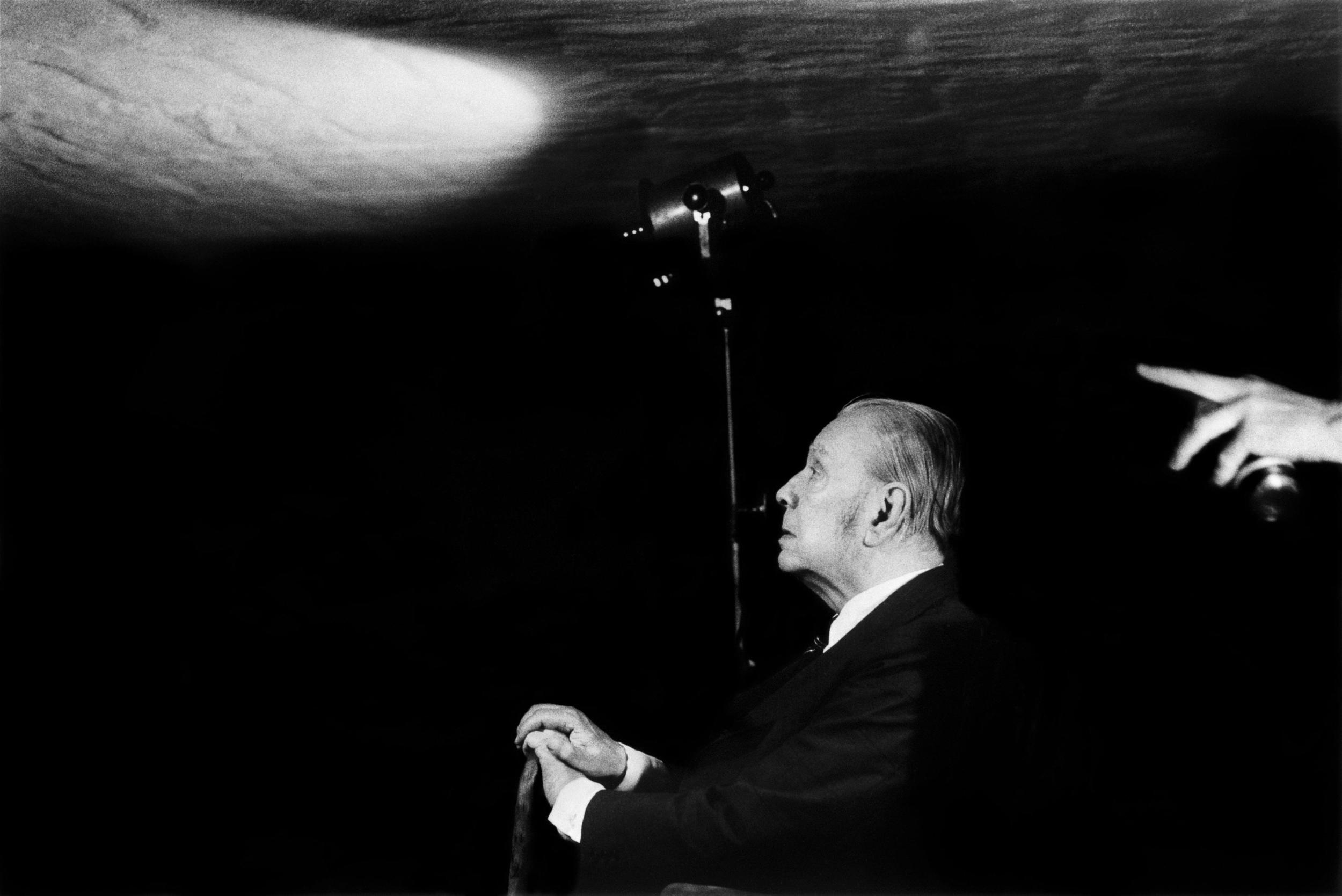
On being a great writer and how almost dying made Borges try short stories
“Not because I think my own stuff particularly good, but because I know that I can't get along without writing. If I don't write, I feel, well, a kind of remorse, no?” - Jorge Luís Borges
Jorge Luís Borges is one of those big names in literature who should need no introduction. In his books I found the recurrence of themes like time, infinity, labyrinths and the doppelganger. Expert in ancient english literature and philosophy, many of his book cast doubt over the border between fiction and non fiction, between the realism and the fantastic.
The love for reading that is clear even in his writings found limitations in his progressive blindness. However, it wasn't enough to hinder his habit of reading and writing even when he was already very debilitated in July of 1966, five years after receiving his first big premiation, the Formentor Prize. In this date he gave an interview to the writer and translator Ronald Christ published by The Paris Review.
His stories are short, complex and profoundly philosophical and granted him the title of the”writer who writes for writers”. But as he tells in the interview, it was only after an almost death experience, due to an accident at the Christmas of 1938, that he first tried to write short stories:
“Yes, I was very timid because when I was young I thought of myself as a poet. So I thought, “If I write a story, everybody will know I'm an outsider, that I am intruding in forbidden ground.” Then I had an accident. You can feel the scar. If you touch my head here, you will see. Feel all those mountains, bumps? Then I spent a fortnight in a hospital. I had nightmares and sleeplessness—insomnia. After that they told me that I had been in danger, well, of dying, that it was really a wonderful thing that the operation had been successful. I began to fear for my mental integrity—I said, “Maybe I can't write anymore.” Then my life would have been practically over because literature is very important to me. Not because I think my own stuff particularly good, but because I know that I can't get along without writing. If I don't write, I feel, well, a kind of remorse, no? Then I thought I would try my hand at writing an article or a poem. But I thought, “I have written hundreds of articles and poems. If I can't do it, then I'll know at once that I am done for, that everything is over with me.” So I thought I'd try my hand at something I hadn't done: If I couldn't do it, there would be nothing strange about it because why should I write short stories?”
Even after this extreme start he rememorate the acceptance of his books in an account that made me remember the way he deals with numerology and mathematic in his books. When “History of eternity” was released he still had no idea that in the future his works would be translated to dozens of languages and even the sales of 37 copies left him surprised and touched:
“At first I wanted to find every single one of the buyers to apologize because of the book and also to thank them for what they had done. There is an explanation for that. If you think of thirty-seven people—those people are real, I mean every one of them has a face of his own, a family, he lives on his own particular street. Why, if you sell, say two thousand copies, it is the same thing as if you had sold nothing at all because two thousand is too vast—I mean, for the imagination to grasp. While thirty-seven people—perhaps thirty-seven are too many, perhaps seventeen would have been better or even seven—but still thirty-seven are still within the scope of one's imagination.”
During all the interview Borges speaks a lot through quotations, refering to positions that ilustrates his own views, quoting the authors and sometimes even the book where he read that. It's this way that he merge his ideas with the words of other writers to tell what he considers essential to write a great book:
“I think that Mark Twain was one of the really great writers, but I think he was rather unaware of the fact. But perhaps in order to write a really great book, you must be rather unaware of the fact. You can slave away at it and change every adjective to some other adjective, but perhaps you can write better if you leave the mistakes. I remember what Bernard Shaw said, that as to style, a writer has as much style as his conviction will give him and not more. Shaw thought that the idea of a game of style was quite nonsensical, quite meaningless. He thought of Bunyan, for example, as a great writer because he was convinced of what he was saying. If a writer disbelieves what he is writing, then he can hardly expect his readers to believe it.”
In this interview Jorge Luís Borges also talks about his studies of ancient english and nordic literature, comments what he considers essential to poetry and to fantastic literature. The writer for writers manages to be a remarkable presence even outside his work. After reading books like “The Aleph” and “Ficciones” I can only recommend kep recommending him everywhere.
I also talked here about an interview from the brazilian writer Lygia Fagundes Telles who met Borges in person. In this interview she also speaks about her last encounter with the argentinian writer before his death.
Reference: Full Borges interview.
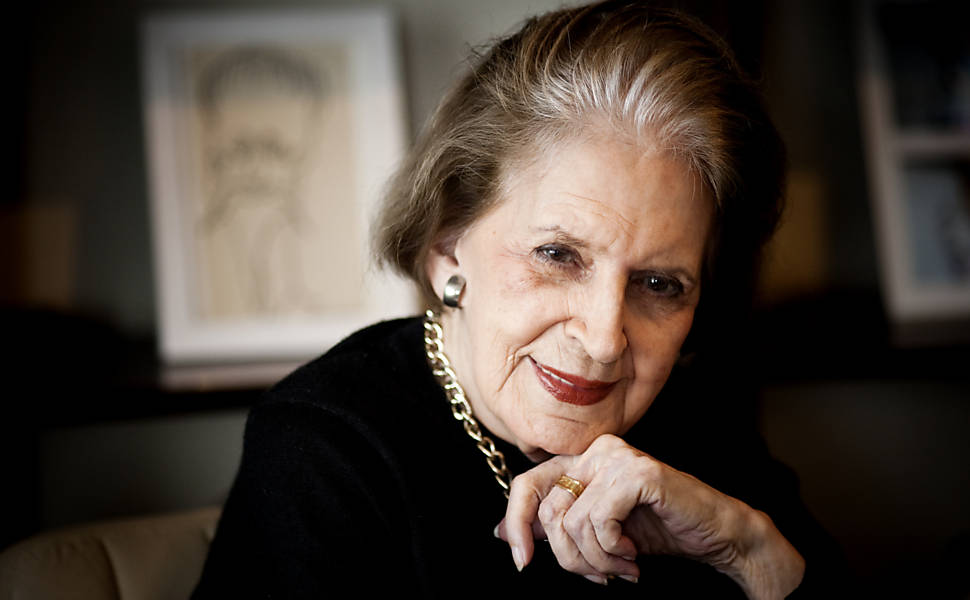
Lygia Fagundes Telles on misogyny in literature and the objective of writing
“I used to think: I’m writing so well and they aren’t talking about my text, they’re talking about my face. It made me very unhappy and I felt persecuted.” - Lygia Fagundes Telles
Owning many of the biggest literary prizes of portuguese language like the Camões Prize of 2005 and the Coelho Neto Prize given by the ABL for her book “The Girls”, Lygia Fagundes Telles is a consolidated name of the Brazilian literature. Born in 1923, she became an influent figure not only by her written work but also due to her efforts as an intellectual and public figure.
In an interview by the show Roda Viva she tells her story in one and a half hour. She speaks about her formation years all the way to her stablished career in contact with other famous writers like Mario de Andrade and Jorge Luís Borges. When commenting her first book – which she now rejected as being an immature work – she talks about how she used to see her vocation as a writer:
“I was ashamed of saying that I had a vocation because I thought that a vocation demanded success. As time passed I perceived: it has nothing to do with success.”
And this is the vocation that allows her to navigate through so many themes of the human life with so much mastery and at the same time create a path to her reader, a possibility. To Lygia the word has an utility so clear as her objective as a writer:
“If I can help my someone in his suffering, in his fear, in his fight, that’s also my fight and that’s also my fear and also my suffering. If I can help someone with this word, mission accomplished. When Death come to look me in the eyes to say “let’s go” I will say: I’m ready, I did what I could.”
However can come in less clear forms through the written work. She also believes that this opacity of the literary text can work as an enhancer of the message that underlies the work:
“I don’t demand to be comprehended. The writer don’t have to be comprehend because comprehension is hard to be achieved. […] The writer circumvents, he also isn’t very open, he plays. The reader becomes an accomplice, he becomes an accessary. It’s like a criminal who is going to commit his crime and then needs all that circumstance that will help him to do the thing as perfect as possible.”
To write in groups dominated by men in times when the oppression against women was even harsher than today is no easy task. She tells some of her struggles as a beginner that are still true to many female writers today:
“I was young, beautiful and wanted to be more intelligent. Then the prejudice. I was beautiful and stuff, so I wanted people to respect me and they didn’t because they wanted to talk about beauty, I always got furious, do you understand? Because I used to think: I’m writing so well and they aren’t talking about my text, they’re talking about my face. It made me very unhappy and I felt persecuted.”
Along the interview she also talks about her last contact with the Argentinian writer Jorge Luís Borges and attacks the superficiality of the traditional media and ask more respect towards the intelligence of the Brazilian people. Today’s post is an invitation to watch this short lesson about history, literature and art. To listen a writer so incredible is second only to reading her books.
Watch the full interview in Portuguese:

Deleuze and Guattari: the subversive minor literature of Franz Kafka
"Kafka emphatically declares that a minor literature is much more able to work over its material.” - Deleuze and Guattari
The “Kafka: Toward a minor literature” was written in conjunct by Félix Guattari and Gilles Deleuze. French, they had already published the “Anti-Oedipus” when this study about the works of Kafka was published in 1975. Both of them dedicated themselves to philosophy, psychology and studies about art and politics.
In this second collaborative work they propose a new approach to Kafka’s works. This approach delineates a writing that contrasts with the major literature: that of the literary canon and habited by great masters. Deleuze and Guattari introduces us to what they call “minor literature”, a revolutionary way of writing that, as Kafka foresaw, puts this kind of creations beyond the realm of the classic works and the traditional literary criticism.
Kafka was born in a German speaking family while living in Prague. They were Jewish and there was an almost hostile relation between those who spoke German and those who spoke Czech. He spoke both but considered the German his mother tongue. It was in this environment where culture, territory and the politics collide that Kafka created his works. And it’s from these conflicts that Deleuze and Guattari draw their discussion about the minor literature as related to Kafka:
“A minor literature doesn't come from a minor language; it is rather that which a minority constructs within a major language. But the first characteristic of minor literature in any case is that in it language is affected with a high coefficient of deterritorialization. In this sense, Kafka marks the impasse that bars access to writing for the Jews of Prague and turns their literature into something impossible—the impossibility of not writing, the impossibility of writing in German, the impossibility of writing otherwise.”
“The three characteristics of minor literature are the deterritorialization of language, the connection of the individual to a political immediacy, and the collective assemblage of enunciation. We might as well say that minor no longer designates specific literatures but the revolutionary conditions for every literature within the heart of what is called great (or established) literature.”
The minor literature positions itself beyond the formal criticism; it’s not a fix object in a category, but an expression machine:
“Only in this way can literature really become a collective machine of expression and really be able to treat and develop its contents. Kafka emphatically declares that a minor literature is much more able to work over its material.”
Taking Kafka’s German as an example, they defend that there are two ways of creating this machine:
“But there are only two ways to do this. One way is to artificially enrich this German, to swell it up through all the resources of symbolism, of oneirism, of esoteric sense, of a hidden signifier. But this attempt implies a desperate attempt at symbolic reterritorialization, based in archetypes, Kabbala, and alchemy, that accentuates its break from the people and will find its political result only in Zionism and such things as the "dream of Zion." Kafka will quickly choose the other way, or, rather, he will invent another way. He will opt for the German language of Prague as it is and in its very poverty. Go always farther in the direction of deterritorialization, to the point of sobriety. Since the language is arid, make it vibrate with a new intensity.”
Guattari and Deleuze see in James Joyce and Samuel Beckett the example of writers whose language allowed them to write in the same manner as Franz Kafka did with his German:
“That is the glory of this sort of minor literature—to be the revolutionary force for all literature. The utilization of English and of every language in Joyce. The utilization of English and French in Beckett. But the former never stops operating by exhilaration and overdetermination and brings about all sorts of worldwide reterritorializations. The other proceeds by dryness and sobriety, a willed poverty, pushing deterritorialization to such an extreme that nothing remains but intensities.”
However, you don’t have to write in German as a Czech nor in English as an Irish. Or, and this is my contribution, to write in Portuguese as a Brazilian to create the minor literature, your own machine. They believe it is possible to write minor literature even if you had the misfortune (and here it’s their adjective) of being born under a great language:
“What interests him even more is the possibility of making of his own language-assuming that it is unique, that it is a major language or has been—a minor utilization. To be a sort of stranger within his own language; this is the situation of Kafka's Great Swimmer.
To make use of the polylingualism of one's own language, to make a minor or intensive use of it, to oppose the oppressed quality of this language to its oppressive quality, to find points of nonculture or underdevelopment, linguistic Third World zones by which a language can escape, an animal enters into things, an assemblage comes into play.”
In this book Guattari and Deleuze invite you to subversion, but draws attention to the responsibility of the writer. To reproduce the status quo, even in unconscious ways, is not something the writer can abdicate after indulging in the conservative side of the language. To see literature beyond of what’s said is to evaluate how things are said, to bend the language or to deprive it of it’s familiarity, and those are choices that have to be considered by the writer.
Complement this Reading notes with the article about the Death of the Author as seen by Roland Barthes, the similarity of methods and theories between Barthes, Deleuze and Guattari is essential to understand the place of the critics and the relation between writer and literature.
Bibliography: DELEUZE, Gilles; GUATTARI, Félix – Kafka: Toward a minor literature. London: University of Minnesota Press, 2003. ISBN 0-8166-1514-4. Translator of the quotations: Dana Polan
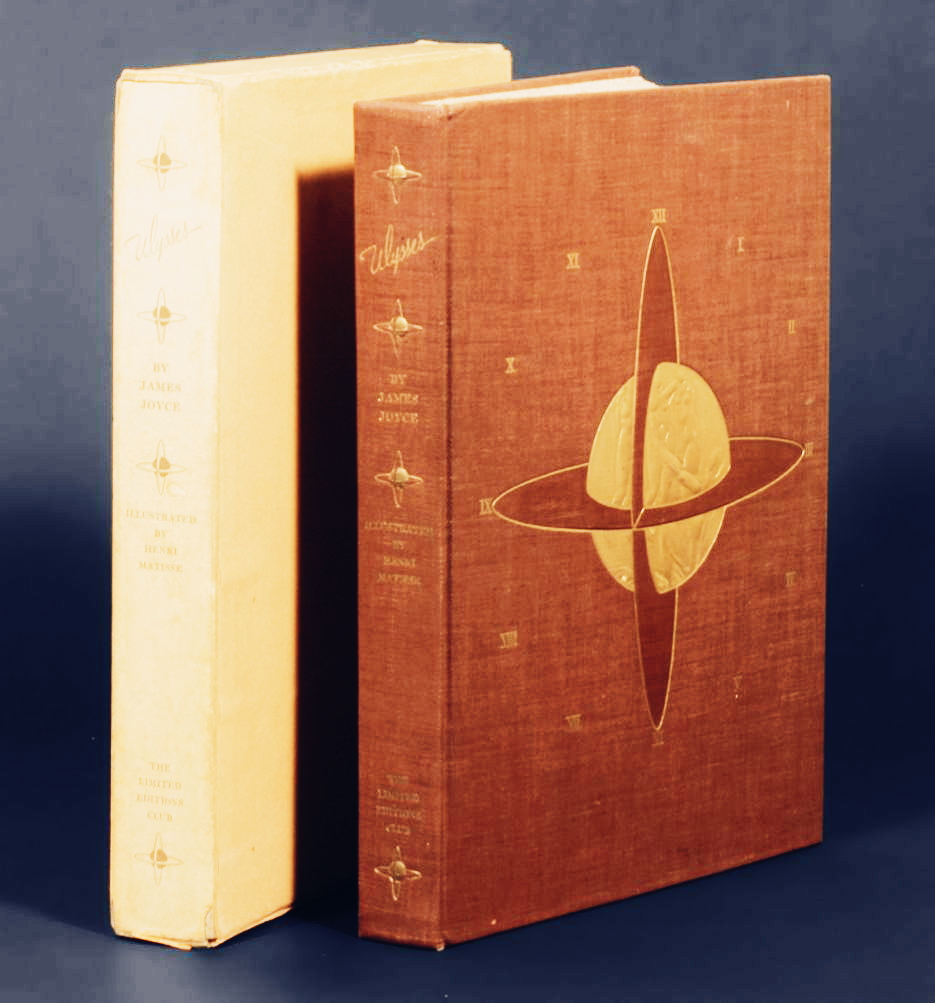
The book that's a work of art, made by Matisse, Joyce and Homer.
“Bloomsday is the only holiday in the world exclusively dedicated to a literary character and of course a book worth this feat has amazing editions.”
Leopold Bloom is the main character of the polemic book Ulysses, written by James Joyce and published in 1922. Every 16 of June brings the Bloomsday, official holiday in Ireland and reason to comemorate for readers all around the world. The holiday is a homage to Bloom, the book and to James Joyce itself. The book can reach more than 1000 pages and tell the story of one day in the average life of the even more average Leopold Bloom. In the this day is 16 of June in 1904 which also the date when Joyce went out with Nora Barnacle, the woman who later became his wife.
Choosing the hero
The Ulysses was written using the structure of the Odyssey, the epic whose hero is Ulisses. Odisseus is the greek name, Ulisses is the latin version. To develop the main character of his book, James Joyce searched in other heros the characteristics he wanted to see in Leopold Bloom, but they had to be pacific, with no sexual constraints and, maybe paradoxically, they should be free of the desire to become heroes and being imortalised through violence.
As Deklan Kieberd says in his introduction to the Ulysses, the self imposed celibacy and lack of informations about his family put Faustus out of the dispute. Hamlet was another option since Shakespeare was Joyce's favorite writer, but to him Hamlet was not a complete man, because Hamlet was basically a son and that was not enough. Jesus was considered, but Joyce discarded him due to the sexual constraint he wasn't willing to impose upon his character, as he told Frank Budgen:
“Jesus was a bachelor and never lived with a woman. Surely living with a woman is one of the most difficult things a man has to do, and he never did it.”
Ulysses was the only greek hero who had no interest in going to war because he didn't believed the reasons subjacent to the Trojan war were good enough to leave his family behind. But the politics obliged him to go since he was the ruler of Ithaca and owed loyalty to the other leaders. Still, we see along the Odyssey that he won his battles using inteligence, traps and other less violent methods. He was a cautious and patient man. Besides that he was father of Telemachus, husband of Penelope, son of Laertes, companion of great war heroes like Achilles and a great adventurer, therefore, the most well developed heroe considered by Joyce. These were some of the reason that made Joyce use the Odyssey and it's hero to build work.
Matisse and the Odyssey
Bloomsday is the only holiday in the world exclusively dedicated to a literary character and of course a book worth this feat has amazing editions. Around 1930the american editor George Macey offered five thousand dollars to the painter Henri Matisse in order to get anything he could create for this money.
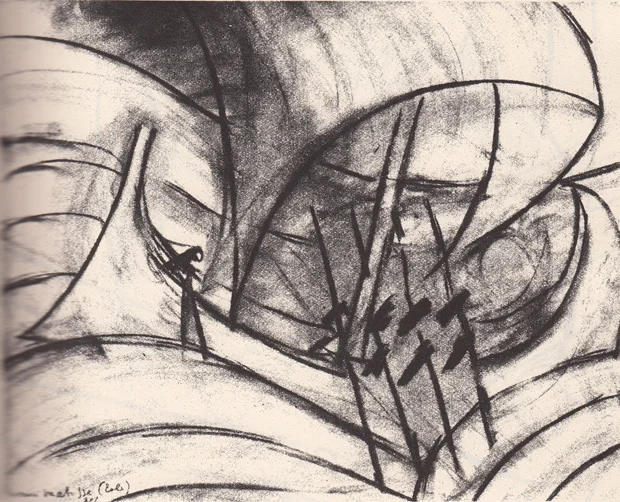
Apparently Matisse never read the Ulysse, at least not before creating the illustrations. His friend Eugene Jolas only summarized the book to him during. Despite that he created 26 illustrations based on themes of the Odyssey. The edition that united both the artistic sensibility of Matisse and Joyce's literary prowess was published in 1935. Matisse signed all the 1500 copies, and Joyce signed 250 of them.
In his illustrations Matisse chose the simplification, with his characteristic quasi childish lines made famous by some of his most popular paintings. Maybe there's a lack of colour to those who are familiarized with Matisse's works, however it was a contingency not only of time and money, but also of the medium, after all they were made exclusively to be used on books. The simple lines and the thems of the Odyssey match the technical complexity of the book and bring attention to the detailes of the homeric skeleton underlying the Ulysses without adding a unnecessary need of interpretative effort upon the reader. In the gallery below you can see 9 of the 26 illustrations of this edition:
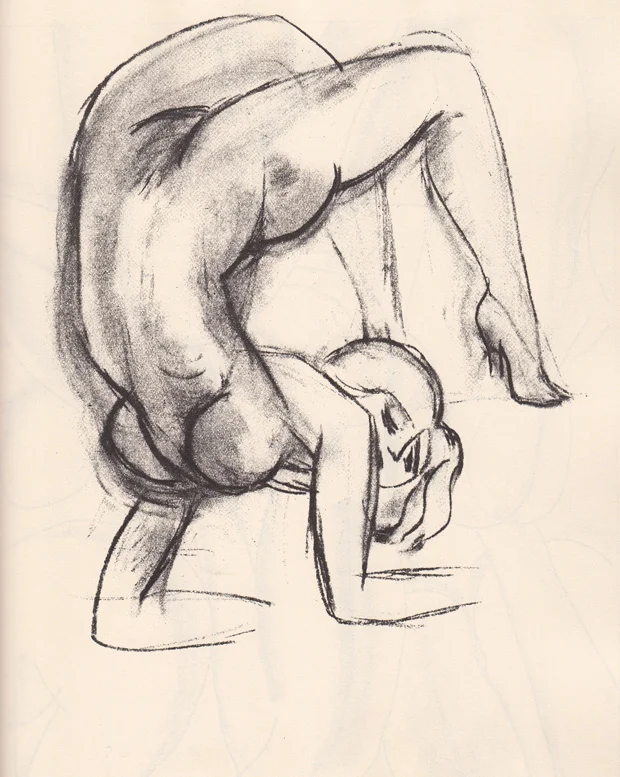
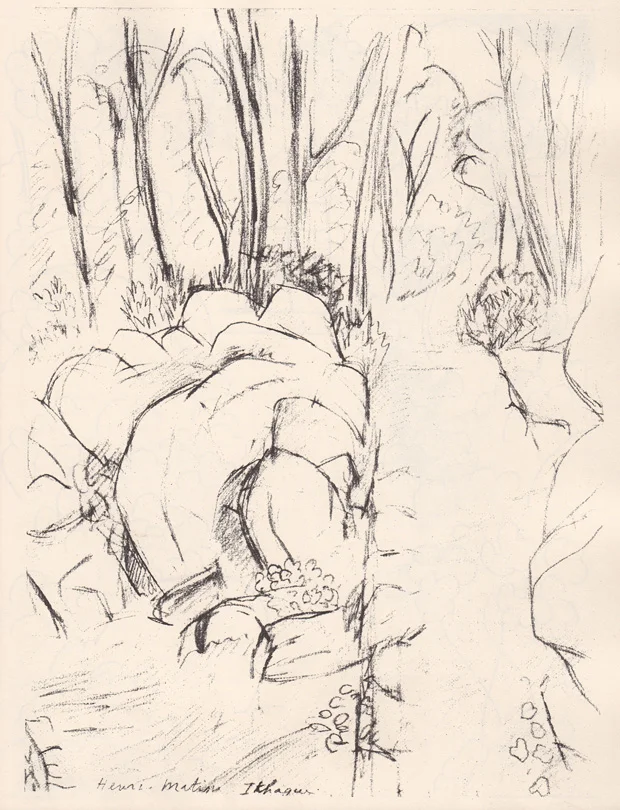
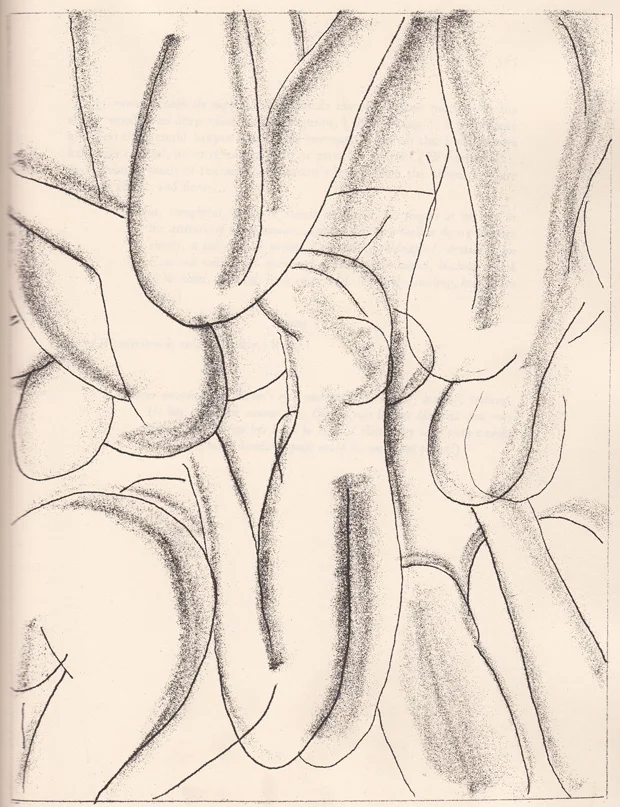
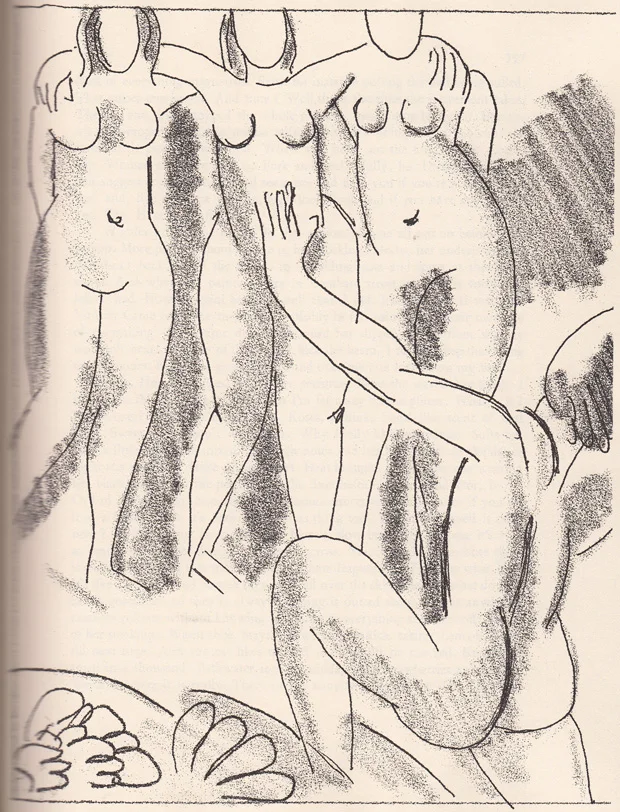
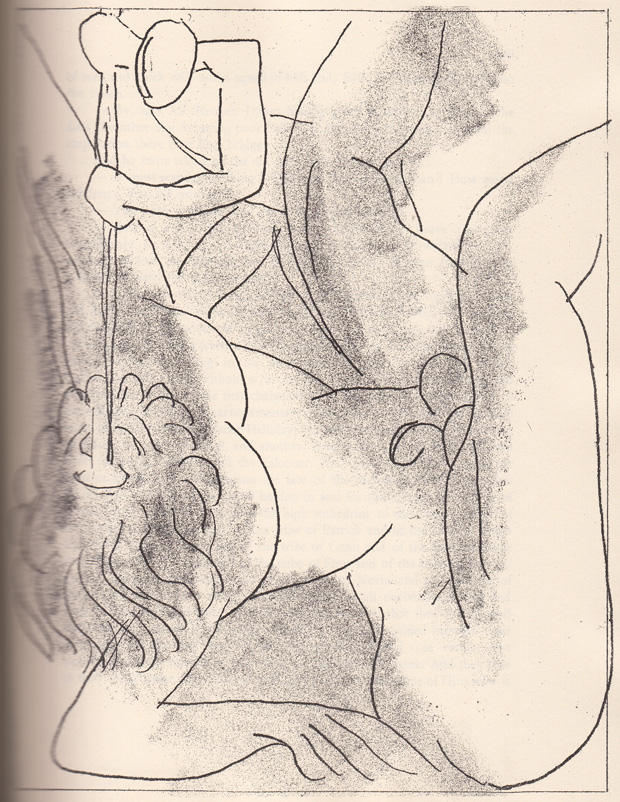
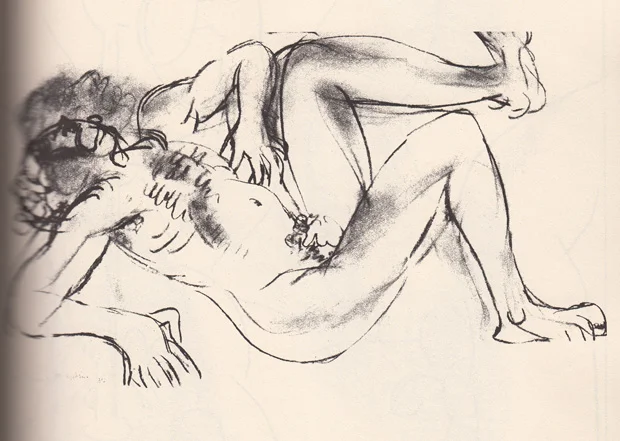
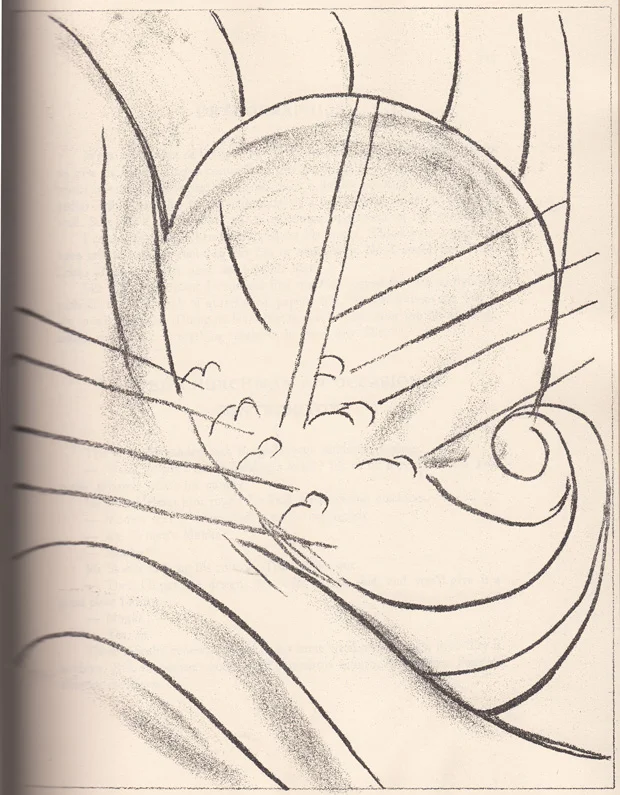
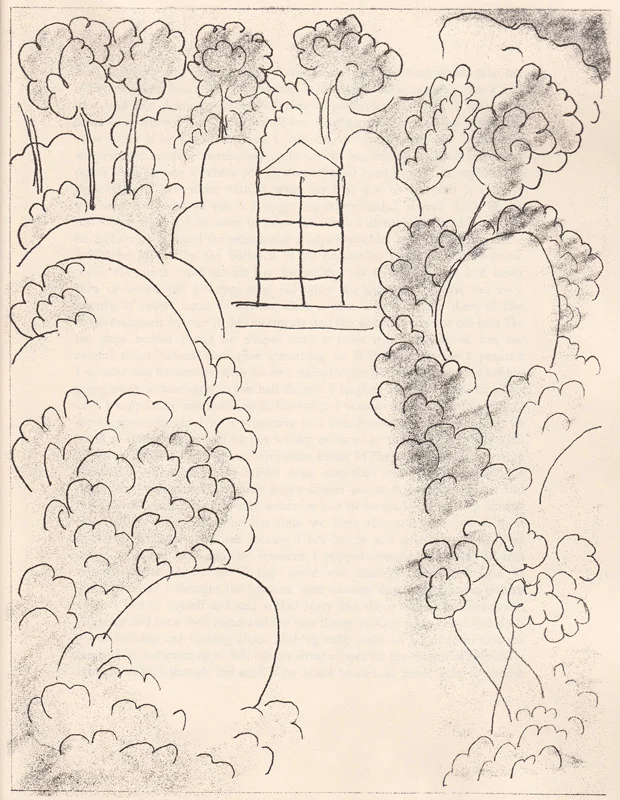
It's still possible to buy a edition with the signatures of both of them, that is, if you have 30 thousand dollars to spend on a book. On Ebay it's also possible to find more affordable replicas, even though still above the usual prices of the average books. The good thing about books it that to know the book you don't need any fancy edition, any copy work just fine, be it digital or pocket.
Would it have been better it Matisse actually read the book? The illustrations lose their value because of this? To literature Roland Barthes claims that the book should be dissociated from the author and Anne-Marie Willis also defend some similar ideas while thinking Design. Two must-read articles that can be used as a first step to answer these questions.