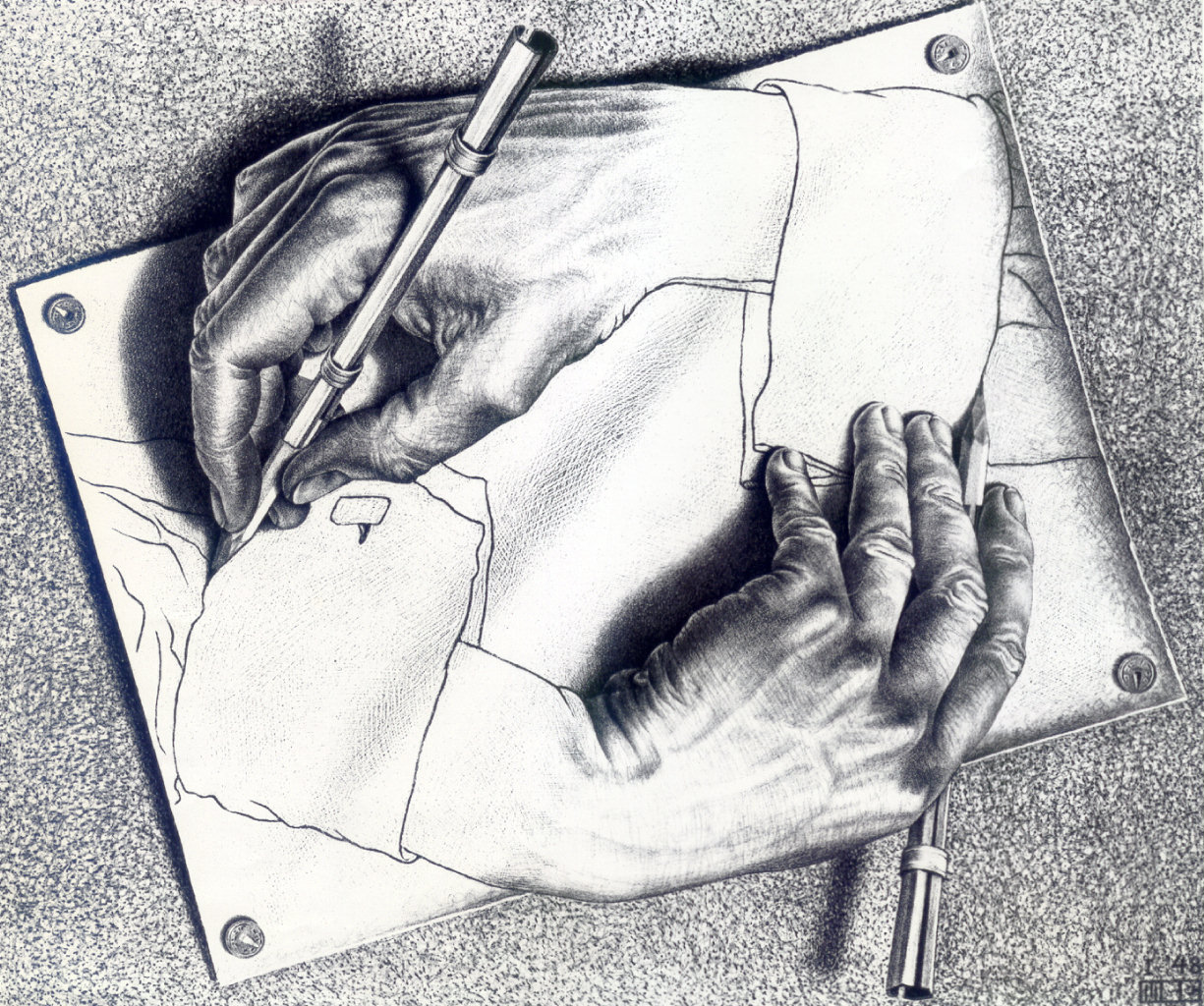
Being and Design: Anne-Marie Willis on the hermeneutics of our creations
"‘Design designs’ also includes the designing effects of that which designers design."- Anne-Marie Willis
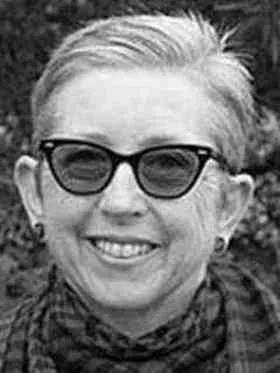
Anne Marie-Willis
With the development of virtual reality technologies the world is opening itself to new creative possibilities beyond the idea of a virtual environment where access is mediated by computers and gadgets, because now we can go inside these environments as much as we can connect and simulate an alternative reality. However, what's the effects of living, even temporarily, in these artificial worlds? More important, what's the artificial? And how new technologies can affect us? There's already a lot of thinkers working on those questions but here I'm going to introduce an important area that has a broader approach on design, the Ontological Design.
The article “Ontological designing – laying the ground” published at the Design Philosophy Papers on June of 2006 gives us an idea of what's this line of thought. Written by Anne-Marie Willis —— who has many published books and scientific articles that range from visual culture and architecture to design and cultural theory – the article is basically an introduction to the concept.
Willis begins by explaining what's she talking about when she says Ontological Designing:
“To begin simply, ontological designing is a way of characterising the relation between human beings and lifeworlds.”
But she isn't meaning only that “we are conditioned by our environment’ or ‘we are shaped by the cultures into which we are born”, because:
“Ontological designing, then, is (i) a hermeneutics of design concerned with the nature and of the agency of design… (ii) an argument for particular ways of going about design activity, especially in the contemporary context of unsustainability.”
As a theory, she writes, the Ontological Design postulates:
“That design is something far more pervasive and profound than is generally recognized by designers, cultural theorists, philosophers or lay persons
That designing is fundamental to being human – we design, that is to say, we deliberate, plan and scheme in ways which prefigure our actions and makings – in turn we are designed by our designing and by that which we have designed (i.e., through our interactions with the structural and material specificities of our environments);
That this adds up to a double movement – we design our world, while our world acts back on us and designs us ”
She explains this double movement using the example of language in a proccess by which we understand the whole by it's parts and the parts by the whole, therefore, a hermeneutic circle:
“It is useful to think of the hermeneutic circle in three moves, taking the example of language. While we cannot think outside of language, this does not mean we are totally programmed: (i) we are born into and come to be human in language; (ii) we appropriate it, modify it, perhaps put words together in ways that they have not been combined before, encounter new situations which require new words; (iii) thus in appropriating language we also change it, and language-as-changed in turn acts back on us as language users.”
The hermeneutic circle implies a designing both of the being and of that which was designed. Willis also indicates regions where it can occur:
“Ontological designing as a condition of being could be seen as inhabiting three continuous inter-connected regions: 1. as it applies to conventionally considered designed things — e.g., buildings, manufactured objects 2. extending on from this there is the ontological designing of material and immaterial infrastructure, of e.g. management systems, of information technologies, of communication systems, and then there is, 3. the ontological designing of systems of thought, of habits of mind.”
To Willis the most clear examples of Ontological Design are connected to equipments and technology and the study must associate both the material and the imaterial aspects of the design:
“However, this carries risks, particularly once the material character of equipment is left behind to consider the ontological designing of the non-material, for example, of systems of organisation or methods of thinking… The risk is a loss of specificity in which ontological designing could be seen as equivalent to ‘environmental determinism’, carrying no more agency than ‘influence’… Yet to make a material/non-material distinction for ontological designing is partly to miss the point — because in most situations both are present — thus the designing effects of an administrative system are inseparable from its materialised environment of IT infrastructure, forms, filing cabinets, work stations and work hierarchies, flows of paperwork and electronic information.”
Maybe the key point of her paper, Willis discuss the relevance of the designer and of the stages of the hermeneutic circle:
“‘Design designs’ also includes the designing effects of that which designers design (objects, spaces, systems, infrastructures). The significant point here is that all these designings are of the same order. That is, no distinction is being made about the nature or relative significance of determinations; neither object, process nor agent is granted primacy. Traditionally agency has been posited with the designer — the assumption being that the designer’s intentions are embedded within the designed object which then causes the object’s user to do things in certain ways. But the problem here is a flawed model of causality based on a linear temporality, in which it is assumed things can be traced back to origins further back in time — there is no particular need for this assumption when attempting to explain phenomenologically the designing that is going on in a particular situation. The fact that teams of designers worked on the configuration of the screen and keyboard I am now using cannot really help me to understand that my using this equipment is at the same time this equipment designing what I am doing. Once the comfortable fiction of an originary human agent evaporates, the inscriptive power of the designed is revealed and stands naked.”
In the article it's also possible to understand how Anne-Marie Willis bases her work on Heidegger, especially when it comes to the hermeneutic circle. This is an essential reading in this moment of changes in the virtual and physical spaces, changes that can affect us much more than may seem at a first glance. The power of such broad changes can also be seen in the critic article of James Joyce about the Renaissance.
Complement this reading with a mind bending vídeo by Jason Silva on the subject of Ontological Design:

Renaissance and the birth of the modern man, according to James Joyce
“Indeed, one might say of modern man that he has an epidermis rather than a soul.” - James Joyce
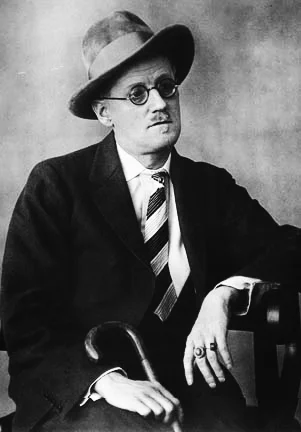
James Joyce is known and imortalized due to his works of fiction, specially for Ulysses, a book so debated it's said that people talk about it more than they read it. Beyond fiction Joyce was an critic and essayist. In his wanderings over the world he wrote in many languages.
On april of 1912, two years before officially publishing his first title, Dubliners, Joyce wrote “The universal literary influence of the Renaissance”. This essay, originally written in italian, show his sharp and somewhat conservative view on what was the Renaissance and how it's influence extends to the modern man.
Joyce begins by questioning the idea that humanity only achieved maturiy after the Renaissance:
“I agree that this social system can boast of great mechanical conquests, of great and beneficial discoveries ... But in the midst of this complex and many-sized civilization the human mind, almost terrorized by material greatness, becomes lost, denies itself and grows weaker.”
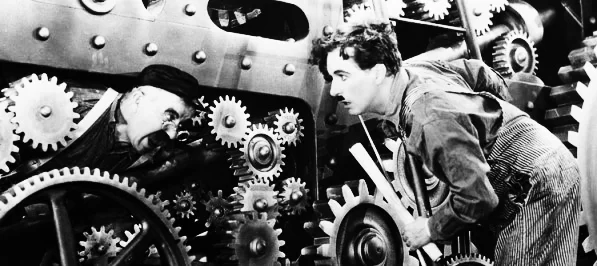
Movie "Modern Times", 1936.
This change, according to a almost nostalgic Joyce, happened as a rebellion against the scholastic absolutism and against the aristotelic philosophical system which had the christian religion as it's peak. In this rebellion:
“[The human spirit] abandoned it's peace, it's true abode because it had tired of it, just as God, tired (if you will permit a rather irreverent term) of his perfections, called forth the creation out of nothing, just as woman, tired of the peace and quiet that were wasting away her heart, turned her gaze towards the life of temptation.”
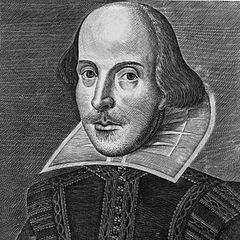
Shakespeare. A Joyce's favorite.
However, Joyce never cease to aknowledge the value of the literary production of that time:
“It would be easy to fill these pages with the names of the great writers who the wave of the Renaissance lifted to the clouds (or thereabouts), easy to praise the greatness of their works which, in any case, no one is calling into doubt, and to end with a ritual prayer: and it might be an act of cowardice since reciting a litany is not philosophical inquiry. The crux of the question lies elsewhere.”
Dismissing the easy way out he develops the core of his arguments. The crucial changing of the period was a changing of the mind that “placed the journalist in the monk's chair”:
“[the renaissance] has deposed a sharp, limited and formal mind in order to hand the sceptre over to a mentality that is facile and wide-ranging... a mentality that is restless and somewhat amorphous.”
The same power and impetus that left behind the formalism also had important effects over the modern mentality and the extrems it would reach:
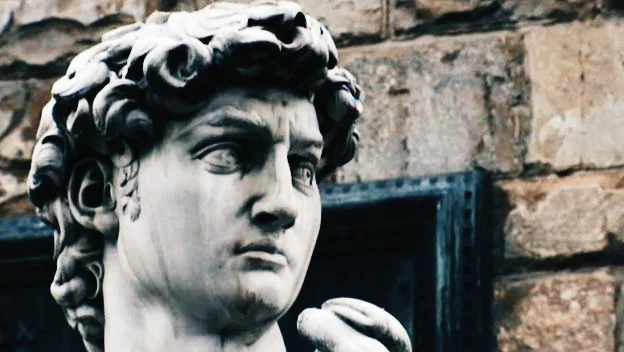
Michelangelo's David.
“Untiring creative power, heated, strong passion, the intense desire to feel, unfettered and prolix curiosity have, after three centuries, degenerated into frenetic sensationalism. Indeed, one might say of modern man that he has an epidermis rather than a soul.”
With a mixture of pessimism and comprehension Joyce moves foward evaluating the origin of the Renaissance and the final results of it's existence:
“Renaissance came about when art was dying of formal perfection, and thought was losing itself in vain subtleties.
[...]
The Renaissance arrived like a hurricane in the midst of all this stagnation, and throughout Europe a tumult of voices arose, and, although the singer no longer exist, their works may be heard just as the shells of the sea in which, if we put them up to our ear, we can hear the voice of sea reverberating.
Listening to it, it sounds like a lament: or at least, so our spirit interprets it. Strange indeed! All modern conquest, of the air, the land, the sea, disease, ignorance, melts, so to speak, in the crucible of the mind and is transformed into a little drop of water, into a tear. If the Renaissance did nothing else, it did much in creating whithin ourselves and our art a sense of pity for every being that lives and hopes and dies and deludes itself. In this at least we excel the ancients: in this the popular journalist is greater than the theologian.
James Joyce”
It's impossible to ignore the body of work that James Joyce left to us assuming his role, being a modern man, as a descendant of the phenomenon he diagnosticated. “The universal literary influence of the Renaissance” is an intelligent essay that has both feet on the ground all the time. It's a must read for any fan or academic interested on his works because it also reflects the mind of the writer.