
Deleuze and Guattari: the subversive minor literature of Franz Kafka
"Kafka emphatically declares that a minor literature is much more able to work over its material.” - Deleuze and Guattari
The “Kafka: Toward a minor literature” was written in conjunct by Félix Guattari and Gilles Deleuze. French, they had already published the “Anti-Oedipus” when this study about the works of Kafka was published in 1975. Both of them dedicated themselves to philosophy, psychology and studies about art and politics.
In this second collaborative work they propose a new approach to Kafka’s works. This approach delineates a writing that contrasts with the major literature: that of the literary canon and habited by great masters. Deleuze and Guattari introduces us to what they call “minor literature”, a revolutionary way of writing that, as Kafka foresaw, puts this kind of creations beyond the realm of the classic works and the traditional literary criticism.
Kafka was born in a German speaking family while living in Prague. They were Jewish and there was an almost hostile relation between those who spoke German and those who spoke Czech. He spoke both but considered the German his mother tongue. It was in this environment where culture, territory and the politics collide that Kafka created his works. And it’s from these conflicts that Deleuze and Guattari draw their discussion about the minor literature as related to Kafka:
“A minor literature doesn't come from a minor language; it is rather that which a minority constructs within a major language. But the first characteristic of minor literature in any case is that in it language is affected with a high coefficient of deterritorialization. In this sense, Kafka marks the impasse that bars access to writing for the Jews of Prague and turns their literature into something impossible—the impossibility of not writing, the impossibility of writing in German, the impossibility of writing otherwise.”
“The three characteristics of minor literature are the deterritorialization of language, the connection of the individual to a political immediacy, and the collective assemblage of enunciation. We might as well say that minor no longer designates specific literatures but the revolutionary conditions for every literature within the heart of what is called great (or established) literature.”
The minor literature positions itself beyond the formal criticism; it’s not a fix object in a category, but an expression machine:
“Only in this way can literature really become a collective machine of expression and really be able to treat and develop its contents. Kafka emphatically declares that a minor literature is much more able to work over its material.”
Taking Kafka’s German as an example, they defend that there are two ways of creating this machine:
“But there are only two ways to do this. One way is to artificially enrich this German, to swell it up through all the resources of symbolism, of oneirism, of esoteric sense, of a hidden signifier. But this attempt implies a desperate attempt at symbolic reterritorialization, based in archetypes, Kabbala, and alchemy, that accentuates its break from the people and will find its political result only in Zionism and such things as the "dream of Zion." Kafka will quickly choose the other way, or, rather, he will invent another way. He will opt for the German language of Prague as it is and in its very poverty. Go always farther in the direction of deterritorialization, to the point of sobriety. Since the language is arid, make it vibrate with a new intensity.”
Guattari and Deleuze see in James Joyce and Samuel Beckett the example of writers whose language allowed them to write in the same manner as Franz Kafka did with his German:
“That is the glory of this sort of minor literature—to be the revolutionary force for all literature. The utilization of English and of every language in Joyce. The utilization of English and French in Beckett. But the former never stops operating by exhilaration and overdetermination and brings about all sorts of worldwide reterritorializations. The other proceeds by dryness and sobriety, a willed poverty, pushing deterritorialization to such an extreme that nothing remains but intensities.”
However, you don’t have to write in German as a Czech nor in English as an Irish. Or, and this is my contribution, to write in Portuguese as a Brazilian to create the minor literature, your own machine. They believe it is possible to write minor literature even if you had the misfortune (and here it’s their adjective) of being born under a great language:
“What interests him even more is the possibility of making of his own language-assuming that it is unique, that it is a major language or has been—a minor utilization. To be a sort of stranger within his own language; this is the situation of Kafka's Great Swimmer.
To make use of the polylingualism of one's own language, to make a minor or intensive use of it, to oppose the oppressed quality of this language to its oppressive quality, to find points of nonculture or underdevelopment, linguistic Third World zones by which a language can escape, an animal enters into things, an assemblage comes into play.”
In this book Guattari and Deleuze invite you to subversion, but draws attention to the responsibility of the writer. To reproduce the status quo, even in unconscious ways, is not something the writer can abdicate after indulging in the conservative side of the language. To see literature beyond of what’s said is to evaluate how things are said, to bend the language or to deprive it of it’s familiarity, and those are choices that have to be considered by the writer.
Complement this Reading notes with the article about the Death of the Author as seen by Roland Barthes, the similarity of methods and theories between Barthes, Deleuze and Guattari is essential to understand the place of the critics and the relation between writer and literature.
Bibliography: DELEUZE, Gilles; GUATTARI, Félix – Kafka: Toward a minor literature. London: University of Minnesota Press, 2003. ISBN 0-8166-1514-4. Translator of the quotations: Dana Polan
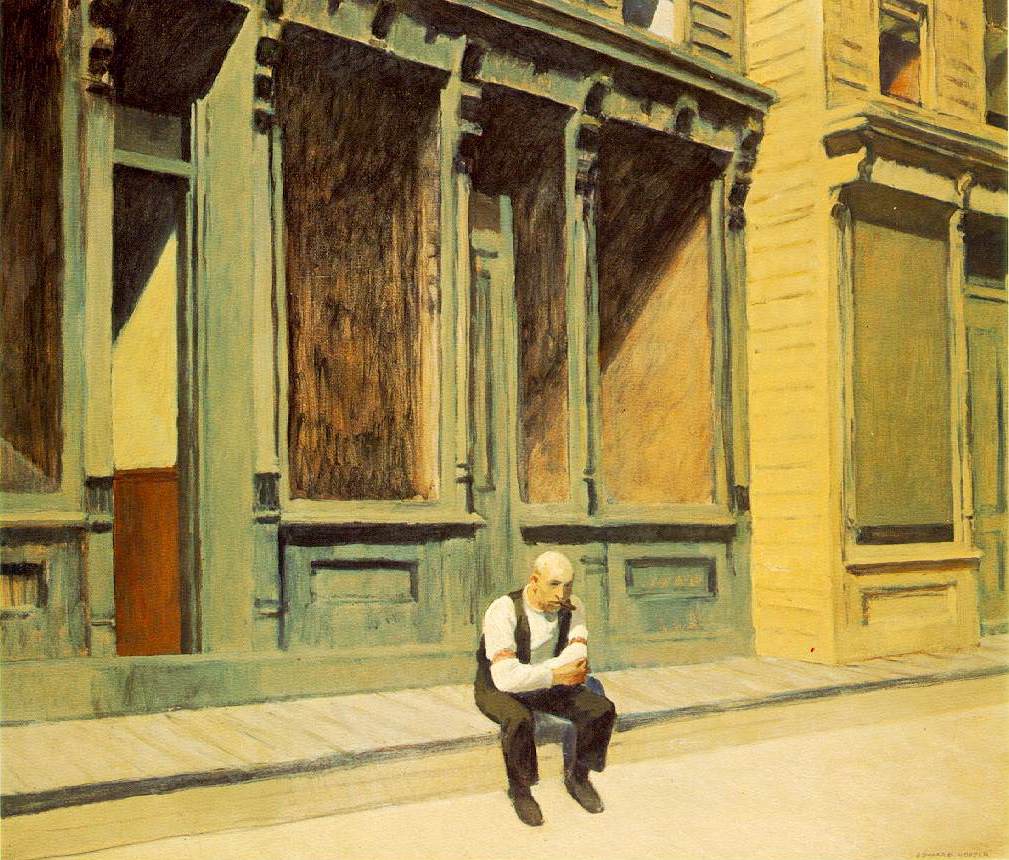
Solitude, pacifism and religious feeling, as seen by Albert Einstein.
“The fairest thing we can experience is the mysterious. It is the fundamental emotion which stands at the cradle of true art and true science.” - Albert Einstein
Universally known by his discoveries, today Albert Einstein is an icon both of popular and scientific cultures. Aware that his singular position as academic granted him influence beyond Physics, Einstein defended some of his political worries and humanistic aspirations. In his letters and essays we find a person worried about the future of humanity and in conflict with problems that also affected him personally. The militarism, the fanatic nationalism and the anti-semitism are always targets of his critics.
Originally published in 1931, his essay “The world as I see it” shows how, even before the rise of the Nazi regime and his unconfortable relation with the nuclear race, he already had a well formed political and humanist line of thought. Conscious of his limitations and sober despite what the world saw in him, Einstein writes:
“Each of us is here for a brief sojourn; for what purpose he knows not, though he sometimes thinks he feels it.”
“Schopenhauer’s saying, that “a man can do as he will, but no will as he will,” has been na inspiration to me since my youth up, and a continual consolation and unfailing well-spring of patience in the face of the hardships of life, my own and others’.”
By praising empathy not only as a objective of his life, but also as a something to be pursued, Einstein show his worry in fighting against the brutality of the world:
“My passionate sense of social justice and social responsibility has always contrasted oddly with my pronounced freedom from the need for direct contact with other human beings and human communities. I gang my won gait and have never belonged to my country, my home, my friends, or even my immediate family, with my whole heart; in the face of all these ties I have never lost an obstinate sense of detachment, of the need for solitude – a feeling which increases with the years.”
At the same time his efforts to connect with other people demanded great effort he also noticed that the incomprehension and the struggle was reciprocal. To him, this reticence in relation to how people saw him was extended to his own ideas, even less understood in his time than today:
“It is an irony of fate that I myself have been the recipient of excessive admiration and respect from my fellows through no fault, and no merit, of my own. The cause of this may well be the desire, unattainable for many, to understand the one or two ideas to which I have with my feeble powers attained through ceaseless struggle.”
Militant pacifist, the militarism is the only subject that makes him go beoynd the critic, showing even contempt for the armed forces. These and other of his more progressive reivindications granted him the label of left militant by the US government, reason for the serious precautions to keep Einstein out of the Manhattan Project:
"This topic brings me to that worst outcrop of the herd nature, the military system, which I abhor.
[…]
This plague-spot of civilization ought to be abolished with all possible speed. Heroism by order, senseless violence, and all the pestilent nonsense that goes by the name of patriotism – how I hate them!"
Despite being upset about the distance between him and other people and his insatisfaction with some of the pillars of the society, he's still optimistic enough to say:
“And yet so high, in spite of everything, is my opinion of the human race that I believe this bogey would have disappeared long ago, had the sound sense of the nations not been systematically corrupted by commercial and political interests acting through schools and the Press.”
The organized religion and the bling theism don't go unscathed under his critic eye. He put himself closer to common poeple when talking about his fears and doubts and admiting his religious feeling about the inescrutable nature, however, his distance is clear when this feeling leads to conceptions incompatible with his ideas:
“The fairest thing we can experience is the mysterious. It is the fundamental emotion which stands at the cradle of true art and true science.
[…]
A knowledge of the existence of something we cannot penetrate, of the manifestations of the profoundest reason and the most radiant beauty, which are only accessible to our reason in their most elementary forms – it is this knowledge and this emotion that constitute the truly religious attitude; in this sense, and in this alone, I am a deeply religious man. I cannot conceive of a God who rewards and punishes his creatures, or has a will of the type of which we are conscious in ourselves. An individual who should survive his physical death is also beyond my comprehension, nor do I wish it otherwise; such notions are for the fears or absurd egoism of feeble souls. Enough for me the mystery of the eternity of life, and the inkling of the marvelous structure of reality, together with the single-hearted endeavor to comprehend a portion, be it never so tiny, of the reason that manifests itself in nature.”
Short and rich, this essay is important because it shows us how things can walk slowly, since being pacifist, defend the ones who need and criticize religious absurdities are lines of thought still regarded as progressist. But from Einstein we can learn that any possibility, be it big like the ones he had or small like the ones from our daily lives, have to be used to replicate the ideas we need.
Einstein wasn't the only one to point the brutality of his time, Franciso de Goya also witnessed how the hateful military institutions are one of the greatest obstacles to civilization. Thinking about culture it's worth to take a look at Joyce's view of the cultural formation of the modern man.
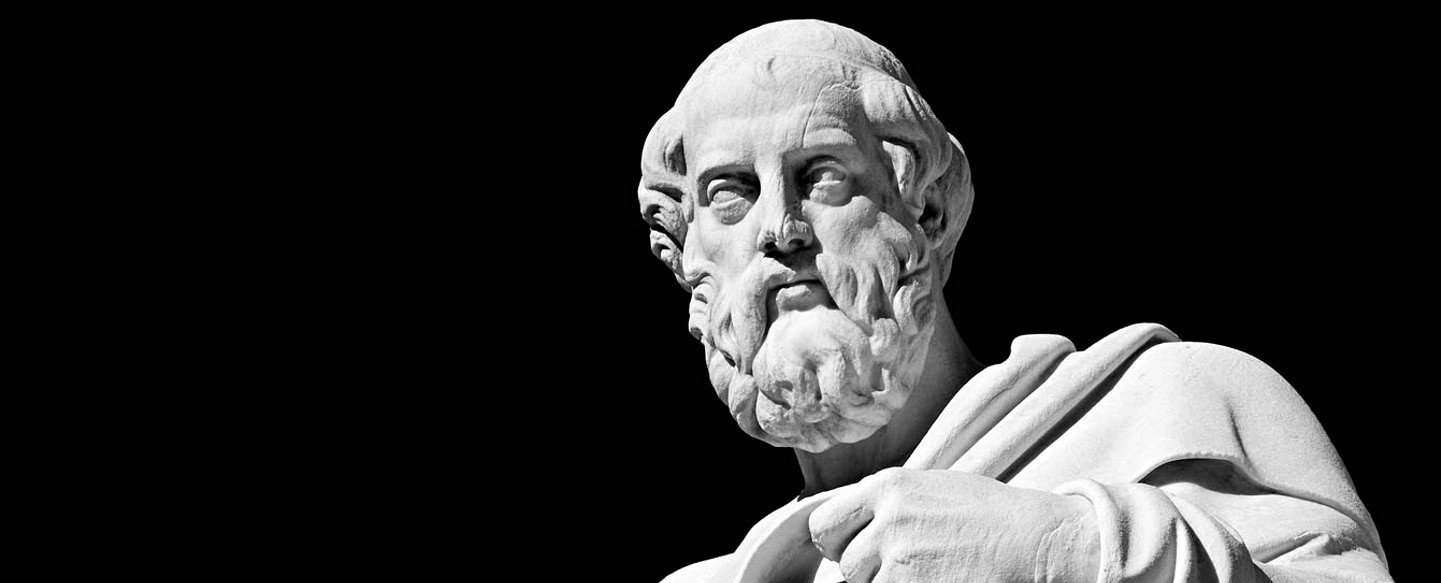
Why to expell the poets? The art in Plato's Republic
“...if I am not mistaken, we shall have to say that about men poets and story-tellers are guilty of making the gravest misstatements when they tell us that wicked men are often happy, and the good miserable;” - Plato
Plato's “Republic” is one of those fundamental books of the Western world that managed to have some popular parts. In this book, written around 380 B.C., the most famous piece is the The Allegory of the Cave, but here we're going to explore a less known but also popular part of the socratic dialogues: The expulsion of the poets from the city.
The book is narrated by Socrates in first person. Plato was his pupil but doesn't appear on the narrative, the Republic is divided in 12 books with dialogues debating a lot of themes necessary to lay the ground for a good city.
When it comes to the expulsion of the poets, basically what's in discussion is: what's the appropriate level of autonomy for the art and the poet's speeches? Art should be free from moral, ethical and political restrictions?
In the first book Socrates listen from other people some definitions of Justice, but he ends up questioning all of them and gets to the conclusion that it's good for you to be just and bad to be unjust. Despite that he still don't have a satisfatory definition, as he admits to Thrasymachus.
Not convinced by Socrates arguments, in the second book the other friends keep using the arguments proposed by Thrasymachus. To him there are cases where being just can be a problem and being unjust can offer benefits. However, Socrates believes that they only agree with this because they are looking at city as whole not individually. Furthermore, the city he is proposing depends on a class of guardians to defend the laws and the justice. Then he goes discussing the importance of the education of these soldiers.
The debate gets to a point where they consider the content and the form through which the stories are told. As always, the focus is on the concepts of true and false, justice and injustice:
“Because, if I am not mistaken, we shall have to say that about men poets and story-tellers are guilty of making the gravest misstatements when they tell us that wicked men are often happy, and the good miserable; and that injustice is profitable when undetected, but that justice is a man's own loss and another's gain—these things we shall forbid them to utter, and command them to sing and say the opposite.”
Socrates goes back to the problem of justice, or better, the lack of a definitive concept at this moment in the dialogue:
“That such things are or are not to be said about men is a question which we cannot determine until we have discovered what justice is, and how naturally advantageous to the possessor, whether he seem to be just or not.”
Socrates tell Adeimantus that the poets always talk about facts, be they present, past or future. And these informations have to be transmited through simple exposition or imitation. These are the styles and he want to decide which of them is the most suited to the Republic:
“Then, Adeimantus, let me ask you whether our guardians ought to be imitators; or rather, has not this question been decided by the rule already laid down that one man can only do one thing well, and not many; and that if he attempt many, he will altogether fail of gaining much reputation in any?”
“Then the same person will hardly be able to play a serious part in life, and at the same time to be an imitator and imitate many other parts as well; for even when two species of imitation are nearly allied, the same persons cannot succeed in both, as, for example, the writers of tragedy and comedy—did you not just now call them imitations?”
Developing the idea that to imitate is to be influenced, Socrates says:
“Suppose, I answered, that a just and good man in the course of a narration comes on some saying or action of another good man,—I should imagine that he will like to personate him, and will not be ashamed of this sort of imitation: he will be most ready to play the part of the good man when he is acting firmly and wisely; in a less degree when he is overtaken by illness or love or drink, or has met with any other disaster. But when he comes to a character which is unworthy of him, he will not make a study of that; he will disdain such a person, and will assume his likeness, if at all, for a moment only when he is performing some good action; at other times he will be ashamed to play a part which he has never practised, nor will he like to fashion and frame himself after the baser models; he feels the employment of such an art, unless in jest, to be beneath him, and his mind revolts at it.”
But the infamous expulsion of the poets isn't necessarily hostile. The fact that the poets doesn't have a place in the Republic isn't related to the use of force or an excuse to violate the customs towards a guest:
“And therefore when any one of these pantomimic gentlemen, who are so clever that they can imitate anything, comes to us, and makes a proposal to exhibit himself and his poetry, we will fall down and worship him as a sweet and holy and wonderful being; but we must also inform him that in our State such as he are not permitted to exist; the law will not allow them. And so when we have anointed him with myrrh, and set a garland of wool upon his head, we shall send him away to another city.”
Socrates explains the kind of poets and orators are needed in the Republic:
“For we mean to employ for our souls' health the rougher and severer poet or story-teller, who will imitate the style of the virtuous only, and will follow those models which we prescribed at first when we began the education of our soldiers.”
It's hard to define where ends the narrator Socrates and begins the writer Plato, but this book is now beyond the question of authorship, being a essential reading to any intelectual enterprise. There's a lot of historical value, but also a atuality in many of these concepts that, despite the influence of time, still permeate our lives.
Other readings to complement these themes are the discussion about the Death of the Author by Roland Barthes and the views of James Joyce about the effects of the art produced in the Renaissance over the modern man.
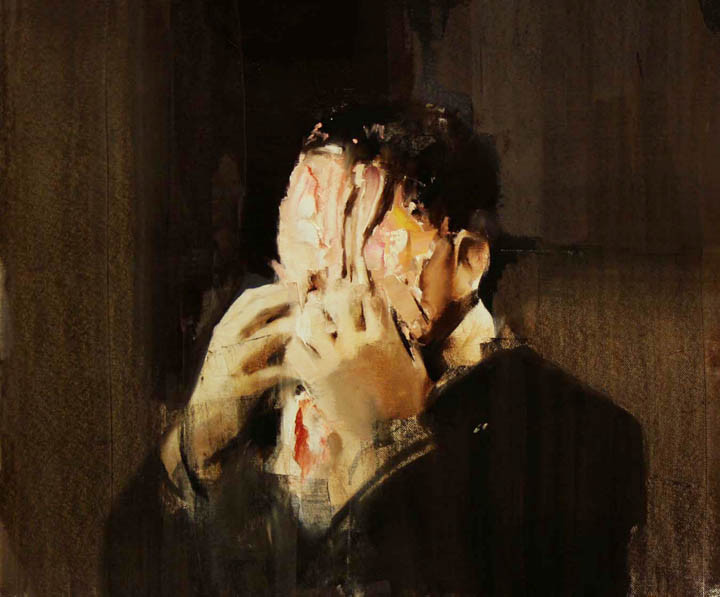
Modern literature and the death of the Author in Roland Barthes
“...literature is that neuter, that composite, that oblique into which every subject escapes, the trap where all identity is lost...” - Roland Barthes
It's common to see fans seeking explanations about movies and books on the authors, considering them the only reliable source of interpretation, but Anne-Marie Willis argues that the designer has no prevalence over his creation. And there's a great thinker foccused on literature who followed a somewhat similar line of thought. In 1968 Roland Barthes published “The death of the Author”, a instigating text about the relation of the Author, the Critics and of the Reader with the modern literature.
If both of them converge to a critic that undermines the importance of the creator, Barthes was more interested with literature and went beyond, showing that to question the image of the Author is also questioning the Critics. Barthes asserts that literature is independent, a body of symbols:
“All writing is itself this special voice, consisting of several indiscernible voices, and that literature is precisely the invention of this voice, to which we cannot assign a specific origin: literature is that neuter, that composite, that oblique into which every subject escapes, the trap where all identity is lost, beginning with the very identity of the body that writes.
Probably this has always been the case: once an action is recounted, for intransitive ends, and no longer in order to act directly upon reality — that is, finally external to any function but the very exercise of the symbol — this disjunction occurs, the voice loses its origin, the author enters his own death, writing begins.”
Stéphane Mallarmé was a french critic and poet to whom Barthes credits the pioneering in this concept of literature:
“In France, Mallarme was doubtless the first to see and foresee in its full extent the necessity of substituting language itself for the man who hitherto was supposed to own it; for Mallarme, as for us, it is language which speaks, not the author: to write is to reach, through a preexisting impersonality — never to be confused with the castrating objectivity of the realistic novelist — that point where language alone acts, “performs,” and not “oneself”: Mallarme’s entire poetics consists in suppressing the author for the sake of the writing (which is, as we shall see, to restore the status of the reader.)”
Against the conventional critic and questioning not only the place of the author but even the literary canon, Barthes goes on with the idea that a work is always dependent on the reader:
“The Author is supposed to feed the book — that is, he pre-exists it, thinks, suffers, lives for it; he maintains with his work the same relation of antecedence a father maintains with his child. Quite the contrary, the modern writer (scriptor) is born simultaneously with his text; he is in no way supplied with a being which precedes or transcends his writing, he is in no way the subject of which his book is the predicate; there is no other time than that of the utterance, and every text is eternally written here and now.
[...]
We know that a text does not consist of a line of words, releasing a single “theological” meaning (the “message” of the Author-God), but is a space of many dimensions, in which are wedded and contested various kinds of writing, no one of which is original: the text is a tissue of citations, resulting from the thousand sources of culture.”
Opposing the image of the Author and that of the writer, he exposes what he consider to be a multiple writing:
"Succeeding the Author, the writer no longer contains within himself passions, humors, sentiments, impressions, but that enormous dictionary, from which he derives a writing which can know no end or halt: life can only imitate the book, and the book itself is only a tissue of signs, a lost, infinitely remote imitation.
[…]
In a multiple writing, indeed, everything is to be distinguished, but nothing deciphered; structure can be followed, “threaded” (like a stocking that has run) in all its recurrences and all its stages, but there is no underlying ground; the space of the writing is to be traversed, not penetrated: writing ceaselessly posits meaning but always in order to evaporate it: it proceeds to a systematic exemption of meaning. Thus literature (it would be better, henceforth, to say writing), by refusing to assign to the text (and to the world as text) a “secret:’ that is, an ultimate meaning, liberates an activity which we might call counter-theological, properly revolutionary, for to refuse to arrest meaning is finally to refuse God and his hypostases, reason, science, the law."
Barthes calls out the negligence with the figure of the reader and contests the idea that it depends on the Author:
"In this way is revealed the whole being of writing: a text consists of multiple writings, issuing from several cultures and entering into dialogue with each other, into parody, into contestation; but there is one place where this multiplicity is collected, united, and this place is not the author, as we have hitherto said it was, but the reader: the reader is the very space in which are inscribed, without any being lost, all the citations a writing consists of; the unity of a text is not in its origin, it is in its destination; but this destination can no longer be personal: the reader is a man without history, without biography, without psychology; he is only that someone who holds gathered into a single field all the paths of which the text is constituted.
[…]
We know that to restore to writing its future, we must reverse its myth: the birth of the reader must be ransomed by the death of the Author."
Subversive, “The death of the Author” is the kind of idea that still needs to be debated. And maybe this is the definition of any relevant thought. In 1968 Barthes made an objection that no reader nor writer should ignore, but that's still less popular than it should, at least out of the academic circles.