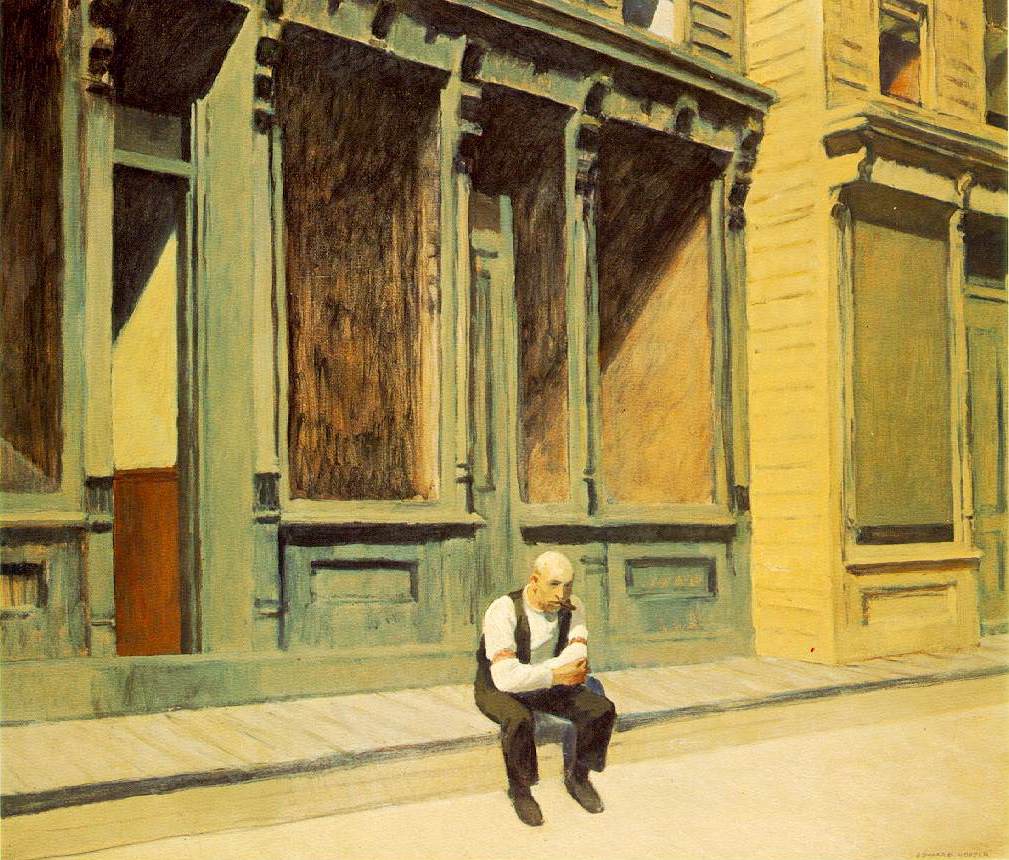
Solitude, pacifism and religious feeling, as seen by Albert Einstein.
“The fairest thing we can experience is the mysterious. It is the fundamental emotion which stands at the cradle of true art and true science.” - Albert Einstein
Universally known by his discoveries, today Albert Einstein is an icon both of popular and scientific cultures. Aware that his singular position as academic granted him influence beyond Physics, Einstein defended some of his political worries and humanistic aspirations. In his letters and essays we find a person worried about the future of humanity and in conflict with problems that also affected him personally. The militarism, the fanatic nationalism and the anti-semitism are always targets of his critics.
Originally published in 1931, his essay “The world as I see it” shows how, even before the rise of the Nazi regime and his unconfortable relation with the nuclear race, he already had a well formed political and humanist line of thought. Conscious of his limitations and sober despite what the world saw in him, Einstein writes:
“Each of us is here for a brief sojourn; for what purpose he knows not, though he sometimes thinks he feels it.”
“Schopenhauer’s saying, that “a man can do as he will, but no will as he will,” has been na inspiration to me since my youth up, and a continual consolation and unfailing well-spring of patience in the face of the hardships of life, my own and others’.”
By praising empathy not only as a objective of his life, but also as a something to be pursued, Einstein show his worry in fighting against the brutality of the world:
“My passionate sense of social justice and social responsibility has always contrasted oddly with my pronounced freedom from the need for direct contact with other human beings and human communities. I gang my won gait and have never belonged to my country, my home, my friends, or even my immediate family, with my whole heart; in the face of all these ties I have never lost an obstinate sense of detachment, of the need for solitude – a feeling which increases with the years.”
At the same time his efforts to connect with other people demanded great effort he also noticed that the incomprehension and the struggle was reciprocal. To him, this reticence in relation to how people saw him was extended to his own ideas, even less understood in his time than today:
“It is an irony of fate that I myself have been the recipient of excessive admiration and respect from my fellows through no fault, and no merit, of my own. The cause of this may well be the desire, unattainable for many, to understand the one or two ideas to which I have with my feeble powers attained through ceaseless struggle.”
Militant pacifist, the militarism is the only subject that makes him go beoynd the critic, showing even contempt for the armed forces. These and other of his more progressive reivindications granted him the label of left militant by the US government, reason for the serious precautions to keep Einstein out of the Manhattan Project:
"This topic brings me to that worst outcrop of the herd nature, the military system, which I abhor.
[…]
This plague-spot of civilization ought to be abolished with all possible speed. Heroism by order, senseless violence, and all the pestilent nonsense that goes by the name of patriotism – how I hate them!"
Despite being upset about the distance between him and other people and his insatisfaction with some of the pillars of the society, he's still optimistic enough to say:
“And yet so high, in spite of everything, is my opinion of the human race that I believe this bogey would have disappeared long ago, had the sound sense of the nations not been systematically corrupted by commercial and political interests acting through schools and the Press.”
The organized religion and the bling theism don't go unscathed under his critic eye. He put himself closer to common poeple when talking about his fears and doubts and admiting his religious feeling about the inescrutable nature, however, his distance is clear when this feeling leads to conceptions incompatible with his ideas:
“The fairest thing we can experience is the mysterious. It is the fundamental emotion which stands at the cradle of true art and true science.
[…]
A knowledge of the existence of something we cannot penetrate, of the manifestations of the profoundest reason and the most radiant beauty, which are only accessible to our reason in their most elementary forms – it is this knowledge and this emotion that constitute the truly religious attitude; in this sense, and in this alone, I am a deeply religious man. I cannot conceive of a God who rewards and punishes his creatures, or has a will of the type of which we are conscious in ourselves. An individual who should survive his physical death is also beyond my comprehension, nor do I wish it otherwise; such notions are for the fears or absurd egoism of feeble souls. Enough for me the mystery of the eternity of life, and the inkling of the marvelous structure of reality, together with the single-hearted endeavor to comprehend a portion, be it never so tiny, of the reason that manifests itself in nature.”
Short and rich, this essay is important because it shows us how things can walk slowly, since being pacifist, defend the ones who need and criticize religious absurdities are lines of thought still regarded as progressist. But from Einstein we can learn that any possibility, be it big like the ones he had or small like the ones from our daily lives, have to be used to replicate the ideas we need.
Einstein wasn't the only one to point the brutality of his time, Franciso de Goya also witnessed how the hateful military institutions are one of the greatest obstacles to civilization. Thinking about culture it's worth to take a look at Joyce's view of the cultural formation of the modern man.
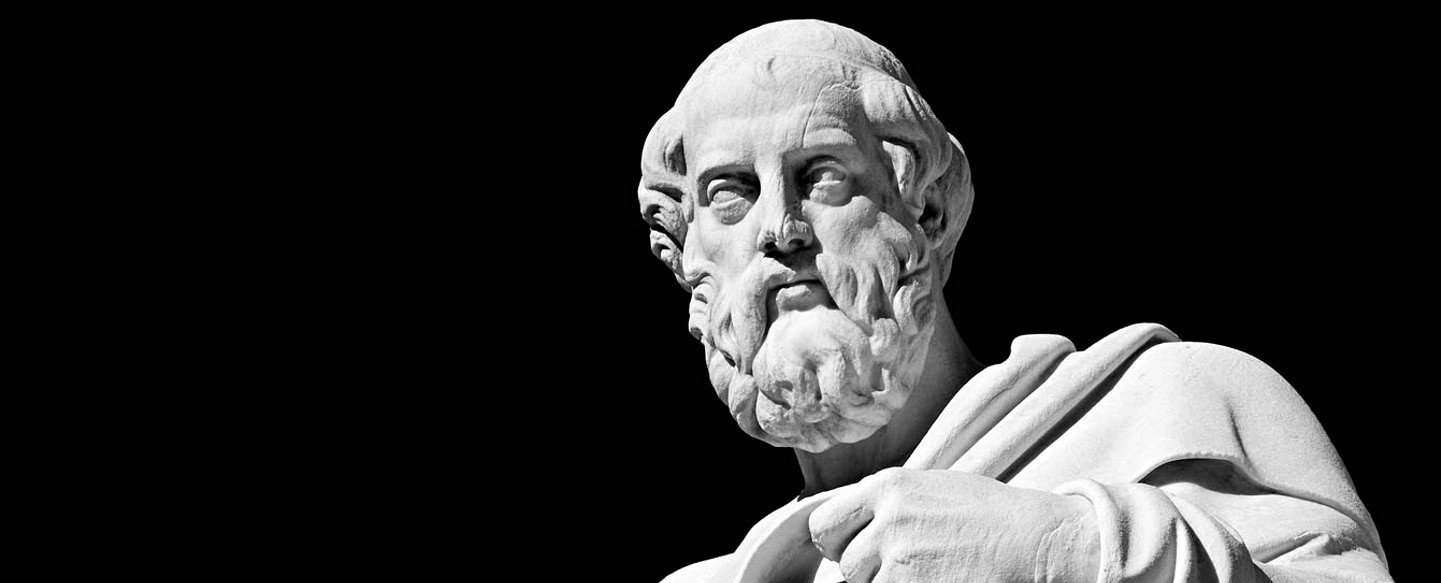
Why to expell the poets? The art in Plato's Republic
“...if I am not mistaken, we shall have to say that about men poets and story-tellers are guilty of making the gravest misstatements when they tell us that wicked men are often happy, and the good miserable;” - Plato
Plato's “Republic” is one of those fundamental books of the Western world that managed to have some popular parts. In this book, written around 380 B.C., the most famous piece is the The Allegory of the Cave, but here we're going to explore a less known but also popular part of the socratic dialogues: The expulsion of the poets from the city.
The book is narrated by Socrates in first person. Plato was his pupil but doesn't appear on the narrative, the Republic is divided in 12 books with dialogues debating a lot of themes necessary to lay the ground for a good city.
When it comes to the expulsion of the poets, basically what's in discussion is: what's the appropriate level of autonomy for the art and the poet's speeches? Art should be free from moral, ethical and political restrictions?
In the first book Socrates listen from other people some definitions of Justice, but he ends up questioning all of them and gets to the conclusion that it's good for you to be just and bad to be unjust. Despite that he still don't have a satisfatory definition, as he admits to Thrasymachus.
Not convinced by Socrates arguments, in the second book the other friends keep using the arguments proposed by Thrasymachus. To him there are cases where being just can be a problem and being unjust can offer benefits. However, Socrates believes that they only agree with this because they are looking at city as whole not individually. Furthermore, the city he is proposing depends on a class of guardians to defend the laws and the justice. Then he goes discussing the importance of the education of these soldiers.
The debate gets to a point where they consider the content and the form through which the stories are told. As always, the focus is on the concepts of true and false, justice and injustice:
“Because, if I am not mistaken, we shall have to say that about men poets and story-tellers are guilty of making the gravest misstatements when they tell us that wicked men are often happy, and the good miserable; and that injustice is profitable when undetected, but that justice is a man's own loss and another's gain—these things we shall forbid them to utter, and command them to sing and say the opposite.”
Socrates goes back to the problem of justice, or better, the lack of a definitive concept at this moment in the dialogue:
“That such things are or are not to be said about men is a question which we cannot determine until we have discovered what justice is, and how naturally advantageous to the possessor, whether he seem to be just or not.”
Socrates tell Adeimantus that the poets always talk about facts, be they present, past or future. And these informations have to be transmited through simple exposition or imitation. These are the styles and he want to decide which of them is the most suited to the Republic:
“Then, Adeimantus, let me ask you whether our guardians ought to be imitators; or rather, has not this question been decided by the rule already laid down that one man can only do one thing well, and not many; and that if he attempt many, he will altogether fail of gaining much reputation in any?”
“Then the same person will hardly be able to play a serious part in life, and at the same time to be an imitator and imitate many other parts as well; for even when two species of imitation are nearly allied, the same persons cannot succeed in both, as, for example, the writers of tragedy and comedy—did you not just now call them imitations?”
Developing the idea that to imitate is to be influenced, Socrates says:
“Suppose, I answered, that a just and good man in the course of a narration comes on some saying or action of another good man,—I should imagine that he will like to personate him, and will not be ashamed of this sort of imitation: he will be most ready to play the part of the good man when he is acting firmly and wisely; in a less degree when he is overtaken by illness or love or drink, or has met with any other disaster. But when he comes to a character which is unworthy of him, he will not make a study of that; he will disdain such a person, and will assume his likeness, if at all, for a moment only when he is performing some good action; at other times he will be ashamed to play a part which he has never practised, nor will he like to fashion and frame himself after the baser models; he feels the employment of such an art, unless in jest, to be beneath him, and his mind revolts at it.”
But the infamous expulsion of the poets isn't necessarily hostile. The fact that the poets doesn't have a place in the Republic isn't related to the use of force or an excuse to violate the customs towards a guest:
“And therefore when any one of these pantomimic gentlemen, who are so clever that they can imitate anything, comes to us, and makes a proposal to exhibit himself and his poetry, we will fall down and worship him as a sweet and holy and wonderful being; but we must also inform him that in our State such as he are not permitted to exist; the law will not allow them. And so when we have anointed him with myrrh, and set a garland of wool upon his head, we shall send him away to another city.”
Socrates explains the kind of poets and orators are needed in the Republic:
“For we mean to employ for our souls' health the rougher and severer poet or story-teller, who will imitate the style of the virtuous only, and will follow those models which we prescribed at first when we began the education of our soldiers.”
It's hard to define where ends the narrator Socrates and begins the writer Plato, but this book is now beyond the question of authorship, being a essential reading to any intelectual enterprise. There's a lot of historical value, but also a atuality in many of these concepts that, despite the influence of time, still permeate our lives.
Other readings to complement these themes are the discussion about the Death of the Author by Roland Barthes and the views of James Joyce about the effects of the art produced in the Renaissance over the modern man.
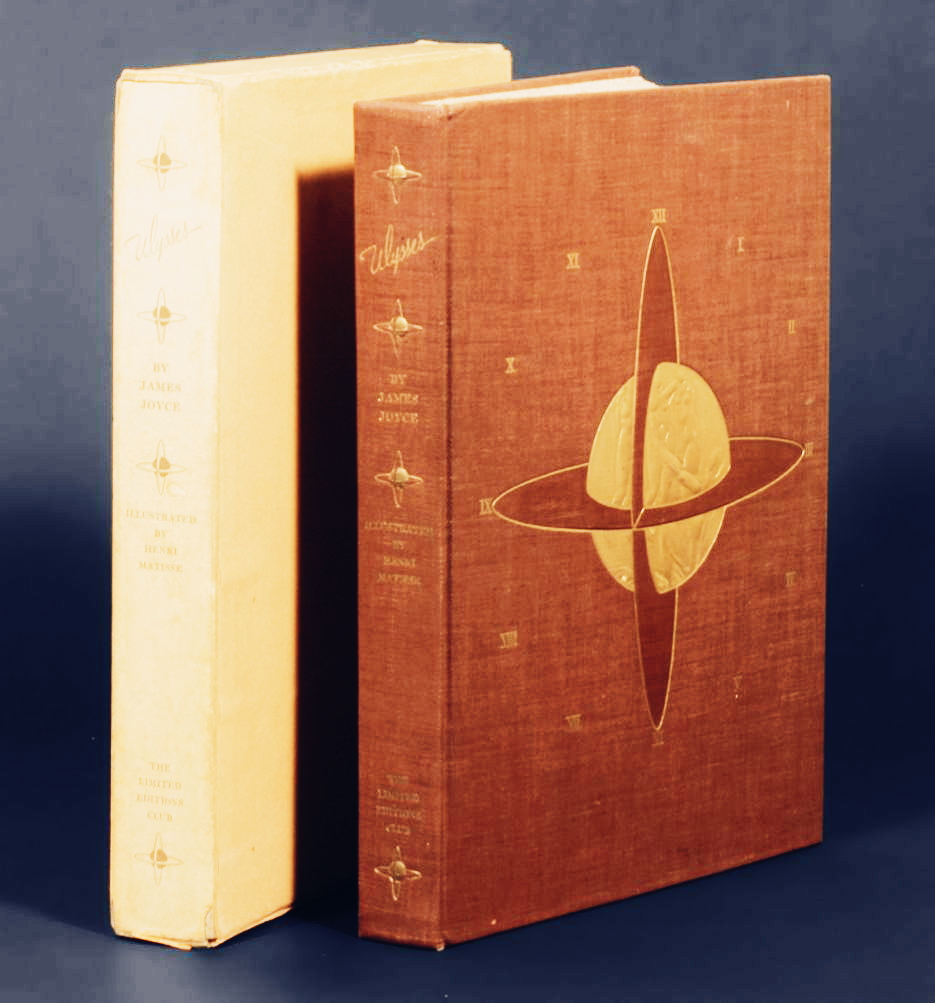
The book that's a work of art, made by Matisse, Joyce and Homer.
“Bloomsday is the only holiday in the world exclusively dedicated to a literary character and of course a book worth this feat has amazing editions.”
Leopold Bloom is the main character of the polemic book Ulysses, written by James Joyce and published in 1922. Every 16 of June brings the Bloomsday, official holiday in Ireland and reason to comemorate for readers all around the world. The holiday is a homage to Bloom, the book and to James Joyce itself. The book can reach more than 1000 pages and tell the story of one day in the average life of the even more average Leopold Bloom. In the this day is 16 of June in 1904 which also the date when Joyce went out with Nora Barnacle, the woman who later became his wife.
Choosing the hero
The Ulysses was written using the structure of the Odyssey, the epic whose hero is Ulisses. Odisseus is the greek name, Ulisses is the latin version. To develop the main character of his book, James Joyce searched in other heros the characteristics he wanted to see in Leopold Bloom, but they had to be pacific, with no sexual constraints and, maybe paradoxically, they should be free of the desire to become heroes and being imortalised through violence.
As Deklan Kieberd says in his introduction to the Ulysses, the self imposed celibacy and lack of informations about his family put Faustus out of the dispute. Hamlet was another option since Shakespeare was Joyce's favorite writer, but to him Hamlet was not a complete man, because Hamlet was basically a son and that was not enough. Jesus was considered, but Joyce discarded him due to the sexual constraint he wasn't willing to impose upon his character, as he told Frank Budgen:
“Jesus was a bachelor and never lived with a woman. Surely living with a woman is one of the most difficult things a man has to do, and he never did it.”
Ulysses was the only greek hero who had no interest in going to war because he didn't believed the reasons subjacent to the Trojan war were good enough to leave his family behind. But the politics obliged him to go since he was the ruler of Ithaca and owed loyalty to the other leaders. Still, we see along the Odyssey that he won his battles using inteligence, traps and other less violent methods. He was a cautious and patient man. Besides that he was father of Telemachus, husband of Penelope, son of Laertes, companion of great war heroes like Achilles and a great adventurer, therefore, the most well developed heroe considered by Joyce. These were some of the reason that made Joyce use the Odyssey and it's hero to build work.
Matisse and the Odyssey
Bloomsday is the only holiday in the world exclusively dedicated to a literary character and of course a book worth this feat has amazing editions. Around 1930the american editor George Macey offered five thousand dollars to the painter Henri Matisse in order to get anything he could create for this money.
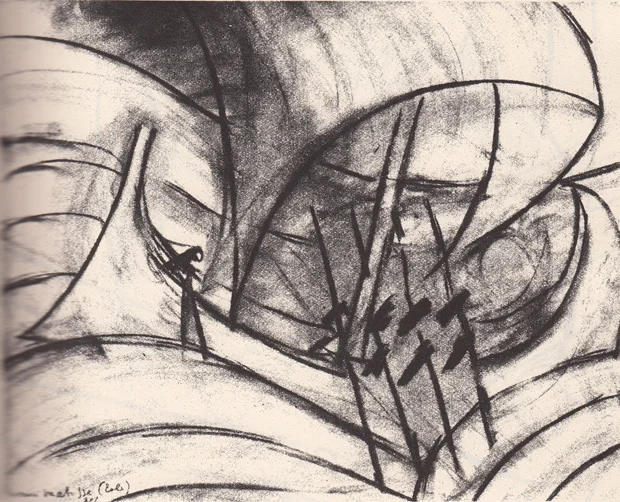
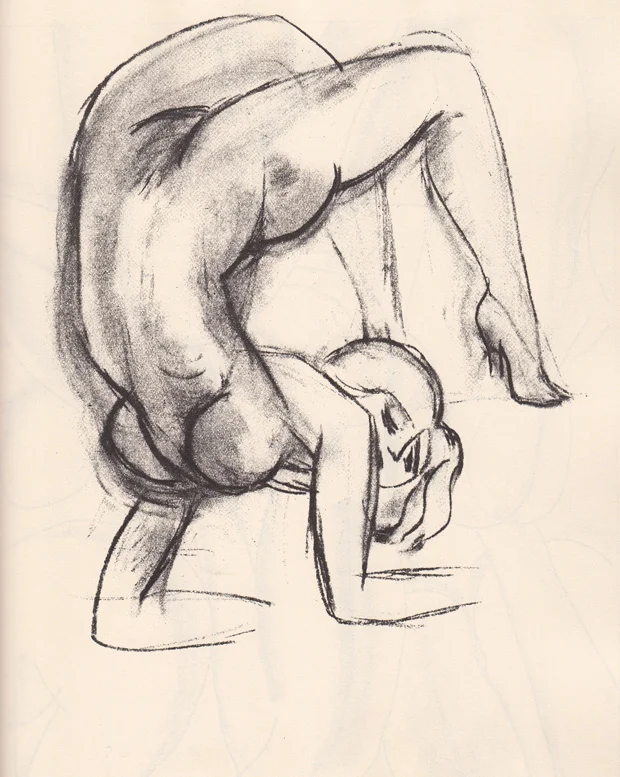
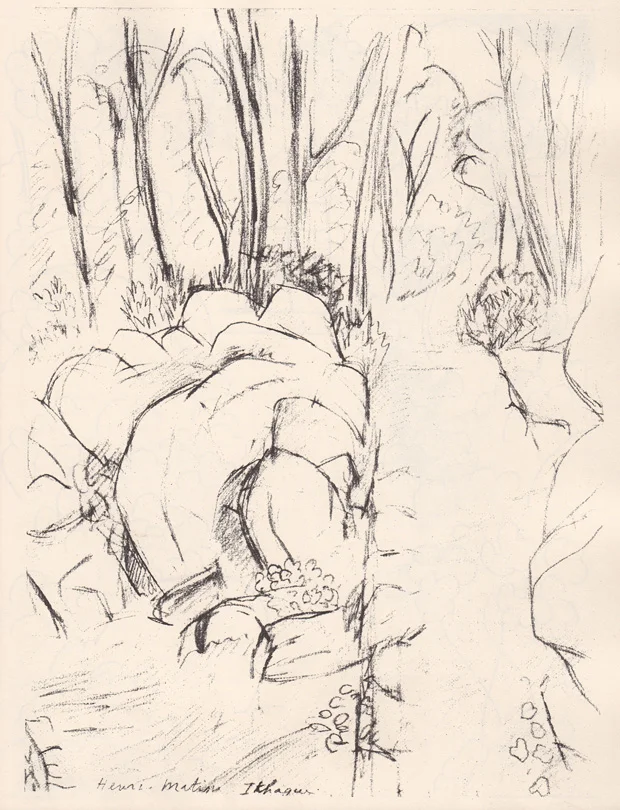
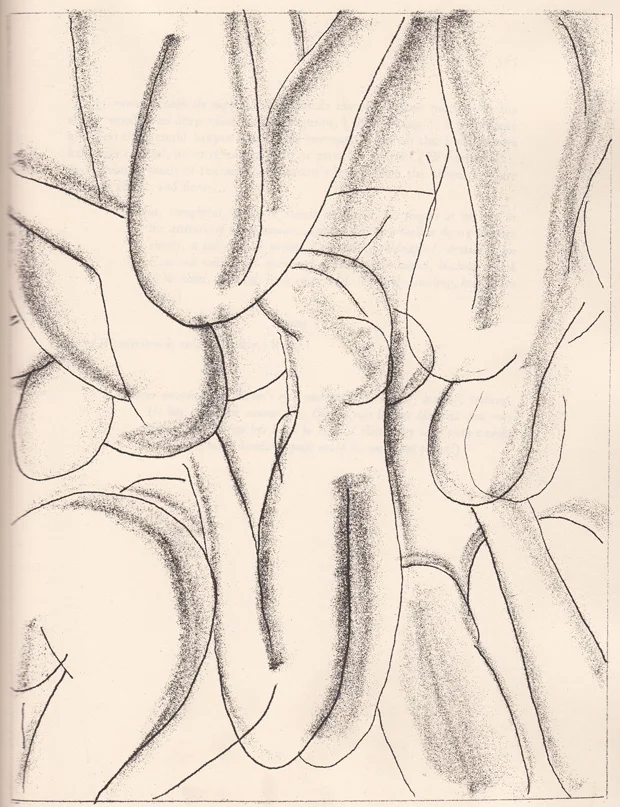
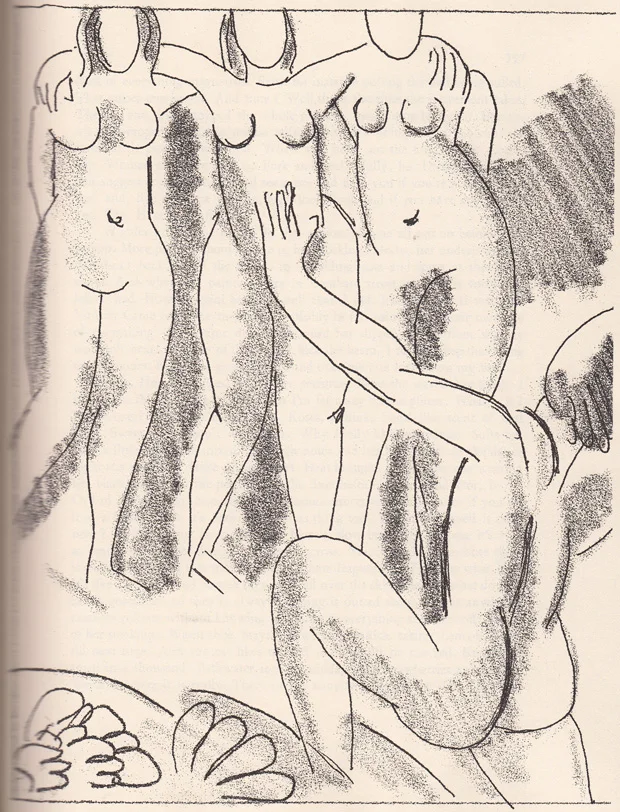
Apparently Matisse never read the Ulysse, at least not before creating the illustrations. His friend Eugene Jolas only summarized the book to him during. Despite that he created 26 illustrations based on themes of the Odyssey. The edition that united both the artistic sensibility of Matisse and Joyce's literary prowess was published in 1935. Matisse signed all the 1500 copies, and Joyce signed 250 of them.
In his illustrations Matisse chose the simplification, with his characteristic quasi childish lines made famous by some of his most popular paintings. Maybe there's a lack of colour to those who are familiarized with Matisse's works, however it was a contingency not only of time and money, but also of the medium, after all they were made exclusively to be used on books. The simple lines and the thems of the Odyssey match the technical complexity of the book and bring attention to the detailes of the homeric skeleton underlying the Ulysses without adding a unnecessary need of interpretative effort upon the reader. In the gallery below you can see 9 of the 26 illustrations of this edition:
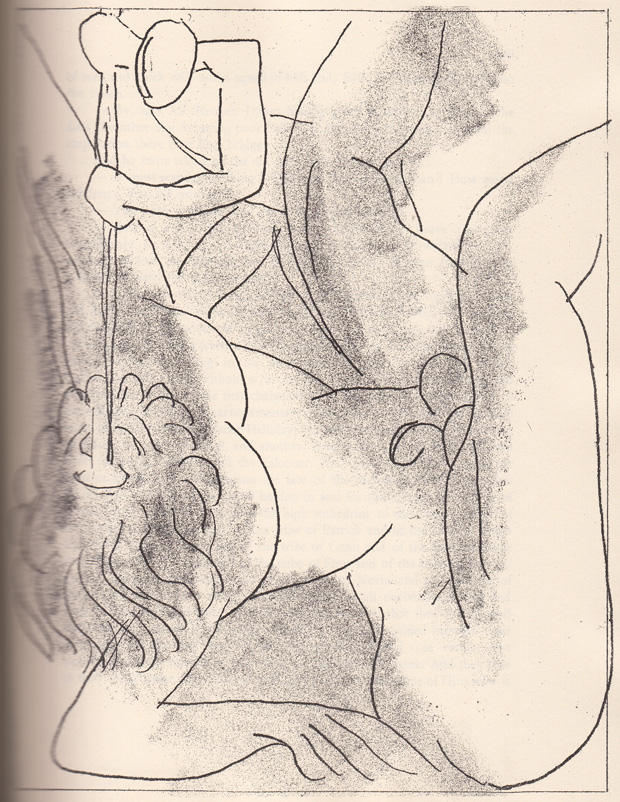
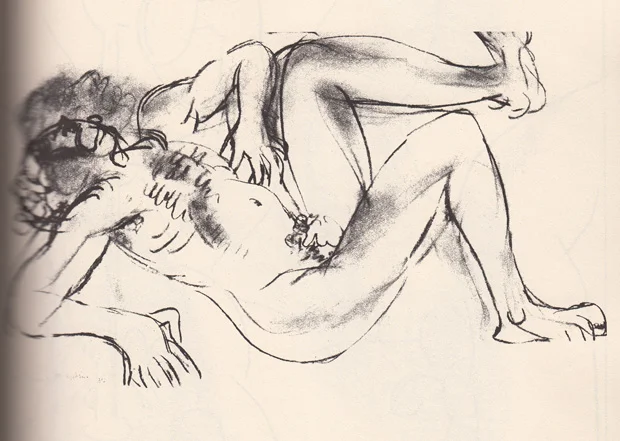
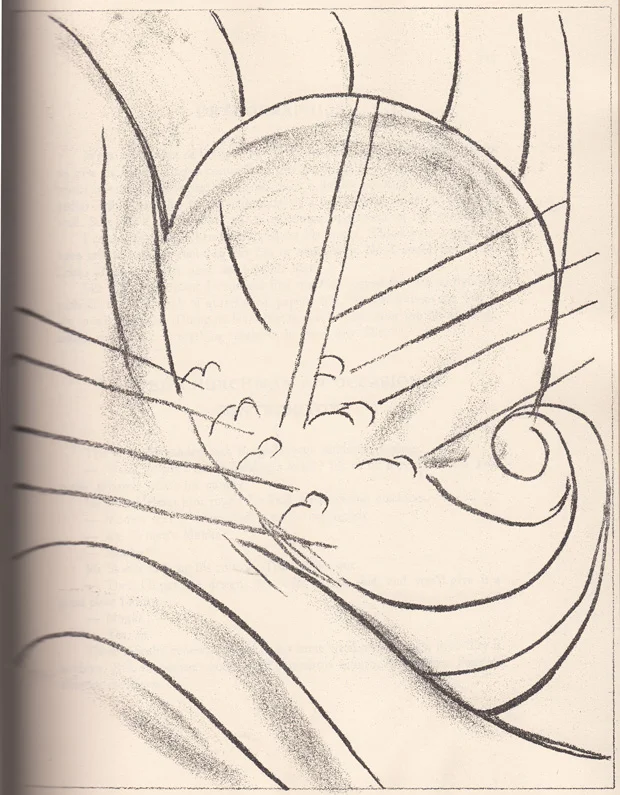
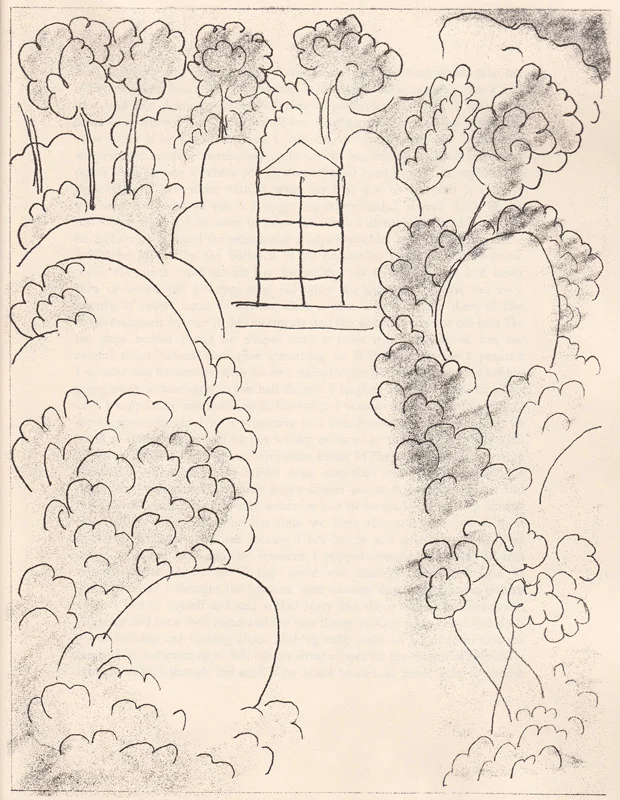
It's still possible to buy a edition with the signatures of both of them, that is, if you have 30 thousand dollars to spend on a book. On Ebay it's also possible to find more affordable replicas, even though still above the usual prices of the average books. The good thing about books it that to know the book you don't need any fancy edition, any copy work just fine, be it digital or pocket.
Would it have been better it Matisse actually read the book? The illustrations lose their value because of this? To literature Roland Barthes claims that the book should be dissociated from the author and Anne-Marie Willis also defend some similar ideas while thinking Design. Two must-read articles that can be used as a first step to answer these questions.
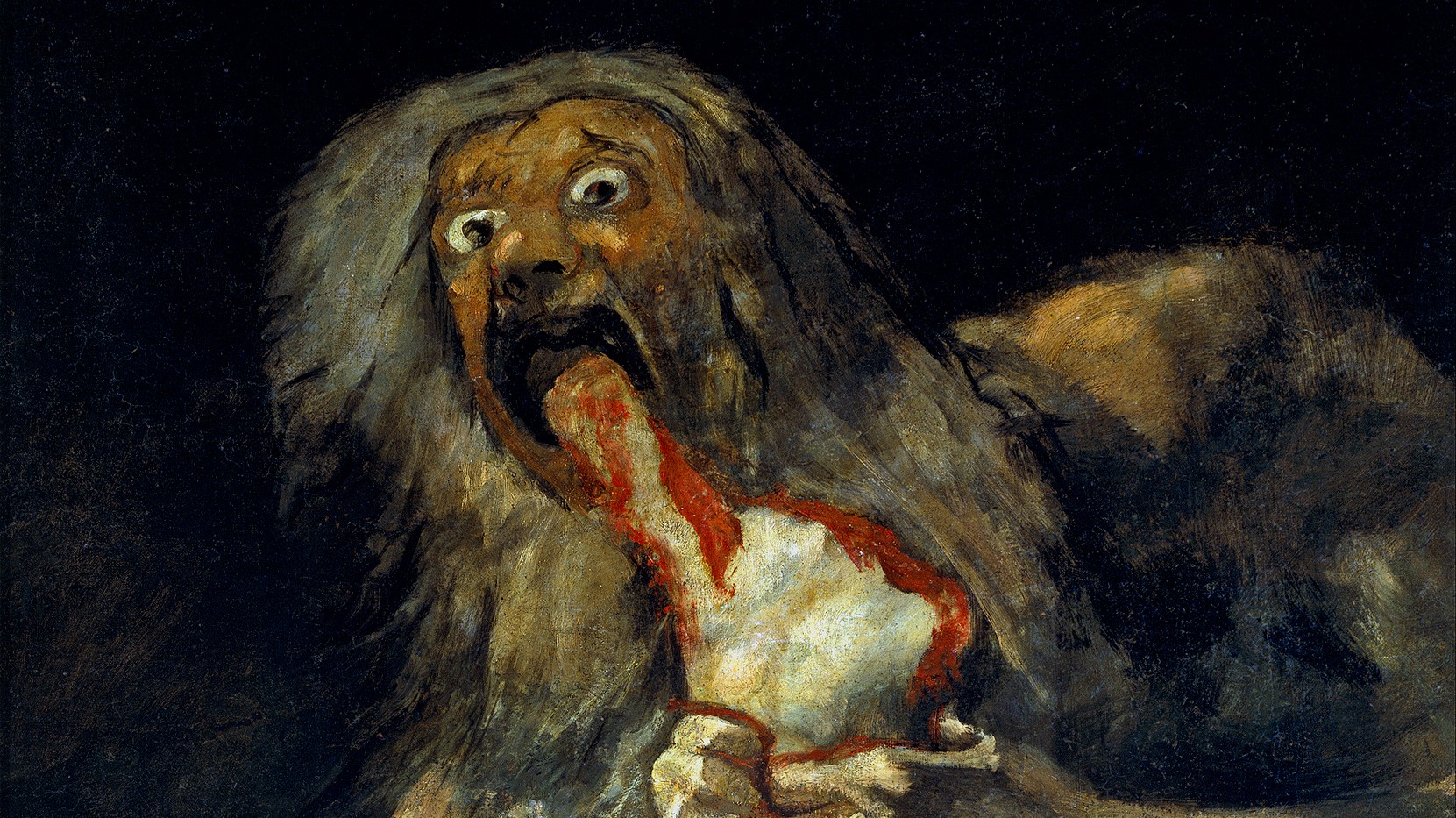
Titan and monster, Lord and cannibal. The myth of Cronus as seen by Goya.
“The sleep of reason produces monsters” - Francisco de Goya
When James Joyce discusses the effects of the Renaissance over the modern man, we can see that to him art has deep roots in it's own time, but still more important is the relation of the artist with the society he lives in. The painter Francisco de Goya suffered an intense proccess on both fronts, because as we will see, he witnessed important social changes and choking historical events while he had to deal with physical and psichological alterations which resulted in a work in constant metamorphosis but also of great sensibility to expose the world as he saw in each stage of his life.
The painting above is known as “Saturn devouring his child”, made by Goya between 1819 and 1823 as part of the group of 14 paintings that covered the wall of his house and today are called “Black paintings”. Even though there are inumerous interpretations it's safe to point some of the recurring themes of these paintings: mythology, mortality, suffering and finitude.
The original myth
Saturn is the latin denomination of the titan known by the greeks as Cronus. His father was Uranus, personification and lord of the skies and his mother was Gaia, the personification of the Earth. The animosity between Gaia and Uranus began after he imprisioned two of their in the Tartarus. In revenge, Gaia created a stone sickle and congregated her sons to castrate Uranus.
Cronus who envied the powers of his father was the only one who accepted the task and castrated his father on a trap created by Gaia. Then he claimed his father throne, imprisoned his brothers again and took his sister Rhea as queen. Gaia and Uranus warned him about a prophecy predicting him being overthroned by one of his sons just like he did to his father. That's the reason why he began to eat his childs as soon as they were born.
Rhea then went to Gaia asking for help to save her childs from her cannibal husband. Their combined efforts managed to delude Cronus by giving a stone wrapped in the baby towels which he ate without noticing the change, allowing Zeus to survive and grow in secret. As an adult Zeus reappers to take revenge on his father Cronus and gives a potion which makes him vomit his eaten brothers and sisters. Zeus also releases form the Tartarus the brothers of his father. Then war ensues, it's called the Titanomachia and had Zeus his brothers and uncles fighting against Cronus and the ohter Titans. As the prophecy foresaw, Cronus and the Titans are defeated.
Goya's vision
According to the greek myth Saturn swallow his children without much violence since Rhea was able to give him a rock wrapped in sheets instead of Zeus and Saturn didn't noticed the difference. It also makes less inconceivable the fact that his children was still alive inside him before Zeus saved them. But Goya approaches the cannibalism from a diferent angle, giving great psychological deepness to the muth not only by the way he depicts the Titan but also through the act itself.
On this painting the lightning comes from the top left of the canvas creating a chiaroscuro responsible only for part of the sense of nightmare. Beyond the lightning we see the desfigured and tortured Titan, irradiating suffering and the grotesque. His legs are thin and look dieseased due to uncommon format that ends up in the darkness which swallows his feet. His shadowed body contrasts with the pale corpse in his hands.
The severed body in the center bring attention to a singular characteristic of this painting: despite the myth tlaking about Cronus eating his child as soon as they were born and in a single swallow, here it's the body of a adult. The body is not of a child and Cronus isn't so giant, he doesn't even look like the lord of the skies. In the myth Cronus eats both male and female children, but here it isn't possible to distinguish the sex of the devoured body.
The body also adds an almost unsuspected dose of anguish because it makes us think about not only of the parts already eaten, but also about the chewing and dismembering to come, anguish reinforced by the hands of the Titan. Their tight and strong squeeze around the body allows us to see some blood between the fingers, as if it were a spasm of despair.
Seeing this painting for the first time it's usual to pay attention at the monstruous figure of Cronus and to identify ourselves more with him than with the body being eaten. In this work the lord of the skies isn't a cold and powerful Titan, he's an old creature desperate for power and very aware of his weakness and of how grotesque is the method he uses to maintain his power. His disgruntled hair supports the dramatic effect of his eery eyes and dilated pupils adorned by the eyebrows responsible for the face of fear and terror.
The painter and the work
Deaf due to a earlier disease that brought great suffering to him, Goya witnessed the unveil and the effects of the Napoleonic Wars in his country. It redirected his works to social and political themes concerned with the folly of war and the lack of meaning of the human suffering. These numerous works are know as “The disasters of war” and pregifured the anguish present on the Saturn painting.
Years later he bought the house where he would paint his Black Paintings. After surviving two serious deseases and witnessed Spain's toils under the absolutism of Fernando VII, he painted over existing works with the ones that are know today as the Black Paintings. This pessimism and the presence of suffering in his works came through his personal life and the politic scenario of his time. The contrast between the works of the beginning of his carrer and the later ones is huge, the porosity of his paintings absorved much of his time and of his mind changes. These changes can be easily seen, for example, comparing the painting “La era” (1786-87) and a Black Painting, “The Great he-goat” (1819-23).
Goya never aimed to publicly expose the Black Paintings, the depiction of Saturn belonged to his dining room. None of them were named by him, their denonimations are posterior. Despite the influences of Goya being important to understand his motivation with this late works on his home it shouldn't exclude their autonomy. As Barthes defends when thinking literature, when it comes to art the value isn't so much on the artists intent but on the interpretatitva possibilities carried by the artistic objects. To look after a absolute meaning based only on the manifest of veiled intents of the artist is to block the possibility of appropriation of the art as social and intelectual instrument.