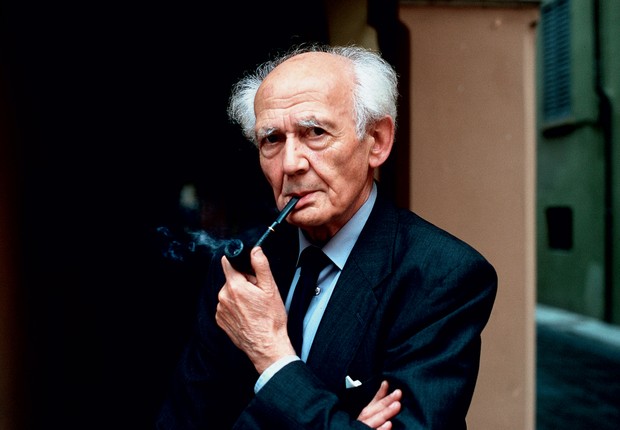
How to navigate Zygmunt Bauman’s liquid world
“If we wish them to become truly familiar, apparently familiar things need first to be made strange.” – Zygmunt Bauman
Your newsfeed has more stuff than you want or can read, daily. Your Whatsapp receive a lot of messages while you use Tinder to find a new date. We can travel anywhere and you just have to download something like Uber to have a driver waiting at your front door to take you to the airport while you do the check-in from your smartphone. All of this is reality to some people, but it’s a recent truth and it may not last. It’s this fluidity of the modern life and the meltdown of relations that Zygmunt Bauman study to give us some understanding of it.
Bauman is a polish sociologist who studies modern society, ranging from politics, through consumism and art. In his book “44 Letters from the Liquid Modern World” he compiles texts written from 2008 to 2009 for the magazine La Repubblica delle Donne. In these letters he introduces themes of this liquid world that seem familiar to us and try to help us understand them beyond our daily lives. His transition to the study of post-modernity is marked by the appearance of the term modern liquid world:
“From the ‘liquid modern’ world: that means from the world you and I, the writer of forthcoming letters and their possible/ probable/hoped for readers, share. The world I call ‘liquid’ because, like all liquids, it cannot stand still and keep its shape for long. Everything or almost everything in this world of ours keeps changing: fashions we follow and the objects of our attention (constantly shifting attention, today drawn away from things and events that attracted it yesterday, and to be drawn away tomorrow from things and events that excite us today), things we dream of and things we fear, things we desire and things we loathe, reasons to be hopeful and reasons to be apprehensive.”
The example I gave in the beginning is only the surface of the world as seen by Bauman, the changes occur in all areas and our anxieties tend to come even from the mere possibility of change:
“To cut a long story short: this world, our liquid modern world, keeps surprising us: what seems certain and proper today may well appear futile, fanciful or a regrettable mistake tomorrow. We suspect that this may happen, so we feel that – like the world that is our home – we, its residents, and intermittently its designers, actors, users and casualties, need to be constantly ready to change: we all need to be, as the currently fashionable word suggests, ‘flexible’. So we crave more information about what is going on and what is likely to happen. Fortunately, we now have what our parents could not even imagine: we have the internet and the world-wide web, we have ‘information highways’ connecting us promptly, ‘in real time’, to every nook and cranny of the planet, and all that inside these handy pocket-size mobile phones or iPods, within our reach day and night and moving wherever we do. Fortunately? Alas, perhaps not that fortunately after all, since the bane of insufficient information that made our parents suffer has been replaced by the yet more awesome bane of a flood of information which threatens to drown us and makes swimming or diving (as distinct from drifting or surfing) all but impossible. How to sift the news that counts and matters from the heaps of useless and irrelevant rubbish? How to derive meaningful messages from senseless noise? In the hubbub of contradictory opinions and suggestions we seem to lack a threshing machine that might help us separate the grains of truth and of the worthwhile from the chaff of lies, illusion, rubbish and waste . . .”
To understand or at least to have better tools to navigate this liquid world, Bauman seeks help from Walter Benjamin to propose two narrative forms. One of them is the narrative about bizarre actions and heroic deeds, those that are fabulous and have little to do with their listeners, the other one is the narrative of closer events, stories of the daily life that seem common, familiar. To Bauman even the more common and simpler stories can only be apparently familiar:
Zygmunt Bauman
“I said apparently familiar, since the impression of knowing such things thoroughly, inside out, and therefore expecting there to be nothing new to be learned from and about them, is also an illusion – in this case coming precisely from their being too close to the eye to see them clearly for what they are. Nothing escapes scrutiny so nimbly, resolutely and stubbornly as ‘things at hand’, things ‘always there’, ‘never changing’. They are, so to speak, ‘hiding in the light’ – the light of deceptive and misleading familiarity! Their ordinariness is a blind, discouraging all scrutiny. To make them into objects of interest and close examination they must first be cut off and torn away from that sense-blunting, cosy yet vicious cycle of routine quotidianity. They must first be set aside and kept at a distance before scanning them properly can become conceivable: the bluff of their alleged ‘ordinariness’ must be called at the start. And then the mysteries they hide, profuse and profound mysteries – those turning strange and puzzling once you start thinking about them – can be laid bare and explored.”
Bauman’s letters are a way to see while being inside the liquidity:
“Tales drawn from the most ordinary lives, but as a way to reveal and expose the extraordinariness we would otherwise overlook. If we wish them to become truly familiar, apparently familiar things need first to be made strange.”
When he defines the objective of his letters he also tell us what’s a possible objective to any intellectual endeavor, even if it demands a great effort to distinguish the signal from the noise. “44 Letters from the Liquid Modern World” is one of those rare books where the clarity don’t compromise the depth of the text.
Other recommended Reading that was already presented here is about how the world we create acts back on us and recreates us, the original article is written by Anne-Marie Willis.
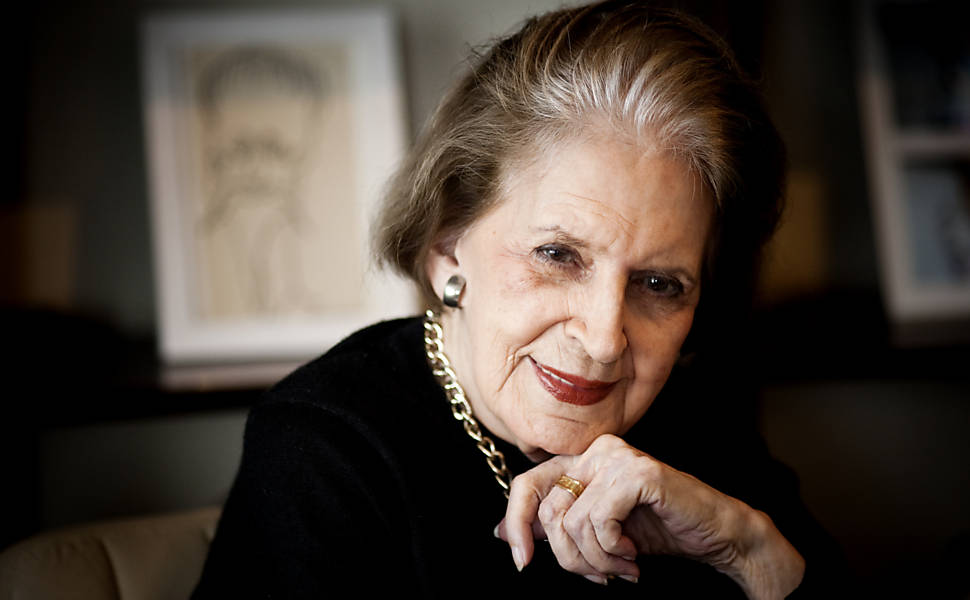
Lygia Fagundes Telles on misogyny in literature and the objective of writing
“I used to think: I’m writing so well and they aren’t talking about my text, they’re talking about my face. It made me very unhappy and I felt persecuted.” - Lygia Fagundes Telles
Owning many of the biggest literary prizes of portuguese language like the Camões Prize of 2005 and the Coelho Neto Prize given by the ABL for her book “The Girls”, Lygia Fagundes Telles is a consolidated name of the Brazilian literature. Born in 1923, she became an influent figure not only by her written work but also due to her efforts as an intellectual and public figure.
In an interview by the show Roda Viva she tells her story in one and a half hour. She speaks about her formation years all the way to her stablished career in contact with other famous writers like Mario de Andrade and Jorge Luís Borges. When commenting her first book – which she now rejected as being an immature work – she talks about how she used to see her vocation as a writer:
“I was ashamed of saying that I had a vocation because I thought that a vocation demanded success. As time passed I perceived: it has nothing to do with success.”
And this is the vocation that allows her to navigate through so many themes of the human life with so much mastery and at the same time create a path to her reader, a possibility. To Lygia the word has an utility so clear as her objective as a writer:
“If I can help my someone in his suffering, in his fear, in his fight, that’s also my fight and that’s also my fear and also my suffering. If I can help someone with this word, mission accomplished. When Death come to look me in the eyes to say “let’s go” I will say: I’m ready, I did what I could.”
However can come in less clear forms through the written work. She also believes that this opacity of the literary text can work as an enhancer of the message that underlies the work:
“I don’t demand to be comprehended. The writer don’t have to be comprehend because comprehension is hard to be achieved. […] The writer circumvents, he also isn’t very open, he plays. The reader becomes an accomplice, he becomes an accessary. It’s like a criminal who is going to commit his crime and then needs all that circumstance that will help him to do the thing as perfect as possible.”
To write in groups dominated by men in times when the oppression against women was even harsher than today is no easy task. She tells some of her struggles as a beginner that are still true to many female writers today:
“I was young, beautiful and wanted to be more intelligent. Then the prejudice. I was beautiful and stuff, so I wanted people to respect me and they didn’t because they wanted to talk about beauty, I always got furious, do you understand? Because I used to think: I’m writing so well and they aren’t talking about my text, they’re talking about my face. It made me very unhappy and I felt persecuted.”
Along the interview she also talks about her last contact with the Argentinian writer Jorge Luís Borges and attacks the superficiality of the traditional media and ask more respect towards the intelligence of the Brazilian people. Today’s post is an invitation to watch this short lesson about history, literature and art. To listen a writer so incredible is second only to reading her books.
Watch the full interview in Portuguese:

Susan Sontag explores the primitive and the modern in photography
“Photographs are a way of imprisoning reality, understood as recalcitrant, inaccessible." - Susan Sontag
Susan Sontag was one of those restless minds that defy categories and limits. Born in 1933, she wrote about art, culture, politics and human rights with great resourcefulness. “The image-world” is an essay of her book “On photography”, which was originally published in 1977. Written during the 70's, these essays show a interconnected way of thinking the image, even considering their individuality.
In “The image-world”, Sontag uses her erudition to show the place of photography in the modern societies through comparisons with pre-industrial cultures or even pre-historic art. As we're going to see, photography and image, as proposed by her, are an extension as real as the original:
“Such images are indeed able to usurp reality because first of all a photograph is not only an image (as a painting is an image), an interpretation of the real; it is also a trace, something directly stenciled off the real, like a footprint or a death mask."
This quote is enough to show the challenges of proposing real that which is usually regarded to be only a representation. But she don't avoid the debate. By refering to Plato she defies a whole thinking tradition:
“But this venerable naïve realism is somewhat beside the point in the era of photographic images, for its blunt contrast between the image (“copy”) and the thing depicted (the “original”)—which Plato repeatedly illustrates with the example of a painting—does not fit a photograph in so simple a way. Neither does the contrast help in understanding image-making at its origins, when it was a practical, magical activity, a means of appropriating or gaining power over something. The further back we go in history, as E. H. Gombrich has observed, the less sharp is the distinction between images and real things; in primitive societies, the thing and its image were simply two different, that is, physically distinct, manifestations of the same energy or spirit. Hence, the supposed efficacy of images in propitiating and gaining control over powerful presences. Those powers, those presences were present in them.”
“What defines the originality of photography is that, at the very moment in the long, increasingly secular history of painting when secularism is entirely triumphant, it revives—in wholly secular terms—something like the primitive status of images. Our irrepressible feeling that the photographic process is something magical has a genuine basis. No one takes an easel painting to be in any sense co-substantial with its subject; it only represents or refers. But a photograph is not only like its subject, a homage to the subject. It is part of, an extension of that subject; and a potent means of acquiring it, of gaining control over it.”
Giving this condition of reality to the photo, she then argues that there's a true inversion in the way we see the real, a return to the primitive ways of dealing with the image:
“But the true modern primitivism is not to regard the image as a real thing; photographic images are hardly that real. Instead, reality has come to seem more and more like what we are shown by cameras. It is common now for people to insist about their experience of a violent event in which they were caught up—a plane crash, a shoot-out, a terrorist bombing—that “it seemed like a movie.” This is said, other descriptions seeming insufficient, in order to explain how real it was."
“It is as if photographers, responding to an increasingly depleted sense of reality, were looking for a transfusion—traveling to new experiences, refreshing the old ones.”
“The urge to have new experiences is translated into the urge to take photographs: experience seeking a crisis-proof form.“
Being real, the mobility of the image can be a relief to those who can't experience that content, no matter if the reason is due to time or because of other kinds of constraints:
“As the taking of photographs seems almost obligatory to those who travel about, the passionate collecting of them has special appeal for those confined—either by choice, incapacity, or coercion—to indoor space. Photograph collections can be used to make a substitute world, keyed to exalting or consoling or tantalizing images.”
“For stay-at-homes, prisoners, and the self-imprisoned, to live among the photographs of glamorous strangers is a sentimental response to isolation and an insolent challenge to it.”
“Photographs are a way of imprisoning reality, understood as recalcitrant, inaccessible; of making it stand still. Or they enlarge a reality that is felt to be shrunk, hollowed out, perishable, remote. One can’t possess reality, one can possess (and be possessed by) images—as, according to Proust, most ambitious of voluntary prisoners, one can’t possess the present but one can possess the past.”
While the photo grants us the chance to keep contact with what's past and some of it's substance, there's also the need to deal with the transference of value that can happen between the “things” and their “images”, something that concerned Plato, even though he didn't saw this phenomenon as a competition between realities, but as the destruction of the only possible reality. Sontag don't accept this argument:
“The attempts by photographers to bolster up a depleted sense of reality contribute to the depletion. Our oppressive sense of the transience of everything is more acute since cameras gave us the means to “fix” the fleeting moment.”
“The powers of photography have in effect de-Platonized our understanding of reality, making it less and less plausible to reflect upon our experience according to the distinction between images and things, between copies and originals. It suited Plato’s derogatory attitude toward images to liken them to shadows—transitory, minimally informative, immaterial, impotent co-presences of the real things which cast them. But the force of photographic images comes from their being material realities in their own right, richly informative deposits left in the wake of whatever emitted them, potent means for turning the tables on reality—for turning it into a shadow. Images are more real than anyone could have supposed.”
“On photography” is an essential reading to thing the image in our society. The internet and social networks may have added another anxieties and needs to these already proposed by Susan Sontag, however, it's inevitable to read her writings in order to reach something more in this field.
If you want to understand better Plato's hesitation in regarding copies and imitations you can find here the Reading Notes about Plato's idea of expelling the poets from the ideial city. And to have an ideia about how it's possible to change the world through photos and videos read article about Ontological Design as seen by Anne-Marie Willis.

Deleuze and Guattari: the subversive minor literature of Franz Kafka
"Kafka emphatically declares that a minor literature is much more able to work over its material.” - Deleuze and Guattari
The “Kafka: Toward a minor literature” was written in conjunct by Félix Guattari and Gilles Deleuze. French, they had already published the “Anti-Oedipus” when this study about the works of Kafka was published in 1975. Both of them dedicated themselves to philosophy, psychology and studies about art and politics.
In this second collaborative work they propose a new approach to Kafka’s works. This approach delineates a writing that contrasts with the major literature: that of the literary canon and habited by great masters. Deleuze and Guattari introduces us to what they call “minor literature”, a revolutionary way of writing that, as Kafka foresaw, puts this kind of creations beyond the realm of the classic works and the traditional literary criticism.
Kafka was born in a German speaking family while living in Prague. They were Jewish and there was an almost hostile relation between those who spoke German and those who spoke Czech. He spoke both but considered the German his mother tongue. It was in this environment where culture, territory and the politics collide that Kafka created his works. And it’s from these conflicts that Deleuze and Guattari draw their discussion about the minor literature as related to Kafka:
“A minor literature doesn't come from a minor language; it is rather that which a minority constructs within a major language. But the first characteristic of minor literature in any case is that in it language is affected with a high coefficient of deterritorialization. In this sense, Kafka marks the impasse that bars access to writing for the Jews of Prague and turns their literature into something impossible—the impossibility of not writing, the impossibility of writing in German, the impossibility of writing otherwise.”
“The three characteristics of minor literature are the deterritorialization of language, the connection of the individual to a political immediacy, and the collective assemblage of enunciation. We might as well say that minor no longer designates specific literatures but the revolutionary conditions for every literature within the heart of what is called great (or established) literature.”
The minor literature positions itself beyond the formal criticism; it’s not a fix object in a category, but an expression machine:
“Only in this way can literature really become a collective machine of expression and really be able to treat and develop its contents. Kafka emphatically declares that a minor literature is much more able to work over its material.”
Taking Kafka’s German as an example, they defend that there are two ways of creating this machine:
“But there are only two ways to do this. One way is to artificially enrich this German, to swell it up through all the resources of symbolism, of oneirism, of esoteric sense, of a hidden signifier. But this attempt implies a desperate attempt at symbolic reterritorialization, based in archetypes, Kabbala, and alchemy, that accentuates its break from the people and will find its political result only in Zionism and such things as the "dream of Zion." Kafka will quickly choose the other way, or, rather, he will invent another way. He will opt for the German language of Prague as it is and in its very poverty. Go always farther in the direction of deterritorialization, to the point of sobriety. Since the language is arid, make it vibrate with a new intensity.”
Guattari and Deleuze see in James Joyce and Samuel Beckett the example of writers whose language allowed them to write in the same manner as Franz Kafka did with his German:
“That is the glory of this sort of minor literature—to be the revolutionary force for all literature. The utilization of English and of every language in Joyce. The utilization of English and French in Beckett. But the former never stops operating by exhilaration and overdetermination and brings about all sorts of worldwide reterritorializations. The other proceeds by dryness and sobriety, a willed poverty, pushing deterritorialization to such an extreme that nothing remains but intensities.”
However, you don’t have to write in German as a Czech nor in English as an Irish. Or, and this is my contribution, to write in Portuguese as a Brazilian to create the minor literature, your own machine. They believe it is possible to write minor literature even if you had the misfortune (and here it’s their adjective) of being born under a great language:
“What interests him even more is the possibility of making of his own language-assuming that it is unique, that it is a major language or has been—a minor utilization. To be a sort of stranger within his own language; this is the situation of Kafka's Great Swimmer.
To make use of the polylingualism of one's own language, to make a minor or intensive use of it, to oppose the oppressed quality of this language to its oppressive quality, to find points of nonculture or underdevelopment, linguistic Third World zones by which a language can escape, an animal enters into things, an assemblage comes into play.”
In this book Guattari and Deleuze invite you to subversion, but draws attention to the responsibility of the writer. To reproduce the status quo, even in unconscious ways, is not something the writer can abdicate after indulging in the conservative side of the language. To see literature beyond of what’s said is to evaluate how things are said, to bend the language or to deprive it of it’s familiarity, and those are choices that have to be considered by the writer.
Complement this Reading notes with the article about the Death of the Author as seen by Roland Barthes, the similarity of methods and theories between Barthes, Deleuze and Guattari is essential to understand the place of the critics and the relation between writer and literature.
Bibliography: DELEUZE, Gilles; GUATTARI, Félix – Kafka: Toward a minor literature. London: University of Minnesota Press, 2003. ISBN 0-8166-1514-4. Translator of the quotations: Dana Polan