
Professionals from the Humanities matter, we just don’t know that
The humanities have some of the biggest clues out there about how to fix stuff. We’re very bad at a range of things that these art graduates could help us with.” – Alain de Botton
It's common to see graduations from the humanities, specially those related to arts like music, painting, literature and cinema, being taxed as useless or as graduations that “don’t pay well”. But if it’s true that they may not “pay well” it’s only because we can’t see the “utility” that these professional can have in our lives.
Zygmunt Bauman simplifies the contingencies of our world, through people’s instability and submission to an order that looks inevitable in our modern society. An order that demands flexibility from everyone, a readiness to fit in. However, this flexibility seems to demand too much from the humanities graduates because what we see is that in order to survive they need to abdicate their knowledge and interests.

Click to see the Youtube channel
The School of Life has what I consider one of the best Youtube channels. In their most recent video named “Why Arts Graduates Are Under-Employed”, Alain de Botton argues that the essence of the problem is in the lack of appropriate positions and employers, a problem of education and knowledge:
“But in truth the extraordinary rate of unemployment or misemployment of graduates in the humanities is a sign of something grievously wrong with modern societies. It’s evidence that we have no clue of what culture and art are really for and what problems it can solve.”
It’s not a problem if you’re not so sure about the benefits that culture and art can have to people in general, he tries to give some reasons as to why we are wasting these professionals when the best job we have for them is serving coffee:
“Good news is that the humanities actually do have a point to them. They’re a storehouse of vitally important knowledge about how to lead our lives. Novels teaches us about relationships. Works of art reframe our perspectives. Drama provides us with cathartic experiences. Philosophy teaches us to think, political science to plan and History is a catalogue of case-studies into any number of personal and political scenarios.
The humanities have some of the biggest clues out there about how to fix stuff. We’re very bad at a range of things that these art graduates could help us with.”
Ok, maybe not so many people think that the knowledfe from the humanities is useless. But our incapacity of harness these people to solve our common problems is, in it’s essence, proof of how much we need them:
“That there are so many arts graduates waiting tables isn’t a sign that they have been lazy and self-indulgent. It’s that we haven’t collectively woken up to what culture could really do for us and how useful and totally practical it could be.”
Full video below:
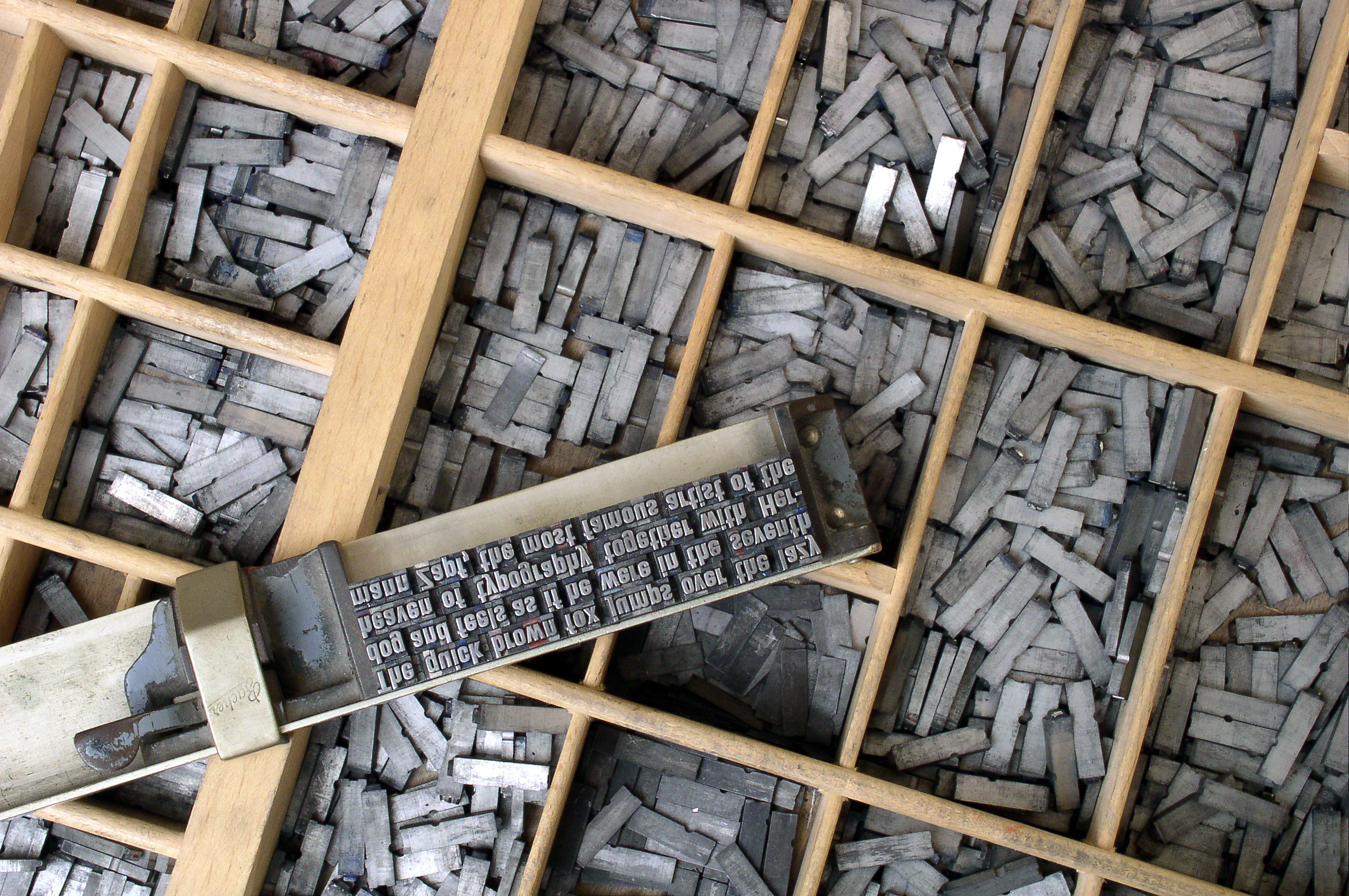
The typeface trying to make reading easier for dyslexics
"When they're reading, people with dyslexia often unconsciously switch, rotate and mirror letters in their minds" – Christian Boer
Some time ago, after a system update in my e-reader I discovered that a new typeface have been added. The typeface is called Dyslexie and I deemed it ugly, irregular and with an awful name. After all, to name a typeface after a mental disorder is at least bad taste. However, after searching more about it in google I began to think of it as the most important typeface of my e-reader.
Here enters the Dutch designer Christian Boer. Being dyslexic, he knows very well the hardships that come with reading and having this in mind he tried to create a typeface able to minimize the problems that dyslexics have while reading. As Dyslexia seems to be related to problems in the process of transforming the symbols we read in sounds and these sounds in words, the designer perceived that himself and many other person who suffer from dyslexia can mistake letters in more or less predictable manners:

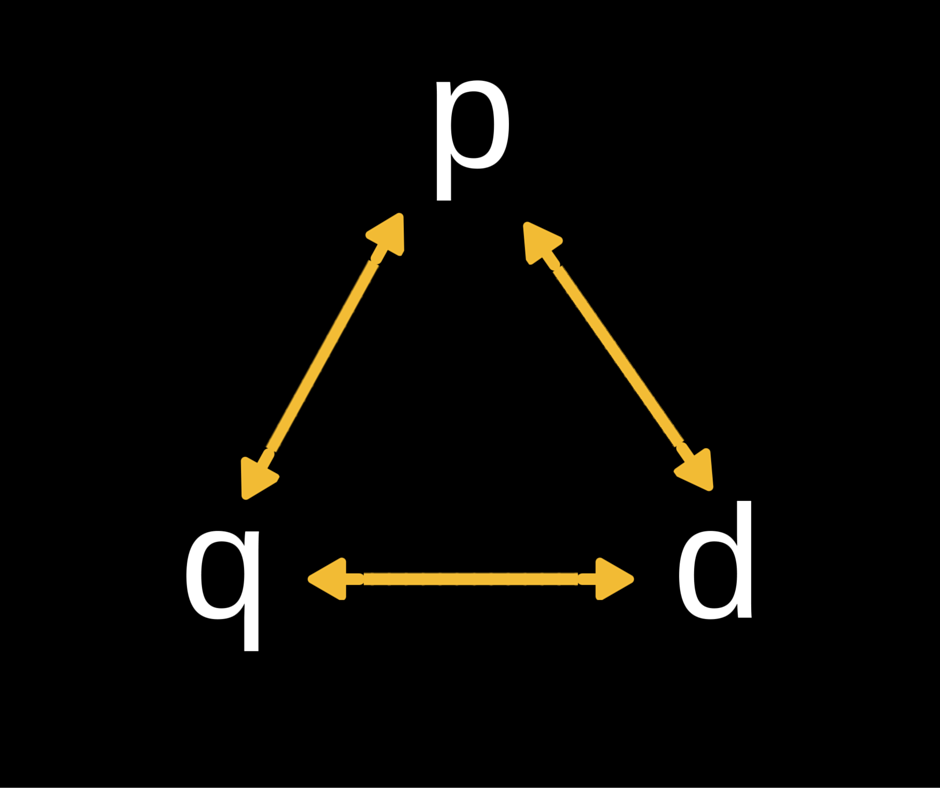
"When they're reading, people with dyslexia often unconsciously switch, rotate and mirror letters in their minds"
This confusion happens more often with other typefaces because they have many lines and strokes in common. These similarities make the “n” and the “u” be the same symbol, only inverted. Other examples are the letters “p”, “b” and “d” that usually are the same symbol mirrored of inverted.
To tackle this problem, Boer used irregular strokes and tried to create unique letterforms, even with letters that resemble each other. The idea is that the singular aspect of each letter can make it harder for the brain to mistake one for the other.
"By changing the shape of the characters so that each is distinctly unique, the letters will no longer match one another when rotated, flipped or mirrored," Boer said. "Bolder capitals and punctuation will ensure that users don't accidentally read into the beginning of the next sentence."
The Dyslexie has letters with broader bottoms to avoid being turned upside down. The use of the semi-italics and variable gaps in the letters are attempts to make them unique. Still, the punctuation signs and the uppercase letters are bigger to make highlight the beginning and the end of sentences. In other words, what at first seemed to me a badly executed and ugly typeface is, in fact, an inventive effort with a bigger objective than being just beautiful.
Of course, this typeface doesn’t replace adequate medical advise, but any help is welcome. In this case, the efforts of a designer created the most important typeface in my e-reader, after all, it has even more opportunities to be helpful in interactive media. Beyond all the care in making it functional here’s also other controllable aspects like color, space and size. I talk so much about reading here that I had to post about this possibility of bringing even more people to this essential habit.
Read also about the Ontological Design. In this post I talk about how she tries to point a way for the Design studies and talks about the unsuspected importance it has in our lives.
Official website with free Dyslexie typeface for personal use: https://www.dyslexiefont.com
All the information used in this post can be found below:
https://www.dyslexiefont.com/en/background-information/the-designer/
http://pediatrics.uchicago.edu/chiefs/DBP/documents/reading%20pdf/Dyslexia.Peterson.pdf
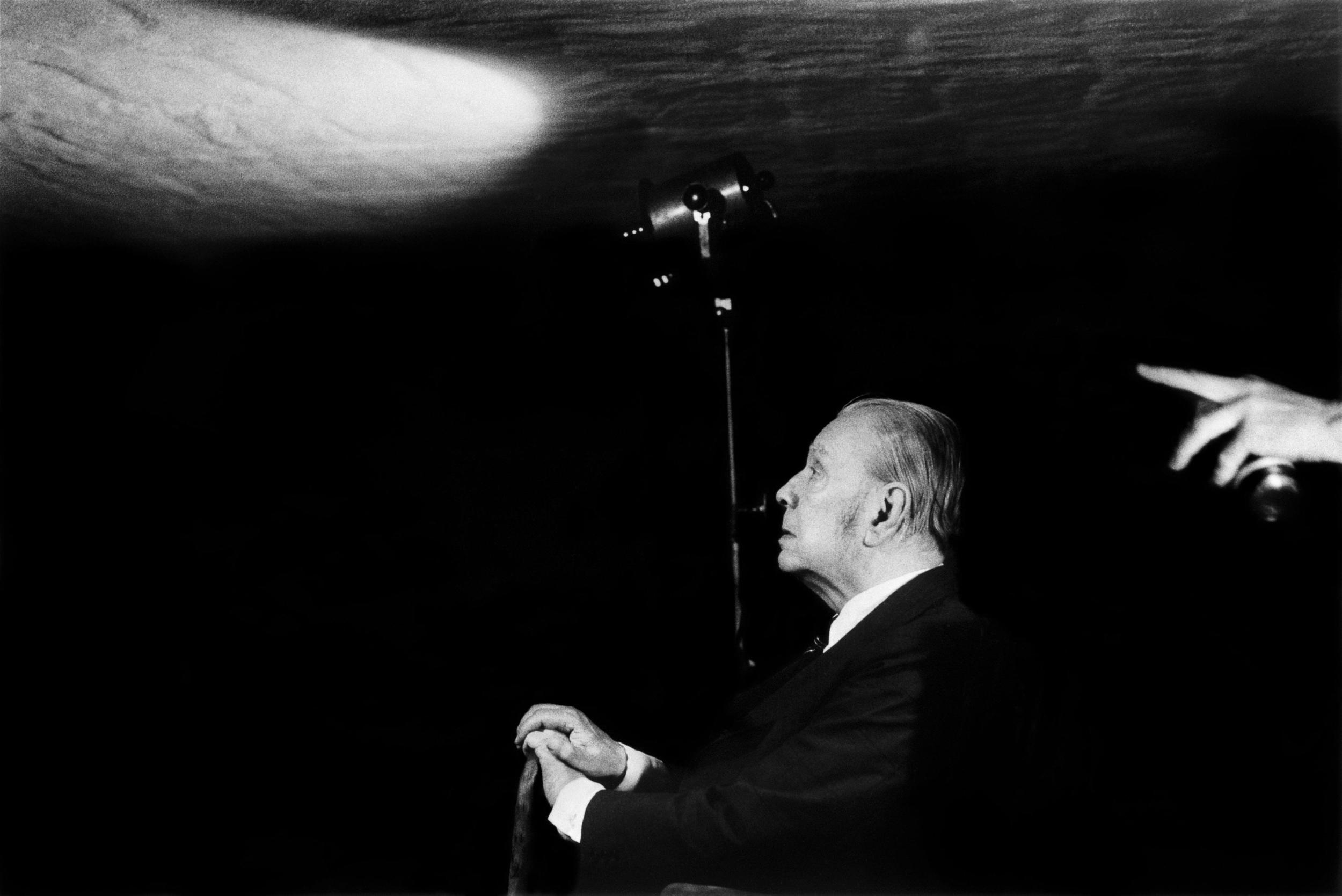
On being a great writer and how almost dying made Borges try short stories
“Not because I think my own stuff particularly good, but because I know that I can't get along without writing. If I don't write, I feel, well, a kind of remorse, no?” - Jorge Luís Borges
Jorge Luís Borges is one of those big names in literature who should need no introduction. In his books I found the recurrence of themes like time, infinity, labyrinths and the doppelganger. Expert in ancient english literature and philosophy, many of his book cast doubt over the border between fiction and non fiction, between the realism and the fantastic.
The love for reading that is clear even in his writings found limitations in his progressive blindness. However, it wasn't enough to hinder his habit of reading and writing even when he was already very debilitated in July of 1966, five years after receiving his first big premiation, the Formentor Prize. In this date he gave an interview to the writer and translator Ronald Christ published by The Paris Review.
His stories are short, complex and profoundly philosophical and granted him the title of the”writer who writes for writers”. But as he tells in the interview, it was only after an almost death experience, due to an accident at the Christmas of 1938, that he first tried to write short stories:
“Yes, I was very timid because when I was young I thought of myself as a poet. So I thought, “If I write a story, everybody will know I'm an outsider, that I am intruding in forbidden ground.” Then I had an accident. You can feel the scar. If you touch my head here, you will see. Feel all those mountains, bumps? Then I spent a fortnight in a hospital. I had nightmares and sleeplessness—insomnia. After that they told me that I had been in danger, well, of dying, that it was really a wonderful thing that the operation had been successful. I began to fear for my mental integrity—I said, “Maybe I can't write anymore.” Then my life would have been practically over because literature is very important to me. Not because I think my own stuff particularly good, but because I know that I can't get along without writing. If I don't write, I feel, well, a kind of remorse, no? Then I thought I would try my hand at writing an article or a poem. But I thought, “I have written hundreds of articles and poems. If I can't do it, then I'll know at once that I am done for, that everything is over with me.” So I thought I'd try my hand at something I hadn't done: If I couldn't do it, there would be nothing strange about it because why should I write short stories?”
Even after this extreme start he rememorate the acceptance of his books in an account that made me remember the way he deals with numerology and mathematic in his books. When “History of eternity” was released he still had no idea that in the future his works would be translated to dozens of languages and even the sales of 37 copies left him surprised and touched:
“At first I wanted to find every single one of the buyers to apologize because of the book and also to thank them for what they had done. There is an explanation for that. If you think of thirty-seven people—those people are real, I mean every one of them has a face of his own, a family, he lives on his own particular street. Why, if you sell, say two thousand copies, it is the same thing as if you had sold nothing at all because two thousand is too vast—I mean, for the imagination to grasp. While thirty-seven people—perhaps thirty-seven are too many, perhaps seventeen would have been better or even seven—but still thirty-seven are still within the scope of one's imagination.”
During all the interview Borges speaks a lot through quotations, refering to positions that ilustrates his own views, quoting the authors and sometimes even the book where he read that. It's this way that he merge his ideas with the words of other writers to tell what he considers essential to write a great book:
“I think that Mark Twain was one of the really great writers, but I think he was rather unaware of the fact. But perhaps in order to write a really great book, you must be rather unaware of the fact. You can slave away at it and change every adjective to some other adjective, but perhaps you can write better if you leave the mistakes. I remember what Bernard Shaw said, that as to style, a writer has as much style as his conviction will give him and not more. Shaw thought that the idea of a game of style was quite nonsensical, quite meaningless. He thought of Bunyan, for example, as a great writer because he was convinced of what he was saying. If a writer disbelieves what he is writing, then he can hardly expect his readers to believe it.”
In this interview Jorge Luís Borges also talks about his studies of ancient english and nordic literature, comments what he considers essential to poetry and to fantastic literature. The writer for writers manages to be a remarkable presence even outside his work. After reading books like “The Aleph” and “Ficciones” I can only recommend kep recommending him everywhere.
I also talked here about an interview from the brazilian writer Lygia Fagundes Telles who met Borges in person. In this interview she also speaks about her last encounter with the argentinian writer before his death.
Reference: Full Borges interview.
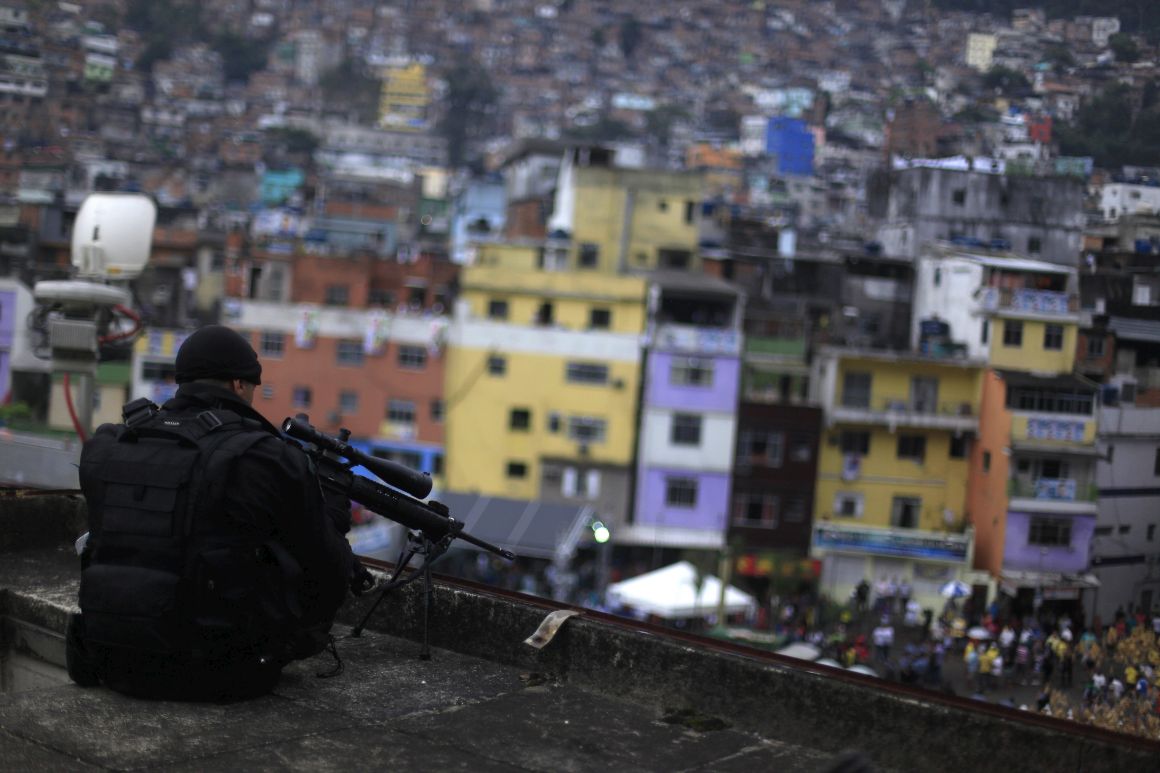
“You killed my son”: Report dissects Police action in Brazil
“There are agents of the state who have registered 19, 20 or 40 cases of ‘resistance followed by death”, and that sounds odd: so much resistance, so many killings linked to just one person.” – Interviewed public defensor
Yesterday (03/08/2015) Amnesty International published their newest report about deaths caused by police intervention. Titled “You killed my son” the document overviews extrajudicial deaths that occurred in Rio de Janeiro between 2014 and 2015, more specifically in the Acari favela. They crossed interviews, testimonies and statistics from many fonts that ended up showing an alarming but predictable picture about the way police officers work in Brazil.
The report begins detailing the humanitarian duties assumed by the Brazilian State and granted by the Constitution and International laws. The starting point is the right to life, considered by the Inter-American Court of Human Rights as essential, because without it all the other rights are compromised.
“On the one hand, the State has the obligation to take the necessary measures to not only prevent and penalize the deprivation of life as a consequence of criminal acts, but also to avoid extrajudicial executions committed by its own security forces.”
To stop these executions there are UN documents recommending some basic guidelines for the use of force by police forces, being them: Legitimate objective, necessity and proportionality. However what we see is that the war on drugs legitimate excesses and injustices, including the manifest support of almost half the civil population that, in survey, said to agree with the statement “a good is a dead crook”.
In previous attempt to lower the criminality rates and the use of force we saw the creation of the UPPs but the report point to a possible suffocation of these precarious initiatives due to a lack of broader politics to include these Unities in a bigger logic of poverty and police abuse reduction. As it’s showed by statistic, today’s Brazil is still hindered by it’s past: almost 80% of the people killed by police intervention in Brazil are black and poor.
Those who live in the favelas also are familiar with execution tactics. Cases where police officers invade homes without mandates to entrap the execution target are so common that there’s even a name for it: Troy.
“A large group of police officers, with various vehicles, enters the favela, making lots of noise, and then leaves. Except that a few officers stay behind in the favela, hiding in a house waiting for the traffickers to appear. It’s an execution tactic. No one wants to arrest anyone. It can’t even be called a tactic really, can it? But what’s the idea behind it? When the traffickers appear, the police officers who are hiding execute them.” – Interviewed police officer.
Impunity walks side by side with excess. The heavy weaponry and it’s indiscriminate use obviously generate collateral damage that are rarely assumed by the police. Even deaths of surrendered or hurt criminals are overseen due to lack of a proper judgement. With only 5% to 8% of the homicides in Brazil being elucidated it isn’t strange to see the rise of the mantra “shoot first, ask later” in the police forces.
“There are agents of the state who have registered 19, 20 or 40 cases of ‘resistance followed by death”, and that sounds odd: so much resistance, so many killings linked to just one person.” – Interviewed public defensor
Despite the individual judgements, the report also studies the responsible institutions and the justice spheres that allow the perpetuation of this scenario:
“In cases where police records indicate that the victim was linked to illegal drug selling, the investigation merely validates the police officers’ claim that the death occurred in self-defence. The investigation does not consider whether the police’s use of force was necessary and proportionate. On the contrary, the whole process seeks to give legitimacy to that homicide, supposedly carried out with just cause and necessity.”
In other words, there’s a inertia to be overcame before the proper changes can be made. But the victims of this police abuses are the ones who need the police and justice the most to grant their rights, however many of them feel threatened and are coerced not to go ahead with the complaints. The report shows that victims, witness and activists fear violence and threats because they’re a recurrent practice of the police officials.
In the end the Amnesty International lists their recommendations to many spheres of power with the intent of help to overcome this problems. Among them I highlight the recommendations to the National Congress asking for laws to make investigations easier in cases of violent death involving State agents and to incorporate in the Constitution the conduct principles recommended by the UN related to the use of force by connected with law enforcement.
The report “You killed my son” presents all these information with more details, the due fonts and na ideal format for digital reading. There’s also individual testimonies long the text that illustrate the data by showing the human suffering that can be underestimated when dealing only with numbers. In a subject like this it is indeed important to align intellectual efforts with the empathy towards the other.
You can find the full report here (In english). All graphics and charts used here were taken from the report.